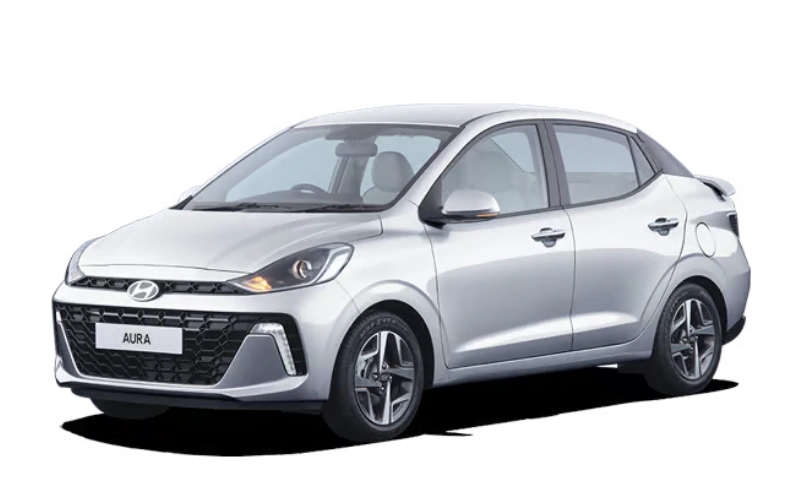
| Advantages | The Aura sedan comes with several must-have and feel-good features that are rarely seen in the sub-compact sedan space. These features include automatic climate control, tyre pressure monitoring system, 6 airbags, cruise control, automatic headlights and rear AC vents. The mid S and SX variants of the Aura sedan offer a long list of features, delivering good value for money. The key notable features of the S variant include a tyre pressure monitoring system, day/night inside rear view mirror, steering-mounted controls, 4 speakers, LED DRLs, rear seat armrest, rear AC vents and height adjustable driver’s seat. The SX variant further adds automatic climate control, touchscreen infotainment system, projector headlights, reverse parking camera and alloy wheels. The Aura sedan offers 3 powertrain options to choose from — 1.2L normal petrol manual, 1.2L normal petrol automatic and 1.2L petrol-CNG manual. Furthermore, all engine options of the Aura not only comply with the BS6 phase-2 and road driving emission norms but are also E20 fuel ready. While the fuel efficiency of the Aura isn’t class leading, all powertrains of the Aura offer respectable fuel efficiency figures. The claimed fuel efficiency figures for the petrol MT, petrol AMT and CNG MT are 20.5kmpl, 20.3kmpl and 27.49kmpkg, respectively.
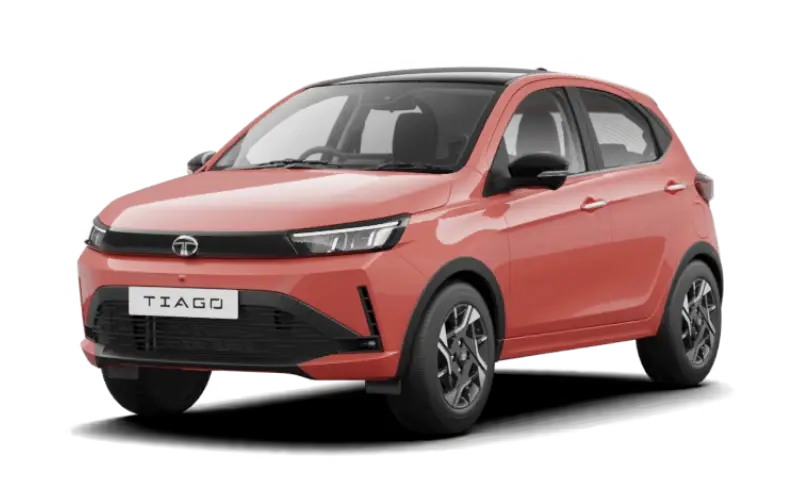
| With the 2025 model year update, the Tiago has become quite interesting with its feature distribution. It retains the simple variant lineup which makes it easy to select a variant. However, earlier, the feature distribution wasn’t the best. You had to stretch for the higher variant with a bunch of good-to-have features just to get a couple of must-have features. This time, it’s much nicer.
For instance, alloy wheels, which are easy to install post purchase and don’t add much value to the functionality are available in top variant. Meanwhile, some must-have features such as rear defogger, ESC, power mirrors, steering-mounted controls are available in the mid-spec XT variant. Higher, XZ also adds some meaningful and useful features such as auto AC, auto headlamps, auto wipers, LED headlamps, larger touchscreen and DRLs before moving up to XZ Plus. Even the lower XM variant gets height-adjustable driver seat, all power windows, day/night inside mirror and a music system.
So, no matter which variant you pick you will get a good feature distribution for a car of its price and segment.
With the 2025 model year updates, the Tiago now brings LED headlamps, wireless Android Auto and Apple Carplay and a larger touchscreen with smoother and responsive interface. These changes, along with some cosmetic updates such as the new steering wheel with backlit Tata logo, its leather wrapping and the larger touchscreen next it make the car feel much more premium from the driver’s seat.
The top model comes quite loaded with features like auto AC, auto LED headlamps, auto wipers, TPMS, cruise control, large touchscreen, with wireless Android and Apple connectivity, keyless entry and go and a cooled glovebox.
While the Tiago is no SUV, it has a better ground clearance than a typical hatchback. 170mm on the standard variants is quite respectable. Moreover, if you do need the high ground clearance for the terrains you have to tackle, there’s the NRG variant, which is available with petrol-manual, petrol-auto, CNG-manual as well as CNG-auto powertrain options. What’s great about this NRG variant is that you don't have to pay a lot for the SUV styling like you do when buying bigger cars like the Exter, Punch, Kiger etc. The Tiago NRG is quite reasonably priced for what it offers.
Unlike some of the other non-turbo petrol cars, the Tiago’s petrol engine delivers its torque a little sooner at 3300 - 3500rpm. The rivals offer peak torque at 4000rpm or higher. This feature gives the Tiago a marginally-better drivability.
The Tiago, of course, offers the usual petrol-manual and petrol-AMT automatic options. Additionally, it also brings the CNG-manual powertrain. But it doesn’t stop there. The Tiago is one of the rare cars in India to offer a CNG-automatic powertrain option. Tata Motors don’t just have the CNG-AMT. The CNG variants of the Tiago also have a usable boot space. With 2 cylinders to hold the gas under the boot floor, there’s quite a usable cargo volume of more than 100 litres even in the CNG variants. This is another rare feature of Tiago CNG variants. Although, Hyundai have also started offering this with the Nios and Exter. No longer applicable as BNCAP/GNCAP crash test procedure has changed significantly since the Tiago was tested back in January 2020.
|
| Disadvantages | While the Aura is the most feature-loaded sub-compact sedan in its segment, it lacks a front centre armrest. A front centre armrest comes in handy on long highway drives, especially in automatic cars. Hyundai should have offered a front centre armrest with the Aura facelift. Addressed by Hyundai with launch of the Aura facelift Addressed by Hyundai with launch of the Aura facelift
| Compared to the Nios and Ignis, the 3-cylinder engine of the Tiago doesn’t feel as refined. Pushing it up the rev band, even just around 3000rpm, which is only 50% of the redline, the engine feels like it’s protesting.
Maruti Suzuki beating Tata Tigor with their 5-star Dzire is one thing. But the Alto K10 offering 6 airbags as standard in variants which don’t even get power steering and air conditioning while the Tiago continues with 2; now that is gonna hurt the Tiago and Tata fanbois.
Even in the top model of the Tiago, you may still miss features such as split-folding rear seat backs, rear AC vents, front centre armrest, front side thorax airbags and curtain airbags.
You won’t just miss out on some features with the Tiago top model. You also won’t get the option of buying it with an automatic transmission. It’s the same story whether you choose the petrol or the CNG engine option.
The base model of the Tiago carries an aggressive price tag, it does miss out on several features we have come to expect from any modern day car. For instance, it doesn’t get day/night inside mirror, height-adjustable driver seat, power mirrors, power windows, wheel covers and more. It also gets 13-inch wheels with skinny 155-section tyres. Even the cheaper Renault Kwid gets 165-section tyres on 14-inch rims.
The Tiago first went on sale early in 2016 with Zica badging on its boot and the legendary Messi promoting the car. It is now 9 years old, and for 2025, it’s again getting mild updates. 9 years is an awfully long time in the auto industry for a car to continue without a major overhaul. The 2025 model year update should prolong its life for another couple of years making it at least 11 years old before people really start hating the old design and stop buying it altogether.
That is not the saddest part though. What’s worse is that there’s no generation update in Tata’s pipeline for the Tiago and its sedan twin. Unless the customers’ buying power severely deteriorates in the coming years with a horrific economic slowdown, we don’t see Tata keeping the Tiago in their portfolio for too long. That means, even if you buy the car today, you may run into problems such as lower resale value because of model discontinuation and difficulty securing slow-moving parts for maintenance.
While every other carmaker out there has managed to figure out how to make vehicles that are reliable enough to only need yearly service, Tata appear to be stuck in the past. Or perhaps they are not! Perhaps, this is a strategy to extract more money out of their customers’ pockets.
While they will only replace consumables during every alternate visit, they will make you pay for labour even on visits where they only claim to have done some checks on the car. This adds to the hassle during the ownership and the overall cost of maintenance.
If you’re not assertive enough, then rest assured that at every service centre visit, the advisor will “advise” you to get some or the other preventive maintenance done even if they are absolutely unnecessary. Denying these optional services is going to be tricky because they are going to spend a whole lot of time with your vehicle. You don’t wanna make enemies with the service advisor because it’s fairly easy to sabotage your vehicle in a way that it will work fine for a few months and break down later during the ownership. Then, they might claim that they told you so. After all, they are the experts.
Thus, this might add to your maintenance costs. And if you don’t maintain a cordial relationship with your service centre reps, then you also run the risk of getting some warranty claims denied in future. The rest of the auto industry recommends yearly service centre visits. In such cases, you only have to see the service centre once every 12 months. So, it’s much less riskier to fight your way through their "recommendations". They probably won’t even remember you 12 months later.
|


 Upcoming Cars