| Advantages | With a length of just a shade under 3 metres, the Comet EV is even smaller than the Tata Nano. It currently is one of the smallest passenger vehicles available in the country. Combine its compact dimensions with a 4.2m small turning radius and you have a very city-friendly compact electric vehicle.
Despite having such a small footprint, the Comet EV can actually accommodate 4 adults with ease. It gets a 2-door format and both the front doors offer a large opening and the space for the rear passengers is generous too. Since the Comet EV is also fairly tall, headroom for even 6 footers is not a problem inside the Comet EV.
The Comet EV looks unlike anything on the road. Its compact design complimented with quirky styling give it a unique appeal on the road. Furthermore, its connected LED light bars at the front and rear along with LED headlights and tail lights also give it a modern stance. If you fancy a colourful livery splashed around your EV, MG Motor India also offer a slew of customisation packs.
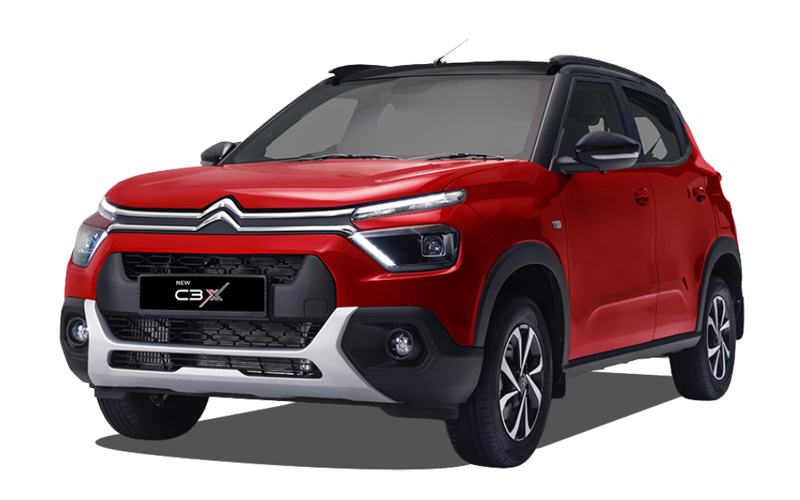
Unlike other budget-centric EVs in the market, the Comet EV is underpinned by an EV-specific platform. Other budget EVs in the market like the Tata Tiago EV and Citroen eC3, on the other hand, are based on the modified ICE platform. Thanks to the EV-specific platform, the Comet EV manages to offer surprisingly good space to its passengers despite its tiny dimensions.
MG Motor updated the Comet EV in March 2024 with feature additions like power-folding mirrors, crawl function, faster AC charging capability, e-parking brake with auto hold and a storage space between front seats to make it easier to live with. The high seating position, low-set dashboard and the large quarter glass of the Comet EV drastically improves all-around visibility and makes it easy to drive both in the city and on the highway. Although the MG Comet EV only offers a ground clearance of 165mm, the short wheelbase of 2010mm makes it very usable over poor roads and tall speed breakers. Despite a low power figure, the city drivability of the Comet is, in fact, far superior to the non-turbo petrol engines of up to 1.2L displacement. The MG Comet EV’s tall-boy design coupled with XL sized doors makes front seat ingress and egress as easy as walking in or out.
| In addition to 3.3kW AC charging, all variants of the Tigor EV also get DC fast charging as standard. Moreover, the charging connector is of the CCS2 type, which is most commonly available in India. So, finding a charging station with a compatible connector is fairly easy. With this DC fast charging Tigor EV can be charged from 0-80% in 59 minutes. The commercial buyers are a picky bunch. They don’t normally warm up to a specific car unless they see it as a reliable option with low maintenance and fuel costs. If you live in a big-enough city, you must have seen a bunch of Tigor EV’s commercial version, the XPress T, running around. This means that the commercial buyers are comfortable betting their livelihood on the Tigor EV’s platform and powertrain.
Moreover, since they drive the car a lot, their driving helps Tata Motors discover all sorts of bugs and gremlins in the car. Then, Tata can make the necessary changes in design and production to satisfy the needs of the fleet buyers.
That should give us a sigh of relief that its version meant for personal use should also give us satisfactory reliability as the car is well past its beta testing phase. In addition to the mild, medium and heavy regen modes, the Tigor EV also offers the option of completely turning off the regenerative braking. This helps you select the most suitable regen option for coasting, catering to a broader range of driving preferences and conditions.
|
| Disadvantages | Having 12-inch wheels on a budget car isn’t a new thing in the Indian market, but the same-sized wheels look diminutive on the Comet EV owing to its tall stance. The MG Comet EV stands 1640mm tall, which is considerably taller than the Tiago EV.
While the Comet EV offers surprisingly good space for its passengers, it couldn’t accommodate their weekend worth of luggage. The Comet EV offers a tiny boot space which is occupied by the puncture repairing kit and portable charger. As a result, the boot of the Comet EV can’t store any more luggage than a backpack.
Poor ergonomics like steering position, garden-chair seats and limited seat contouring make it a terrible option for covering long distances
The Comet EV offers a very quirky styling that may not go down well with everybody’s taste. Someone who prefers to have a conventional car bodystyle with 4 doors and better boot space can shell out a little extra and jump to the Tata Tiago EV.
If you intend to frequently use the rear seats, then note that the access to the rear seats is quite cumbersome. Despite the large doors that make ingress-egress easy for front row passengers, the front seats do not slide far forward to make rear seat ingress-egress easy for adults. Although MG claims the Comet EV is equipped with TPMS, we experienced a flat tyre without any prior warning of low pressure. We drove the Comet EV for a fair bit with the flat tyre and the system failed to recognise a loss of pressure. Upon further inspection, we found that there are no TPMS sensors on the wheels. The motor and some wiring underneath is exposed to the elements of nature while the rear differential is the lowest part of the car; it is a concern to watch out for when traversing over bad roads The Comet EV doesn’t support DC fast charging, thus limiting its usage within city confines only. Other EVs in its price bracket like the Tata Tiago EV, Tata Tigor EV and Citroen eC3 offer DC fast charging. Mostly addressed with 2024 model update (7.4kW AC fast charging capability)
| Telematics, or connected car technology, may look helpful on paper. However, this functionality's tech-heavy and data-centric nature raises significant digital privacy concerns. These concerns are particularly notable as Tata Motors haven’t specified which data security expert manages this aspect.
This issue is even more problematic because there isn't a single variant or an option of opting out of the Tigor EV without the telematics feature. Unlike other vehicles where telematics is reserved for higher variants, privacy-conscious buyers cannot even choose a lower variant to avoid this feature. The Tigor EV doesn’t offer you that choice. The presence of the Punch EV in a similar price range makes this a notable missing feature for the Tigor EV. When developing a new electric car, manufacturers often modify an existing petrol or diesel platform to accommodate an electric powertrain, significantly reducing development costs. However, this approach requires buyers to accept compromises regarding packaging efficiency.
When the Comet EV, which costs far less, can offer a dedicated EV platform, we should expect this from the Tigor EV as well. Moreover, the Tigor EV uses an almost 9-year-old platform, which first debuted with the Tiago in early 2016 and was originally designed for petrol and diesel engines. For a car costing ~Rs. 12.0 lakh (ex-showroom), it doesn’t have several features like a sunroof, alloy wheels, rear window curtains, 360-degree camera and a head-up display. Once you factor in the pricey nature of electric vehicles compared to petrol cars, many of these are somewhat easy to ignore. What’s not excusable is the lack of front armrest, rear armrest and rear AC vents. Front and rear armrests are fairly standard in cars costing around Rs. 12.0 - 13.0 lakh and they are not that expensive to engineer and integrate into an existing car. The lack of rear AC vents is another serious concern when significantly cheaper cars like the Grand i10 have been offering this feature for several years. Shockingly, a day/night Inside rear view mirror, which is a standard feature in cars costing around Rs. 6.0 lakh like the Nissan Magnite, is missing from the Tigor EV’s base XE trim, which costs Rs. 12.49 lakh. This level of cost-cutting is unacceptable, especially at this price point. Additionally, several other features are absent, including remote central locking, steering-mounted controls, front and rear armrests, rear camera, touchscreen infotainment, wheel covers, rear defogger, projector or LED headlamps, power mirrors and cruise control. Surprisingly, Tata Tigor’s EV hardware doesn’t support any kind of AC fast charging. Meanwhile, the Tiago EV gets 7.2kW fast charging support as standard. So, it’s not a technological hurdle for Tata. Tigor’s 3.3kW charger’s 6-hour 0-100% time is painfully slow, and it could have benefitted from having an option of fast AC charging. Even the tiny Comet offers this feature at least as an (expensive) option. The real-world range of the Tata EVs we have experienced so far has been about 30-40% below the claimed range. Even with a conservative driving style, we get a realistic range that deviates about 25-30% from the official range figure. With an optimistic estimate, you should expect about 200-230km from the Tigor EV’s 26kWh battery.
In comparison, the MG Comet’s real-world range estimates are much closer to the advertised figures. With a conservative driving style, you can get a 230km real-world driving range from the Comet EV. Even with load and everyday driving, you can expect to get close to a 200km range from the little Comet, which is only a 10-15% deviation from the claimed range. If you put a gun to our head and forced us to choose, the Tigor XT Plus would be the variant we'd pick. Among the less-equipped options, it offers slightly better features and value. However, it should only be considered if you specifically need a sedan. Based on our value-based algorithm, the additional cost for both higher and lower Tigor variants is not justifiable.
In comparison, upgrading to the Punch EV Adventure Long Range (~Rs. 13.0 lakh) seems much better. It provides an EV-specific platform, an SUV body style, better touchpoint quality, supports AC fast charging, a fresh design, a larger boot, and superior performance. It's also worth noting that the Adventure LR is our top recommendation for Punch EV buyers. Lastly, another issue for customers is the Tigor EV's association with the taxi market. Its popularity in the fleet market has led to a "taxi tag", which discourages general potential customers from purchasing it.
|


 Upcoming Cars