

 Upcoming CarsPopular CarsLatest CarsElectric Cars
Estimate costs and savings with our handy automotive calculators.
Simplify your car ownership journey with our buying, selling, and renewal tools.
Explore additional resources and comparisons for car enthusiasts.
Published : 14 September 2026
Read Time : 5 min
Author: Mahesh Yadav
In this variants explained article, you'll find out which variant of the 2026 Maruti Suzuki Swift petrol or CNG you should buy based on variant-wise features while prioritising functionality, usability and value for money. Here we compare and analyse the Swift variants and their features to figure out which variant offers a balanced ownership experience.

What Are The Pros And Cons Of Maruti Suzuki Swift Petrol & CNG?
The pros or advantages of the 2026 Maruti Swift petrol and CNG are:
- The Swift brand itself commands a level of respect and helps it hold resale value in the used market
- Class-leading efficiency with all powertrains (25.75kmpl with petrol-AMT and 32.85kmpkg with CNG-manual)
- Maruti Suzuki’s wide service, spares network, low maintenance costs and easy repairability
- 6 airbags, ABS, ESC, HSA, halogen projector headlamps are standard safety features, which emphasises the focus on safety
- Reasonably long list of features include auto AC with rear AC vents, keyless entry, LED projector headlamps, cruise control and power mirrors
The Maruti Suzuki Swift petrol and CNG have the following shortcomings or problems:
- Missing features such as TPMS, front armrest, sunroof and rear armrest
- Cruise control is limited to the Swift ZXI Plus top model (Rs. 8.29 lakh) while the Nios offers it in the Sportz Executive Sportz and higher variants (~Rs. 7.30 lakh ~Rs. 6.88 lakh)
- The 3-cylinder engine is a step back in the wrong direction for an enthusiast-friendly car like the Swift
- Speaking of enthusiast, the lack of a turbo petrol engine also hurts the Swift’s hot hatch image
- No CNG powertrain option at launch; since the Swift has chosen the efficiency route, we expect it to remain true to at least that path but the lack of CNG doesn’t help solidify its new image either Addressed by Maruti Suzuki in September 2024
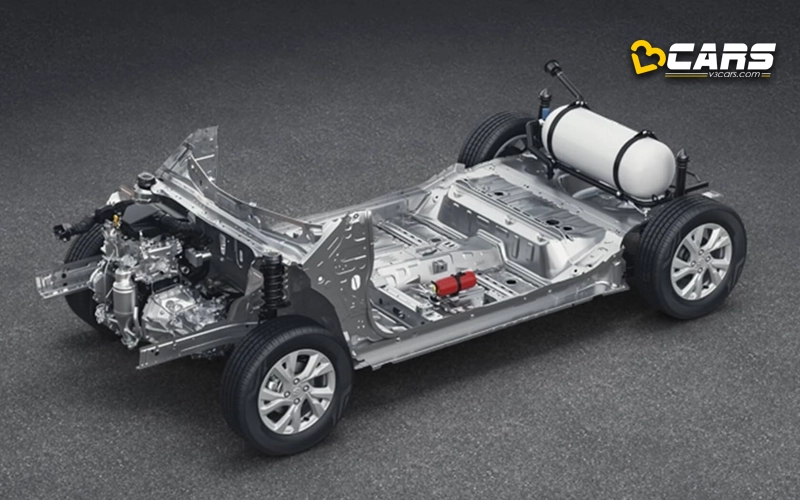
- Unlike the Grand i10 Nios and Tiago CNG, which position their twin CNG cylinders below the luggage area, the Swift uses a single large cylinder inside the boot and loses significantly more usable luggage space
- No option of CNG-automatic powertrain, which is available with the Tiago and Altroz
- Nothing groundbreaking — no feature of the 2026 Swift warrants attention; it’s all available in the market at similar or lower price points
What Is The Price Of 2026 Maruti Suzuki Swift Petrol And CNG Variants?
The 2026 Swift is available in the following 4 main variants:
- LXI
- VXI
- ZXI
- ZXI Plus
All 4 variants get the 1.2L normal petrol-manual powertrain. The petrol-AMT and CNG-manual models are available from the VXI.
The following table lists the latest ex-showroom prices of the 2026 Swift:
The ZXI Plus dual-tone variants cost another Rs. 15,000 over their corresponding monotone versions. The Swift currently costs between Rs. 5.84 lakh and Rs. 8.89 lakh (ex-showroom).
Should You Buy The Maruti Suzuki Swift CNG Over Petrol?
The Swift CNG costs Rs. 89,500 more than the comparable petrol-manual variant across the VXI, VXI (O) and ZXI trims.
At the time of updating this article, petrol costs Rs. 102.12 per litre in Delhi while CNG costs Rs. 83.09 per kg. The Swift petrol-manual offers a claimed fuel efficiency of 24.80kmpl, while the CNG-manual offers 32.85kmpkg.
Based on these figures, the Swift petrol-manual costs about Rs. 4.12 per kilometre to run. The CNG version costs about Rs. 2.53 per kilometre. This gives the Swift CNG a fuel-cost advantage of roughly Rs. 1.59 per kilometre.
With an upfront price difference of Rs. 89,500, you will need to drive roughly 61,000km to recover the higher ex-showroom price of the CNG version through fuel savings alone.
This calculation does not account for differences in insurance, financing, maintenance or resale value. The CNG version also produces less power and torque than the petrol engine. Its single CNG cylinder also takes up a significant portion of the boot.
At current Delhi fuel prices, the Swift CNG should recover its Rs. 89,500 price premium over the equivalent petrol-manual variant after roughly 61,000km. However, CNG buyers also have to accept lower performance and a significant loss of usable boot space because of the single-cylinder layout. Therefore, the Swift CNG makes the most sense for buyers with sufficiently high running to recover the additional upfront cost and justify these compromises.
Maruti Suzuki Swift LXI — Base Model Standard Features
The base LXI variant of the Maruti Suzuki Swift only gets the 1.2L petrol engine and a manual transmission. It costs Rs. 5.84 lakh (ex-showroom) and gets the following notable features:
The base variant seems to have several must-have features but you may miss the following notable features:
- Touchscreen/music system
- Rear parcel tray
- Steering wheel-mounted controls
- Height-adjustable driver seat
- Wheel covers
- TPMS
- Day/night inside mirror
- Internally-adjustable outside mirrors (manual or powered)
The Swift LXI is suitable for petrol-manual buyers on a tight budget. It covers several must-have features and is the most affordable way to buy the Swift. However, buyers who can stretch their budget should consider the ZXI rather than upgrading to the VXI or VXI (O), as both of those variants offer relatively poor value for their respective premiums.
Maruti Swift LXI vs VXI & VXI (O) Variant - Price, Feature Comparison
From the VXI variant onwards, you get the petrol-automatic and CNG powertrain options with the Swift. The VXI costs Rs. 6.68 lakh with the petrol-manual, Rs. 7.13 lakh with the petrol-automatic and Rs. 7.57 lakh with the CNG-manual powertrain, all prices are ex-showroom.
The following table compares the prices of the Swift LXI, VXI & VXI (O) variants:
The Swift VXI and VXI (O) variants offer the following additional notable features:
This variant misses out on the following features:
- Auto AC
- Split-folding rear seatbacks
- Tyre pressure monitoring system (TPMS)
- Height-adjustable driver seat
For petrol-manual buyers, the VXI and VXI (O) do not justify their respective premiums over the LXI from a value perspective. The LXI remains the better choice for buyers on a tight budget.
For petrol-automatic and CNG buyers, the VXI is the entry-level option and is suitable if you want to keep the upfront cost in check. The VXI (O), however, costs another Rs. 26,000 and only adds features such as telematics, keyless entry with push-button start/stop and power-folding outside mirrors. It does not offer enough additional value to justify the premium.
Therefore, we recommend skipping the VXI (O) and upgrading to the ZXI if your budget allows.
Maruti Swift VXI vs ZXI Variant - Price, Feature Comparison
The ZXI variant of the Swift costs Rs. 7.62 lakh with the petrol-manual and Rs. 8.07 lakh with the petrol-AMT powertrain while the ZXI CNG-manual costs Rs. 8.51 lakh, all prices are ex-showroom. These prices are Rs. 94,000 higher than those of the corresponding VXI variants.
The following table compares the prices of the Swift VXI and ZXI variants:
The Swift ZXI variant adds the following notable features over the VXI:
You may miss the following features in the ZXI variant:
- Front centre armrest
- Cruise control
- Tyre pressure monitoring system (TPMS)
- Rear centre armrest
- Rear parking-assist camera
The ZXI justifies the Rs. 94,000 premium over the VXI with several useful features such as auto AC, rear AC vents, LED projector headlamps, wireless phone charging, 60:40 split-folding rear seatbacks and a height-adjustable driver seat. It offers substantially better overall value and is the variant we recommend upgrading to.
2026 Maruti Suzuki Swift ZXI vs ZXI Plus Variant - Price, Feature Comparison
The Swift ZXI Plus is only available with the petrol-manual and petrol-AMT powertrains. It costs Rs. 8.29 lakh with the manual and Rs. 8.74 lakh with the AMT. Both options cost Rs. 67,000 more than the corresponding ZXI variants.
The following table compares the prices of the Swift ZXI and ZXI Plus variants:
The Swift ZXI Plus top model offers the following notable features over the lower ZXI variant:
Even in this top-spec model, you may miss features like:
- Rear armrest
- Tyre pressure monitoring system (TPMS)
- Sunroof
The Swift ZXI Plus also gets 3 dual-tone exterior colour options for another Rs. 15,000.
The ZXI Plus does not justify the full Rs. 67,000 premium over the ZXI from a value perspective. However, it is still worth considering if you specifically want features such as cruise control, the larger 9-inch touchscreen, rear camera and machined alloy wheels. Otherwise, the lower ZXI offers better overall value.
Which Variant Of The 2026 Maruti Suzuki Swift Petrol Or CNG Should You Buy?
For Swift petrol-manual buyers, the LXI is suitable if you want to keep the upfront cost as low as possible. The VXI and VXI (O), however, offer poor value for their respective premiums and are worth skipping.
The ZXI offers the best balance of price, features and overall usability in the petrol-manual range, which makes it our top recommendation. It adds several useful features such as auto AC, rear AC vents, LED projector headlamps, wireless phone charging, 60:40 split-folding rear seatbacks and a height-adjustable driver seat.
The ZXI Plus costs another Rs. 67,000 over the ZXI and adds features such as cruise control, a larger 9-inch touchscreen, rear camera and machined alloy wheels. It offers weaker value than the ZXI, but is still worth considering if you specifically want these additional features.
For Swift petrol-automatic buyers, the VXI is suitable if you want to keep the upfront cost in check. The VXI (O), however, offers poor value for its Rs. 26,000 premium and is worth skipping in favour of the higher ZXI variant.
The ZXI offers the best value in the Swift petrol-AMT range and is our top recommendation. For Rs. 68,000 more than the VXI (O), it adds several useful features such as auto AC, rear AC vents, LED projector headlamps, wireless phone charging, 60:40 split-folding rear seatbacks and a height-adjustable driver seat.
The ZXI Plus costs another Rs. 67,000 over the ZXI and adds features such as cruise control, a larger 9-inch touchscreen, rear camera and machined alloy wheels. It does not offer as much value as the ZXI, but it is worth considering if you specifically want these additional features.
Compared with the equivalent petrol-manual variants, the Swift CNG costs Rs. 89,500 more. At current Delhi fuel prices, you will need to drive roughly 61,000km to recover this premium through fuel savings alone. The CNG variants also offer lower power and torque, while the single CNG cylinder takes up a significant portion of the boot. Therefore, the Swift CNG makes the most sense for buyers with sufficiently high running who can justify these compromises.
The Maruti Swift CNG VXI is suitable if you want to keep the upfront cost in check. The VXI (O), however, offers poor value for its Rs. 26,000 premium and is worth skipping in favour of the higher ZXI variant.
The ZXI offers the best value in the Swift CNG range and is our top recommendation. For Rs. 68,000 more than the VXI (O), it adds several useful features such as auto AC, rear AC vents, LED projector headlamps, wireless phone charging, 60:40 split-folding rear seatbacks and a height-adjustable driver seat.
What Are The Engine Specifications Of The Maruti Suzuki Swift Petrol?
The Swift gets a 1.2L 3-cylinder normal petrol engine, which makes 82PS of power and 112Nm of torque. It is available with a 5-speed manual and a 5-speed AMT.
The Swift produces slightly less power and torque than the Grand i10 Nios and Tiago. However, its claimed fuel efficiency is significantly better. The Swift petrol-manual offers 24.80kmpl, while the petrol-AMT offers 25.75kmpl.
The following table compares the Swift petrol engine specifications with its direct rivals:
*Estimated
The Swift and Tiago use 3-cylinder petrol engines, while the Grand i10 Nios gets a 4-cylinder engine - which should technically have less NVH. The Swift, however, easily leads this comparison in claimed fuel efficiency.
Note: You can use our Fuel Cost Calculator to see how much any petrol, diesel or CNG car will cost to run based on the latest fuel price in your city.
What Are The Engine Specifications Of The Maruti Suzuki Swift CNG?
The Swift CNG uses the same 1.2L normal 3-cylinder engine as the Swift petrol. In CNG mode, it produces 70PS of power and 102Nm of torque. It is only available with a 5-speed manual transmission and offers a claimed fuel efficiency of 32.85kmpkg.
The following table compares the Swift CNG powertrain specifications with its direct rivals:
The Swift CNG offers the highest torque and the best claimed CNG fuel efficiency among these 3 hatchbacks. Its peak torque also arrives at a lower RPM than the Nios and Tiago CNG.
The Tiago CNG, however, produces the most power and is the only one here available with an automatic transmission. The Grand i10 Nios is the only CNG car in this comparison with a 4-cylinder engine.
What Are The Dimensions Of The 2026 Maruti Suzuki Swift?
The Swift is the longest and widest car among its direct rivals. It shares its 2450mm wheelbase with the Grand i10 Nios but has the lowest ground clearance at 163mm.
The following table compares the Swift's dimensions and CNG packaging with the Grand i10 Nios and Tiago:
*Estimated
While the petrol Swift has the largest boot in this comparison, its CNG version places a single large cylinder inside the boot. Maruti Suzuki do not provide a boot-space figure for the Swift CNG.
The Grand i10 Nios and Tiago position 2 smaller CNG cylinders below the luggage area. This leaves considerably more usable space above the cylinders. We estimate that the Nios CNG offers around 120L of usable boot space, while the Tiago CNG offers around 107L.
Even without an official boot space figure for the Swift CNG, its single-cylinder position has a much greater impact on usable luggage space. Therefore, the Swift’s petrol boot-space advantage does not carry over to the CNG version.
Note: Find out how you can get the best mileage or fuel efficiency from your car with our mileage guide - 10 Tips To Get Better Mileage From Your Petrol, Diesel Or CNG Car
What Are The Colour Options Of The Maruti Suzuki Swift?
The 2026 Swift is available in 6 monotone and 3 dual-tone exterior colour combinations:
- Red
- Blue
- Orange
- Grey
- Silver
- White
- Red with black roof
- Blue with black roof
- White with black roof
However, colour availability depends on the variant. Check out all variant-wise Swift colour options.
The 3 dual-tone colour options are only available with the ZXI Plus petrol variants and cost Rs. 15,000 more than the corresponding monotone variants.
Note: Here is a quick look at our latest length-based segmentation of cars to give you an idea of how we are classifying cars based on their size.
*Despite its 4460mm length, the Kia Seltos is classified as a C1-segment SUV based on its market positioning and direct rivals.
Also Read: 2026 Maruti Suzuki Brezza Petrol, CNG Turbo Variants Explained - Which One To Buy?
Before you finalise your next car, these V3Cars tools can help you make a more informed decision:
Fuel Cost Calculator for Cars – Know your monthly fuel expense based on usage and mileage
Car On-Road Price Calculator – Convert ex-showroom to on-road price for any city
Sell Used Car Online – Enter your car and contact details to get an instant price estimate and book a free inspection with our partner network
Did you find this information helpful?
Car News Update
View All Latest NewsExpert Car Reviews
View All Car ReviewsLatest Videos
View All Car Latest VideosUpcoming Cars In India
View All Upcoming Cars
Comments
0 comments