

Published : 18 May 2026
Read Time : 5 min
Author: V3Cars Editorial Desk
In this article, we’ll provide real-world city range and highway range of all the EV cars tested by V3Cars. We’ll compare the city and highway range of all cars against claimed range figures so you can see how much their real-world range deviates from the claimed numbers.

We’ll also provide you with the list of cars according to their realistic range that you can expect based on mixed city-highway usage (city 50:50 highway, city 70:30 highway & city 30:70 highway). This will help you gauge what range you can expect based on your driving requirements. Next, we’ll list out the charging cost based on the same 3 mixed usage conditions (city 50:50 highway, city 70:30 highway, city 30:70 highway). Lastly, we’ll provide you with the driving range of all V3Cars tested models based on the minimum and maximum driving range you can expect based on city driving and highway driving on a 100% of battery charge.
Electric Cars With Best Real-World City Efficiency
Among all the EVs we have tested so far, the Hyundai Creta EV LR is the most efficient in city driving, delivering 9.15kmpu. That is only 8.50% lower than its claimed efficiency of 10.00kmpu, making it not only the most efficient EV in this list but also the closest to its official claim.
At the other end of the list, the Mahindra XEV 9S LR showed the highest deviation from its claimed efficiency. It delivered 5.08kmpu against a claimed figure of 8.59kmpu, which is a 40.86% drop. The Mahindra BE 6 LR also showed a high deviation of 37.80%, making both Mahindra EVs the furthest from their claimed efficiency figures in our city test.
Interestingly, the top 3 cars in this list — the Creta EV LR, Carens Clavis EV LR and Nexon EV LR — all use relatively smaller battery packs, suggesting that weight, drivetrain tuning and city-use optimisation play a major role in real-world EV efficiency.
However, lower efficiency does not always mean lower overall range. Larger-battery EVs like the Mercedes-Benz EQS SUV 450 may consume more units per kilometre in city use, but their bigger battery packs can still help them deliver a long driving range on a full charge. For buyers, though, higher city efficiency directly translates to lower running costs, especially if most of their driving is within urban areas.
Electric Cars With Best Real-World Highway Efficiency
In terms of highway efficiency too, the Hyundai Creta EV LR with the 51kWh battery sits safely at the top with a tested efficiency figure of 7.08kmpu. However, this is still 29.2% lower than its claimed efficiency of 10.00kmpu, showing how much highway driving can affect EV efficiency.
The Tata Nexon EV LR showed the highest deviation from its claimed number. It delivered 6.06kmpu against a claimed efficiency of 11.34kmpu, which is a 46.56% drop. However, the lowest tested highway efficiency came from the Tata Harrier EV QWD, which managed 4.49kmpu.
The highway test also highlights a typical EV behaviour — efficiency drops at higher cruising speeds. Unlike city driving, where EVs can recover some energy through regenerative braking, highway driving involves sustained higher speeds and greater aerodynamic drag. As a result, none of the EVs in this list managed to match or beat their claimed efficiency figure.
Interestingly, the most efficient EV was not the one closest to its claimed figure. The Creta EV LR delivered the highest highway efficiency, while the BMW iX1 had the lowest deviation from its claimed number. The iX1 delivered 5.76kmpu against a claimed efficiency of 8.05kmpu, resulting in a deviation of 28.45%.
For buyers, the key takeaway is that highway range can be significantly lower than the claimed range. Even the best-performing Creta EV LR was nearly 30% below its claimed efficiency, so long-distance EV users should plan charging stops with a healthy buffer. At the same time, a larger battery can still compensate for lower efficiency. For instance, based on our tested highway efficiency, the Mercedes-Benz EQS SUV 450 could still deliver a higher estimated highway range than the Creta EV LR because of its much larger 122kWh battery.
City Highway Mixed Usage vs Claimed Range (50:50 City-Highway Usage)
The following table presents the range with a mixed usage (50:50 city-highway split) that you can expect from the electric cars we have tested so far:
In a 50:50 city-highway usage cycle, the Mercedes-Benz EQS SUV 450 delivers the highest real-world mixed range among all the EVs tested so far. With its large 122kWh battery pack, it managed a calculated mixed-use range of 573km against a claimed range of 821km. That is a 30.21% deviation from the claimed figure.
However, the EQS SUV 450’s top position is largely down to its massive battery capacity rather than outright efficiency. In the city and highway efficiency tables, it was among the least efficient EVs, but the 122kWh battery helps it deliver the longest usable range in mixed driving conditions.
The Hyundai Creta EV LR is one of the strongest performers in this table. Despite having a much smaller 51kWh battery pack, it delivers a mixed-use range of 410km, which puts it very close to the larger-battery Mahindra BE 6 LR (414km) and XEV 9S LR (412km). More importantly, it has the lowest deviation from its claimed range at 19.61%, making it the most consistent EV here in terms of real-world range versus claimed range.
At the bottom of the table is the Tata Nexon EV LR, with a mixed-use range of 266km against a claimed range of 465km. It also has the highest deviation in this table at 42.80%, making it the furthest from its claimed range figure in mixed real-world usage.
For buyers, the key takeaway is that claimed range alone does not tell the full story. Larger battery packs help deliver longer total range, but efficiency and real-world consistency matter just as much.
City Highway Mixed Usage vs Claimed Range (70:30 City-Highway Usage)
For buyers who have a heavier bias towards city driving, the following table presents the real-world range with mixed usage that they can expect with these EV cars:
The Mercedes-Benz EQS SUV 450 remains at the top with a calculated 70:30 mixed-use range of 568km against a claimed range of 821km. That is a 30.82% deviation from the claimed figure. Its lead is mainly because of its massive 122kWh battery pack, rather than high efficiency.
The Hyundai Creta EV LR is the strongest overall performer in this table. Despite using a much smaller 51kWh battery, it delivers a 70:30 mixed-use range of 432km, placing it second overall. More importantly, it has the lowest deviation from its claimed range at just 15.29%. This makes the Creta EV LR the most consistent EV here when compared with its claimed range, and the most impressive result for buyers who mainly drive in the city.
For buyers, the key takeaway is that a city-heavy usage pattern improves real-world range for most EVs. The EQS SUV 450 offers the longest range overall, but the Creta EV LR is the more impressive efficiency story because it comes close to the larger-battery EVs while using a much smaller battery pack. If claimed-range accuracy matters, the Creta EV LR and Carens Clavis EV LR are the two strongest performers in this 70:30 city-highway usage cycle.
City Highway Mixed Usage vs Claimed Range (30:70 City-Highway Usage)
For buyers who spend more time on highways than in the city, this 30:70 city-highway range table gives a more relevant estimate of real-world EV range. Since highway driving usually reduces EV efficiency, most cars deliver a lower range here than they do in the 70:30 city-heavy usage cycle.
The Mercedes-Benz EQS SUV 450 continues to lead the table with a calculated mixed-use range of 577km against a claimed range of 821km. That is a 31.50% deviation from the claimed figure.
The Hyundai Creta EV LR remains one of the standout performers. With a much smaller 51kWh battery, it still delivers a 30:70 mixed-use range of 390km, placing it close to the larger-battery BMW iX1 and Tata Harrier EV QWD. More importantly, it has the lowest deviation from its claimed range at just 8.50%, making it the most consistent EV here against its official range claim.
At the bottom of the table is the Tata Nexon EV LR, with a 30:70 mixed-use range of 257km against a claimed range of 465km. Its deviation stands at 36.77%, which is high, though not the highest in this table. Its smaller 41kWh battery is also a major reason for its lower absolute range.
For buyers, the key takeaway is that highway-heavy usage changes the ranking significantly. The EQS SUV 450 offers the longest real-world range, while the Mahindra XEV 9S LR and BE 6 LR benefit from their larger battery packs. However, the Creta EV LR remains the most impressive consistency story, delivering close to 400km of calculated mixed-use range from a 51kWh battery while staying closest to its claimed range figure.
Cost Per Kilometre (Assumption Charging Cost @ Rs. 23 per unit)
The Hyundai Creta EV LR is the most affordable EV to run across all driving conditions in this table. Its running cost ranges from Rs 2.51/km in city use to Rs 3.25/km on the highway, making it the only EV here that stays close to or under Rs 3/km in most mixed-use conditions. This is consistent with its strong showing in both the city and highway efficiency tests.
Here’s a look at what you can expect to pay per kilometre in charging cost based on your driving requirements ranging from 100% city to 100% highway. One important point to note is that this table assumes a charging cost of Rs 23 per unit. Actual running cost will vary depending on whether the owner charges at home, at the office, or at public fast chargers. Home charging could make these cars significantly cheaper to run, while frequent public DC fast charging could push the per-km cost higher:
The BMW iX1 LWB sits in the middle of the table, with costs ranging from Rs 3.83/km in the city to Rs 3.99/km on the highway. What stands out is its consistency — the difference between its city and highway running cost is quite small. That suggests its efficiency is more stable across different driving conditions compared to several other EVs in this list.
The Mercedes-Benz EQS SUV 450 is among the most expensive EVs to run in almost every usage pattern. Its cost ranges from Rs 4.99/km in the city to Rs 4.81/km on the highway. The slight improvement on the highway is interesting, but the overall cost remains high because of its lower real-world efficiency and large, heavy vehicle format.
For buyers, the key takeaway is simple: the Creta EV LR is the most cost-efficient EV in this test set, while the Kia Carens Clavis EV LR and Tata Nexon EV LR are also strong low-cost options. At the other end, the Mercedes-Benz EQS SUV 450 and Tata Harrier EV QWD are the most expensive to run depending on the driving pattern. The EQS is costlier in city and mixed usage, while the Harrier EV QWD becomes the most expensive in pure highway use.
In terms of real-world driving range, the Mercedes-Benz EQS SUV 450 is clearly in a league of its own. It is the only EV in this list that managed to stay above 500km in all tested usage conditions, with an estimated real-world range of 562km to 583km. This is mainly because of its massive 122kWh battery pack, which helps it overcome its relatively lower efficiency.
Cars With Best Real-World Driving Range On A Full Charge
The Hyundai Creta EV LR is the most impressive mainstream performer here. Despite using a much smaller 51kWh battery pack, it delivers a real-world range of 361km to 467km, placing it second in terms of maximum range. Its upper range figure is almost as high as the Tata Harrier EV QWD, which has a much larger 75kWh battery pack. This again highlights how efficient the Creta EV LR is in real-world driving.
The Tata Harrier EV QWD also performs strongly, with a real-world range of 337km to 466km. Its best-case range is very close to the Creta EV LR, but its minimum range is lower, which suggests that its range is more sensitive to driving conditions — especially highway-heavy usage.
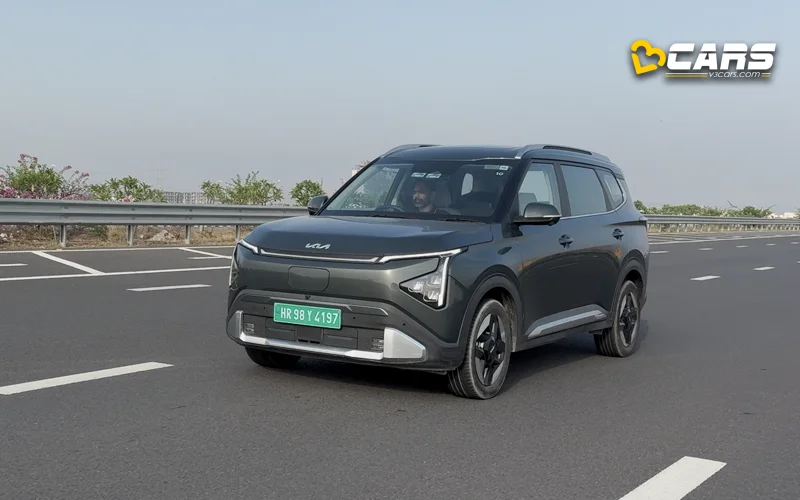
The Kia Carens Clavis EV LR offers a wide real-world range of 306km to 444km. Like the Creta EV LR, it uses a 51kWh battery pack, but its minimum range is lower. This means it can deliver strong range in favourable city-heavy conditions, but highway use has a bigger impact on its overall range.
The Mahindra BE 6 LR and Mahindra XEV 9S LR are closely matched, with real-world range bands of 404km to 425km and 401km to 423km, respectively. Both use the same 79kWh battery pack, and both offer a narrower range spread than many other EVs here. This suggests their range is relatively consistent across different usage conditions, even though their claimed-range deviation is on the higher side.
Interestingly, the Mahindra XEV 9S LR and the Mercedes-Benz EQS SUV 450 deliver slightly higher range on the highway than in the city, which is not common for EVs. This could make them better suited to inter-city trips than their city efficiency numbers may suggest. However, the difference is not huge, so it should be read as a test-cycle observation rather than a universal rule.
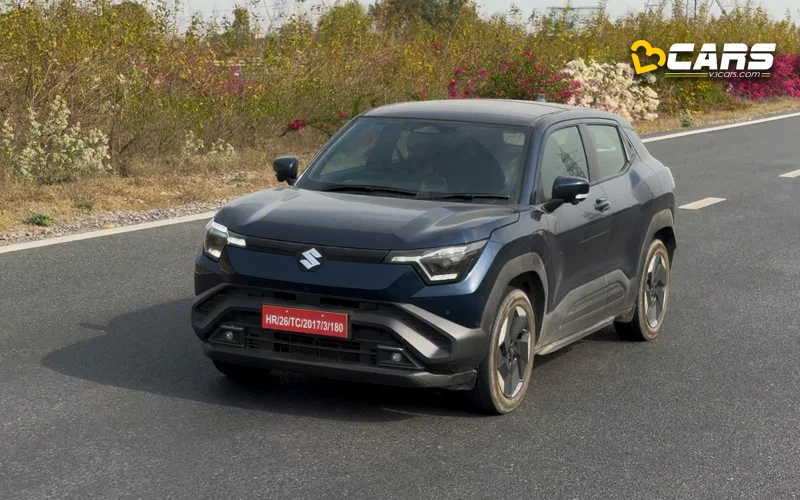
The Maruti Suzuki E-Vitara sits in the middle with a real-world range of 338km to 403km. Its range spread is moderate, and it should offer a usable range for both city and mixed usage. However, it does not match the Creta EV LR or Carens Clavis EV LR in terms of extracting maximum range from a similar-sized battery pack.
The BMW iX1 LWB has the narrowest real-world range band in this table, at 380km to 396km. That suggests it is one of the most consistent EVs here across city, highway and mixed usage. However, despite having a 66kWh battery pack, its maximum range is lower than the Creta EV LR, Carens Clavis EV LR and both Mahindra EVs.
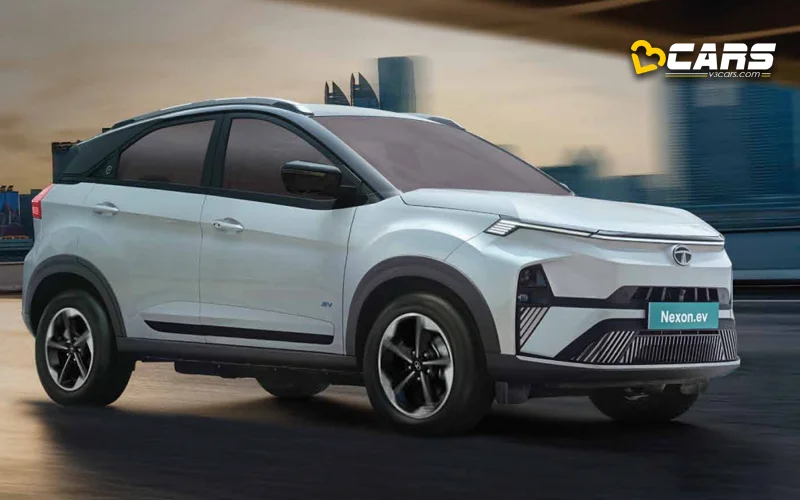
At the bottom of the table is the Tata Nexon EV LR, with a real-world range of 248km to 294km. Its smaller 41kWh battery pack is the main reason for the lower absolute range. While it remains one of the more affordable EVs to run per kilometre, buyers planning frequent long-distance trips will need to factor in more charging stops.
For buyers, the key takeaway is that battery size helps, but efficiency decides how well that battery is used. The EQS SUV 450 offers the highest real-world range because of its huge battery pack, while the Creta EV LR stands out as the most efficient mainstream EV in this list. The Mahindra BE 6 LR and XEV 9S LR offer strong and consistent 400km-plus real-world range, while the BMW iX1 LWB is the most stable across different driving conditions.
Helpful Links:
Fuel Cost Calculator for Cars – Know your monthly fuel expense based on usage and mileage
Car On-Road Price Calculator – Convert ex-showroom to on-road price for any city
Sell Used Car Online – Enter your car and contact details to get an instant price estimate and book a free inspection with our partner network