

Published : 15 September 2021
Read Time : 5 min
Author: Mahesh Yadav
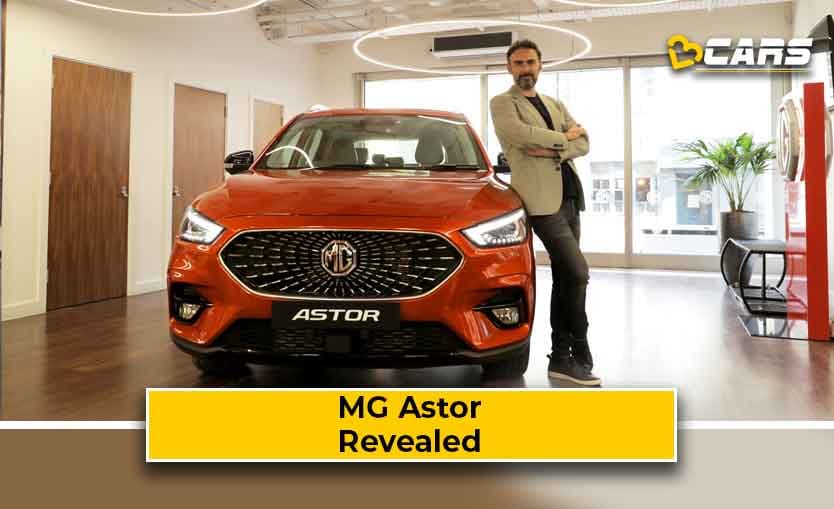
We finally have a complete look at what all the MG Astor is going to offer and what it’s going to look like. Astor’s unique strengths lie in its technology features. So, let’s start off with the boring stuff like the engine and get that out of the way.
MG Astor Engine Options
The Astor has 2 petrol engine options - a 1.5-litre normal petrol engine and a 1.4-litre turbo petrol engine. The normal petrol engine gets a 5-speed manual and a CVT automatic transmission option. The turbo petrol engine only has a 6-speed torque converter automatic as the transmission option.
The power and torque output are par for the course and nothing extraordinary.
*RPM details are not available at the moment.
MG Astor Dimensions
The MG Astor is 4323mm long, 1809mm wide and 1650mm tall. MG Astor’s wheelbase measures 2580mm long. These figures are also about what we’d expect from a car of this class, which hopes to go up against its prime rivals like the Kia Seltos and Hyundai Creta.
MG Astor Steering Feel Selector
The Astor will come with a steering “feel” or mode selector, which will change the way the steering feels while driving. Some drivers prefer light steering while some prefer a heavy feel. The Astor will let you decide how you want the steering.
You can also make it light in slow traffic with Urban mode and set it to a heavy feel for highways with Dynamic mode. Alternatively, you can choose the Normal mode to automatically weigh up as the speed increases.
MG Astor Companion AI Bot
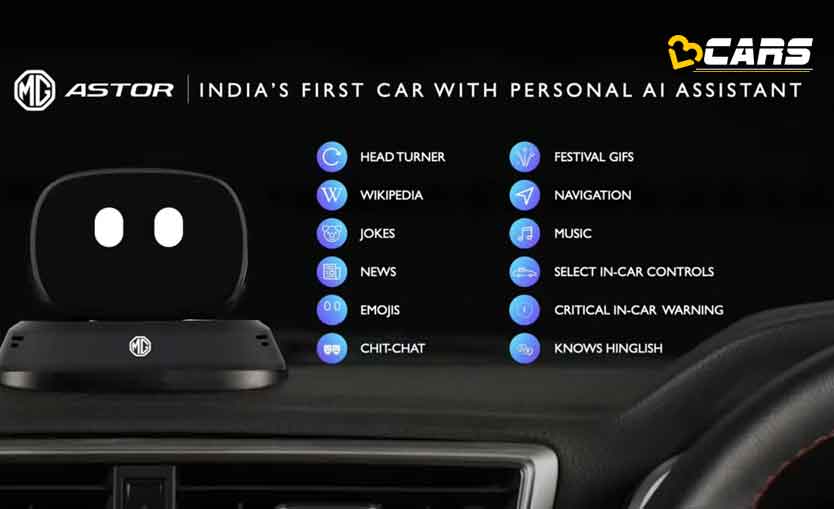
The small screen bot with a human voice will accompany the driver and occupants. This mini bot has a 4.5-inch screen to display emotions and possibly information we ask of it.
The companion mini-bot is an advanced version built upon the chit-chat feature, which was first offered with the MG Hector and Gloster. The ‘chit-chat’ feature lets the occupants chat with the car’s AI bot to get through a boring journey with some jokes, trivia or other information. However, it mainly benefits the driver when there is no one else in the car to chat with.
MG Astor Digital Key
In case you forget to bring the key along, you can occasionally use the MG Astor’s digital key from your smartphone. The technology works over Bluetooth and the surprising feature here is that you can not only lock/unlock the car but also drive away using only your phone. However, MG recommends that you keep the key with you could end up stranded in case the car’s battery runs out or some software or hardware malfunction.
ADAS Features Of MG Astor
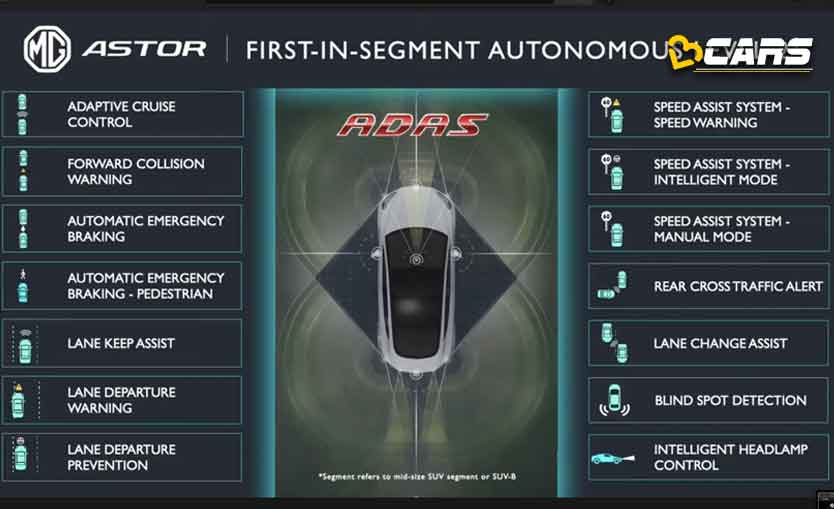
The Astor’s advanced driver-assist features include:
- Forward collision warning
- Automatic emergency braking
- Lane departure warning
- Lane keep assist
- Adaptive cruise control
- Traffic sign recognition and speed warning
- Pedestrian detection and full auto-braking
- Rear cross-traffic alert
- Blindspot alert
- Auto-high beam on/off
- 360-degree camera
The forward-collision warning system will warn the driver with beeps if it senses the chances of a possible collision. If the speed is more than 40kmph at the time of threat detection, then it’ll slow down the car to below 40kmph to contain the impact force. If the Astor detects a potential collision threat while you’re driving below 40kmph, then the car will attempt to avoid it by fully braking to a complete stop. The car will only intervene with the automatic braking if the driver ignores the warning beeps.
Unique Features of MG Astor
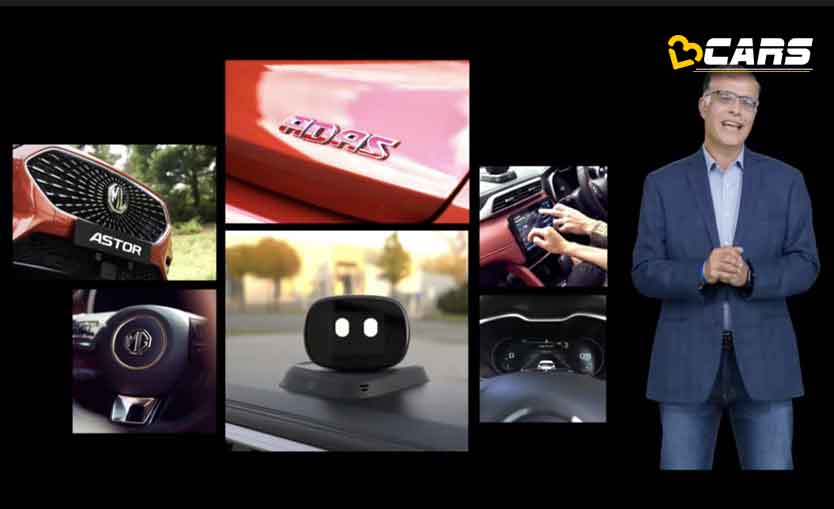
Other unique and notable features of the MG Astor are:
- 3 interior colour options (dual-tone brown, dual-tone white, full black)
- 6-way power driver seat
- Panoramic sunroof with 90% roof area coverage
- Electronic parking brake
- Auto wiper
- PM 2.5 air filter
- Heated outside mirrors
- Traction control
- Hill descent control
- Front and rear armrests
- 7-inch full-colour instrument control
- Electronic Stability Control
- Keyless entry and push-button start/stop
- Auto AC
- Projector headlamps and LED DRLs
MG Astor Price - Expected
Considering the engine-transmission options, performance figures and most importantly, the features of the Astor, we are expecting the Astor to start at Rs. 9.9 lakh for the base variant.
The top-spec variant with the turbo petrol engine, the automatic transmission, and all the gizmos could cost around Rs. 16 lakh ex-showroom. With these prices, the Astor has enough firepower to challenge the South Korean twins’ might in the C-segment SUV space.
MG Astor Launch Date - Expected Timeline
MG will make the car available at their dealerships starting September 19. Within the next few days, dealers will start accepting bookings for the Astor. We are expecting MG to reveal the complete variant-wise price list of the Astor sometime in the first or second week of October.