
IIT Madras Released Paediatric Cancer Genome Database (Press Release) | V3Cars
IIT Madras released a first-of-its-kind cancer genome database covering paediatric leukaemia, colorectal, and pancreatic cancers, marking a major step towards strengthening India’s cancer research ecosystem and enabling population-specific precision medicine.
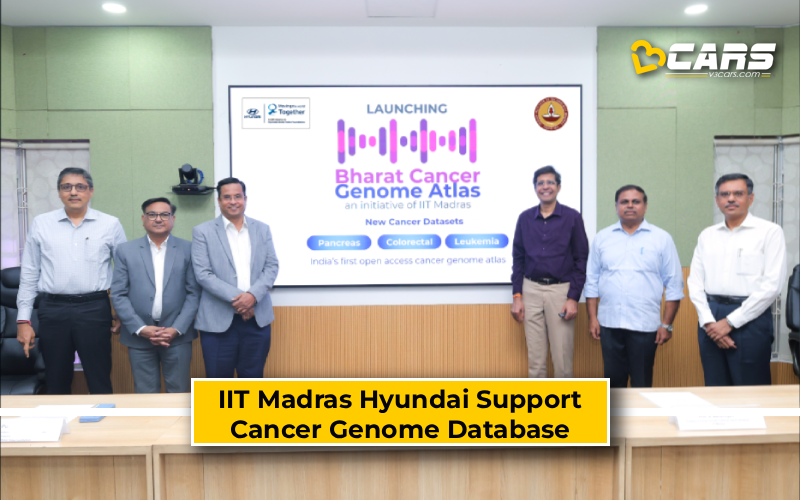
Here’s what IIT Madras have to say about the cancer genome database release:
Cancer continues to be one of the most fatal health challenges globally, with India witnessing a steady rise in cases. A recent Indian Council of Medical Research report highlighted that the number of people living with cancer in the country continues to increase. Data from the National Cancer Registry Program indicates that one in nine people in India is likely to develop cancer in their lifetime, with approximately 2.5 million people currently living with the disease. Cancer incidence has risen by 12.8 percent annually since 2022.
Despite the high disease burden, India has remained under-represented in global cancer genome studies. In the absence of a comprehensive genomic architecture of cancers prevalent in the country, India-specific genetic variants have not been adequately captured or catalogued for diagnostic kits and drug development. To address this gap, IIT Madras initiated the Indian Cancer Genome Program in 2020, under which whole genome sequencing of leukaemia, colorectal and pancreatic cancer patient samples collected across the country has now been completed.
The research was enabled through Hyundai’s CSR support via the Hyundai Hope for Cancer programme, aligned with the Hyundai Hope on Wheels initiative. IIT Madras collaborated with Karkinos Healthcare, Mumbai, the KK Childs Trust Hospital, Chennai, Institute of Child Health, Chennai, Government Rajiv Gandhi Hospital, Chennai, and Kumaran Hospital, Chennai, to analyse the data and assemble anonymised summaries of genetic variants from Indian cancer samples.
As part of this effort, the Bharat Cancer Genome Grid (BCG2) has also been established as a clinician-centric national initiative aimed at accelerating the responsible adoption of whole genome sequencing in routine oncology practice in India. Conceived as a functional and clinical adjunct to the Bharat Cancer Genome Atlas, BCG2 seeks to bridge the gap between large-scale cancer genome data generation and its meaningful application at the patient bedside.
The research was led by IIT Madras’ Centre of Excellence on Cancer Genomics and Molecular Therapeutics, funded under the Government of India’s Institutions of Eminence initiative and the Hyundai Centre for Cancer Genomics, with support of INR 56 crore from Hyundai Motor India Foundation. The centre focuses on genomic sequencing to identify genetic mutations, laying the foundation for a national paediatric leukaemia, colorectal and pancreatic cancer genome database and enabling the development of personalised treatment protocols.
Through this partnership, the centre also actively conducts cancer screening and vaccination camps, undertakes upskilling of technicians, and deploys mobile medical units to expand healthcare access in underserved regions. In addition, INR 3 crore has been allocated to support cancer treatment for low-income families.
Prof. V. Kamakoti, Director, IIT Madras, formally announced the generation and release of the Indian cancer genome sequences on campus on 4 February 2026. Highlighting the significance of the initiative, he said:
“True to our ‘IITM for all’ commitment to society, we are releasing yet another genome data, the Leukaemia, Colorectal and Pancreatic Cancer Genome data. We hope that this will provide deep insights on reasons leading to this deadly disease and help preventing the same with early interventions. The Atlas fills the gap in genomic landscape from different cancers in the country. It provides a compendium of genetic variants representing the contemporary Indian leukaemia, colorectal and pancreatic cancer patients to classify variants involved in early diagnostics, disease progression, and treatment outcomes.”
Elaborating on the initiative, Prof. S. Mahalingam, Project Coordinator and Head of the Centre of Excellence on Cancer Genomics and Molecular Therapeutics and the Hyundai Centre for Cancer Genomics, IIT Madras, said:
“This database will be an invaluable resource to identify cancer-specific biomarkers in India, which will enable early detection of paediatric leukaemia, colorectal and pancreatic cancers. Further, it will also be very useful to identify novel drug targets for developing better treatment strategies specific to the Indian population.”
Speaking on Hyundai’s involvement, Mr. Gopala Krishnan CS, Whole Time Director and Chief Manufacturing Officer – HMIL and Trustee, HMIF, said:
“At Hyundai, our global vision ‘Progress for Humanity’ guides us to create meaningful impact beyond mobility. Through the Hyundai Hope for cancer program, we are committed to advancing equitable, technology-driven cancer care for India. Our partnership with IIT Madras on the Bharat Cancer Genome Atlas and the Bharat Cancer Genome Grid reflects this commitment. By supporting genomic research, early detection, and access to treatment for underprivileged families, we aim to strengthen India’s foundation for precision oncology and bring hope to countless children and families impacted by cancer.”
Speaking on the objectives of the Bharat Cancer Genome Atlas, Prof. S. Mahalingam said:
“BCGA aims to host data from researchers working on cancer genomics across multiple cancer types and will be open to accepting submissions. The data will be utilized to identify biomarkers for high-risk groups, monitor cancer progression, design strategies for personalized treatment, and understand treatment outcomes.”
The Genome Atlas provides insights into the genetic basis of cancer progression and evolution and supports India’s transition toward personalised medicine by integrating genetic and molecular information into clinical decision-making. Working in synergy with BCGA, BCG2 aims to create an ecosystem that empowers oncologists, addresses population-specific genomic realities, and establishes unified frameworks for clinical implementation to ensure the benefits of precision medicine reach cancer patients across the country.
The analysis was conducted under the National Center for Precision Medicine in Cancer, a joint initiative between IIT Madras and Karkinos Healthcare focused on advancing interdisciplinary research and developing affordable cancer care solutions. The institute has acknowledged the support of Hyundai Motor India and the Department of Science and Technology, Ministry of Science and Technology, Government of India, for the Cancer Tissue Biobank facility at IIT Madras.
Also Read:
Helpful Links:
Fuel Cost Calculator for Cars – Know your monthly fuel expense based on usage and mileage
Car On-Road Price Calculator – Convert ex-showroom to on-road price for any city
Sell Used Car Online – Enter your car and contact details to get an instant price estimate and book a free inspection with our partner network
ABOUT THE AUTHOR

Jackson Kumar
Jackson is drawn to SUVs with presence—big, bold, and impossible to ignore. From the Mahindra Thar to the Range Rover, he admires vehicles that speak strength and power, even if he’d rather avoid the chaos of driving.
0 Comments
Hyundai Cars in India
Ioniq 5
₹55.70 lakh*
*Ex-showroom priceExter
₹5.80 - ₹9.57 lakh*
*Ex-showroom priceVerna
₹10.98 - ₹18.40 lakh*
*Ex-showroom priceVenue
₹8.00 - ₹15.69 lakh*
*Ex-showroom priceVenue N
Line
₹10.55 - ₹15.48 lakh*
*Ex-showroom priceCreta EV
₹18.02 - ₹24.70 lakh*
*Ex-showroom priceAlcazar
₹14.50 - ₹21.21 lakh*
*Ex-showroom priceCreta N
Line
₹17.83 - ₹20.10 lakh*
*Ex-showroom priceCreta
₹10.79 - ₹20.05 lakh*
*Ex-showroom pricei20
₹5.99 - ₹10.57 lakh*
*Ex-showroom priceAura
₹6.00 - ₹8.54 lakh*
*Ex-showroom priceGrand i10
Nios
₹5.55 - ₹8.03 lakh*
*Ex-showroom pricei20 N
Line
₹9.22 - ₹11.67 lakh*
*Ex-showroom priceUpcoming Hyundai Cars
Creta 3rd-Gen
₹11.49 - ₹21.50 lakh*
*Expected PriceExpected Launch Jan 2027
Next-Gen Grand
i10 Nios
₹6.30 - ₹8.99 lakh*
*Expected PriceExpected Launch Apr 2027
Next-Gen Aura
₹6.80 - ₹9.50 lakh*
*Expected PriceExpected Launch May 2027
Stargazer
-
*Expected PriceExpected Launch Jun 2027
Verna N
Line
-
*Expected PriceExpected Launch Jul 2027
Bayon
₹8.00 - ₹12.00 lakh*
*Expected PriceExpected Launch Jul 2027
Sonata Facelift
-
*Expected PriceExpected Launch Dec 2027
Ioniq 6
2026
₹65.00 - ₹80.00 lakh*
*Expected PriceExpected Launch Feb 2028
Kona EV
Facelift
-
*Expected PriceExpected Launch Feb 2028
Staria
₹45.00 - ₹55.00 lakh*
*Expected PriceExpected Launch Oct 2028
Venue XRT
₹12.49 lakh*
*Expected PriceExpected Launch Nov 2028
Next Gen
Elantra
-
*Expected PriceExpected Launch Dec 2028
Palisade
-
*Expected PriceExpected Launch Jan 2029
Venue Facelift
-
*Expected PriceExpected Launch Mar 2029
Santa FE
-
*Expected PriceExpected Launch Apr 2029
Ioniq 9
₹80.00 - ₹90.00 lakh*
*Expected PriceExpected Launch Jun 2029
Nexo
-
*Expected PriceExpected Launch Feb 2030
Exter XRT
-
*Expected PriceExpected Launch Dec 2030
Inster
₹9.50 - ₹13.00 lakh*
*Expected PriceLaunch Date release soon
Latest Hyundai Cars Videos
Tata Punch vs Hyundai Exter Sub Rs. 9 Lakh Battle | Which Car Is More Value For Money?
Tata Punch vs Hyundai Exter Sub Rs. 9 Lakh Battle | Which Car Is More Value For Money?
Finally! A Hyundai Is More Efficient Than A Maruti | Hyundai Creta EV LR Range Test⚡
Hyundai Exter Variants Explained | HX2, HX3, HX4, HX4+, HX6, HX8, HX10
Hyundai Verna Variants Explained | HX2, HX4, HX6, HX6+, HX8, HX10 | The Ultimate Analysis
Hyundai i20 vs Maruti Fronx | Sub Rs 8 Lakh Battle | Which Car Is More Value For Money?
Hyundai i20 Variants Explained | Era, Magna Executive, Magna, Sportz, Sportz (O), Asta, Asta (O)
Kia Seltos vs Hyundai Creta Sub Rs. 15 Lakh Battle | Which Car Is More Value For Money?
Hyundai Venue vs Maruti Arena Brezza Sub Rs. 10 Lakh Battle | Which Car Is More Value For Money?
Hyundai Venue vs Tata Nexon Sub Rs. 11 Lakh Battle | Which Car Is More Value For Money?
Creta Important Links