

Published : 10 December 2022
Read Time : 5 min
Author: Mahesh Yadav
In this variant explained article, you'll find out which variant of the Kia Sonet diesel you should buy based on the ex-showroom prices, variant-wise features and value for money. Here we compare and objectively analyse the Sonet's diesel variants and the features to figure out which variant is worth buying for a good value for money and ownership experience. Then we will compare the engine specs, dimensions and mileage of the Kia Sonet with its competitors and other diesel-powered B2-segment SUVs like Hyundai Venue, Tata Nexon, Mahindra XUV300 and Honda WRV.

Updated: This update of the Kia Sonet variants explained includes buying recommendations based on the December 2022 prices along with engine and dimension comparison with the new Venue facelift diesel.
What Are The Pros And Cons Of Kia Sonet Diesel?
The pros or advantages of the Kia Sonet diesel are:
- Option of a diesel engine with a manual as well as an automatic transmission even as diesel engines become a dying breed
- Best-in-class mileage figure of 24.1kmpl with the diesel-manual
- The diesel engine carries a nominal premium of Rs. 40,000 - 50,000 over the turbo petrol-ACMT and Rs. 44,000 - 60,000 over turbo petrol-DCT automatic
- A fairly long list of features for the top variant includes - front parking sensors, ventilated seats, sunroof, auto AC, auto-dimming inside mirror, front and rear armrests, premium Bose sound system with subwoofer, tyre pressure sensors, 6 airbags, LED headlamps, LED DRLs and rear window sunshades
- With the diesel engine, the HTX variant offers phenomenal value for money for diesel-manual and diesel-automatic buyers
The Kia Sonet diesel has the following shortcomings or problems:
- Inefficient torque converter automatic transmission’s fluid coupling brings the official ARAI mileage figure down to just 19kmpl, which is the worst in the class
- The base variant misses out on several must-have features while the higher HTK offers poor value for money; thus no variant below Rs. 10.0 lakh offers a decent balance of value and features
- Rear washer wiper is reserved for top variant while rear armrest, LED headlamps, DRLs, sunroof and cruise control are only available in the HTX and higher variants
Also Read: Kia Sonet Petrol Variants Explained - Which One To Buy?
Tata Punch Petrol Variants Explained - Which One To Buy?
Maruti Suzuki Nexa Ciaz Petrol Variants Explained - Which One To Buy?
What Is The Price Of Kia Sonet Diesel Variants?
The Sonet diesel is available in 6 variants with the manual transmission and automatic transmission is available in HTX, GTX Plus and X-Line variants. The ex-showroom prices of the Sonet diesel-manual start at Rs. 9.04 lakh and go up to Rs. 12.99 lakh. The Sonet diesel-automatic costs Rs. 80,000 more than the diesel-manual.
Note: Check your Car EMI with our - Car Loan EMI Calculator
Compared to the Sonet 1.2L normal petrol engine, the diesel variants cost Rs. 1.30 lakh to Rs. 1.56 lakh more. While it may sound like a steep price jump, the diesel engine also offers substantially more power and torque. Compared to the turbo petrol engine, the diesel-manual variants of the Sonet only cost about Rs. 40,000 - 50,000 more. The diesel-automatic range costs Rs. 44,000 to 60,000 more and adds some more power and torque to the equation on top of the diesel-manual’s performance figures.
Kia Sonet Petrol Vs Diesel - Should You Buy Sonet Petrol Or Diesel?
Compared to the 1.2L normal petrol engine, the turbo diesel engine will recover the higher upfront cost in 84,000km and 1,00,000km depending on the variant you pick. Our in house algorithm tells us that the diesel engine justifies some price jump with better performance alone. With that in mind, the diesel engine will recover the remaining higher upfront cost in 18,000km to 34,000km depending on the variant.
Compared to the 1.0L turbo petrol-manual powertrain, the 1.5L turbo diesel engine will recover the higher upfront cost in 25,000km - 31,000km. According to our in-house algorithm, factoring in the performance advantages of the diesel engine and the ACMT convenience of the turbo petrol engine, it only needs cover 7,000 - 13,000km to recover the higher upfront cost of Rs. 40,000 - 50,000.
Note: There may be some feature differences between comparable petrol and diesel variants. For example, the Sonet HTK Plus petrol gets a sunroof but the HTK Plus diesel does not.
If you’re considering the Sonet turbo petrol-automatic and turbo-diesel automatic, then the mileage advantage of the diesel engine goes down significantly. This is because of the inefficient fluid coupling of the torque converter automatic transmissions. So, you’ll have to drive the Sonet diesel for a little over 77,000km - 1,05,000km to recover the higher upfront cost. With the performance advantage factored in, you can expect to recover the price difference in 7,000km with the GTX Plus and X-Line variants. Once you factor in the performance differences, the HTX automatic more than justifies the price gap with the higher torque output alone.
Kia Sonet Diesel HTE - Base Model Features
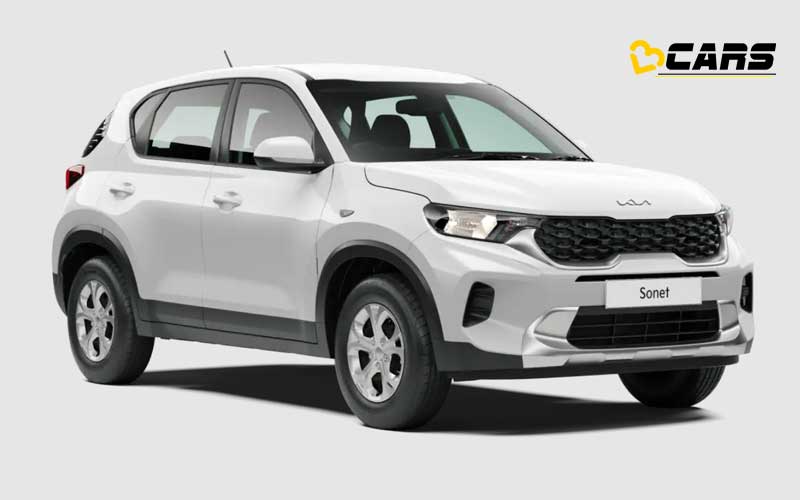
The base HTE variant of the 2022 Sonet diesel costs Rs. 9.05 lakh and it’s only available with the manual transmission. The Sonet offers the following notable features as standard in the base model:
- Manual AC
- 4x airbags including 2x front side thorax airbags
- Tyre pressure sensors
- Manual central locking
- Front armrest
- 2x USB ports
- Tilt steering
- Front power windows
- 15-inch steel wheels with wheel covers
- Power mirrors
- Rear AC vents
- Halogen reflector headlamps
The base variant doesn’t get a few important features such as:
- Music system
- Steering-mounted controls
- Remote central locking
- Height-adjustable driver seat
- Rear parcel tray
- Rear camera
- Rear washer wiper
- Rear defogger
- Rear power windows
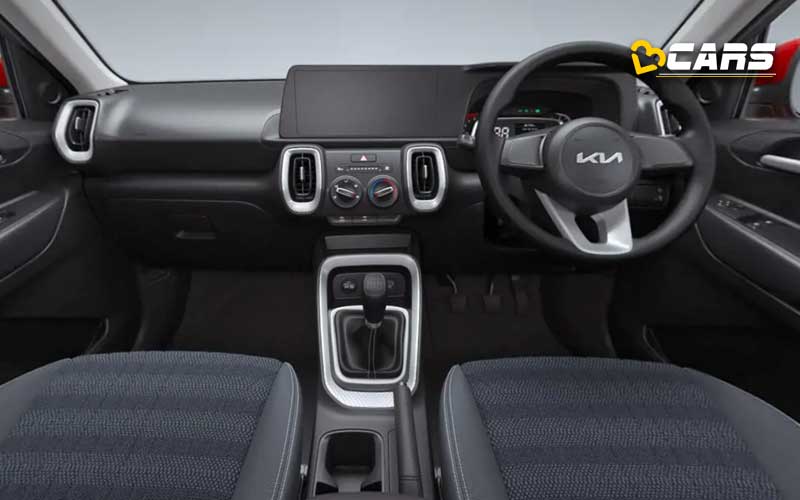
However, the higher HTK variant of the Sonet diesel is overpriced for the additional features it offers. So, we’ll suggest budget buyers to buy the base HTE variant and personalise it with some aftermarket accessories.
Kia Sonet Diesel HTE vs HTK Variant
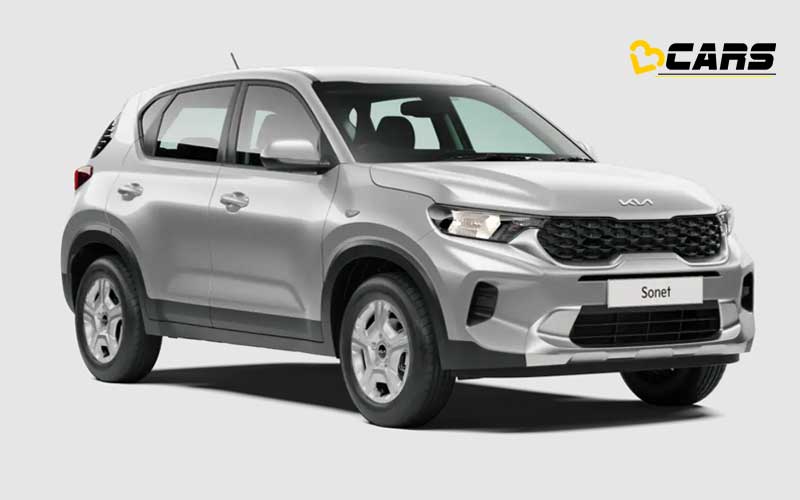
The Kia Sonet HTK diesel costs Rs. 9.79 lakh, which is Rs. 74,000 higher than the HTE’s price tag. For this additional price, it adds the following notable features:
- Rear power windows
- Stylish wheel covers
- Larger 16-inch steel wheels
- Remote central locking
- Music system with USB, aux, FM, bluetooth and 4x speakers
- Steering-mounted controls
- Height-adjustable driver seat
- Sunglass holder
You might miss the following features in the Sonet HTK variant:
- Auto AC
- Rear parcel tray
- Touchscreen
- Rear camera
- Rear washer wiper
- Rear defogger
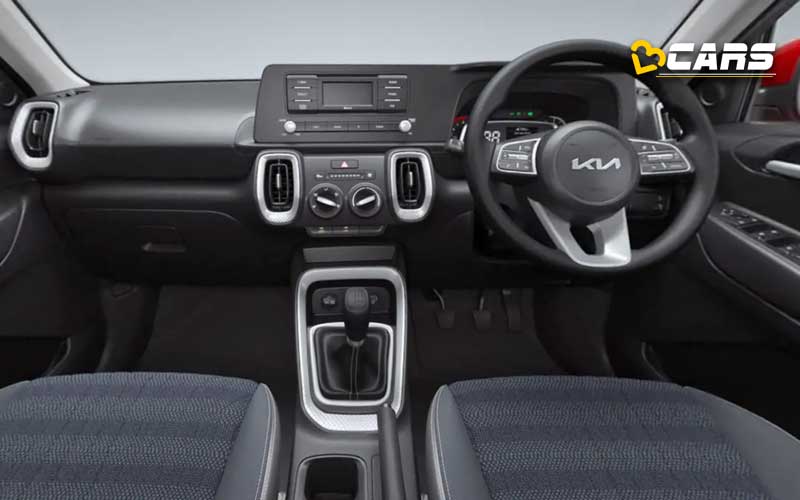
The HTK variant seems reasonably loaded for a decent ownership experience. However, our in-house algorithm suggests that it’s quite a bit overpriced considering the additional features and the incremental cost over the HTE variant. So, budget buyers should either buy the lower HTE variant and personalise it with aftermarket accessories or stretch the budget to get a higher variant, which offers better value for money.
Kia Sonet Diesel HTK vs HTK Plus Variant
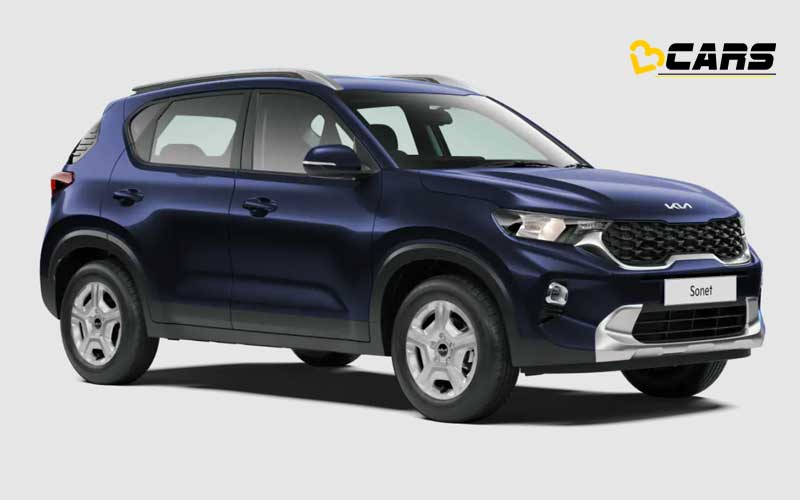
The Kia Sonet HTK Plus variant costs Rs. 10.49 lakh, which is Rs. 70,000 more than the lower HTK diesel variant. It adds the following additional features to the list:
- Halogen projector fog lamps
- Rear defogger
- Rear camera
- 8-inch touchscreen with Android Auto and Apple Carplay
- 2x tweeters
- Wireless phone charging
- Keyless entry with push-button start/stop
- Rear parcel tray
The HTK Plus variant doesn’t get the following notable features:
- LED headlamps
- LED DRLs
- LED tail lamps
- Adjustable rear headrests
- Cruise control
- Rear armrest
- Rear washer wiper
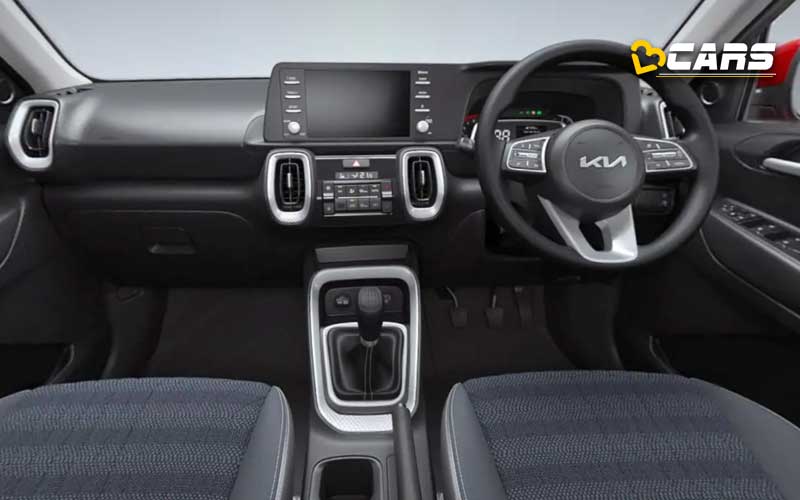
The HTK Plus variant offers a decent value for money and almost entirely justifies the incremental cost over the base model. But it has an ex-showroom price of more than Rs. 10.0 lakh, which will effectively impact the on-road prices in several states as it falls in the higher registration tax slab. So, if you’re ready to consider a Rs. 10.0 lakh+ variant, then we’ll suggest stretching your budget a bit more and buying the higher HTX variant. It will offer significantly better value for money and a far better ownership experience too.
Kia Sonet Diesel HTK Plus vs HTX Variant
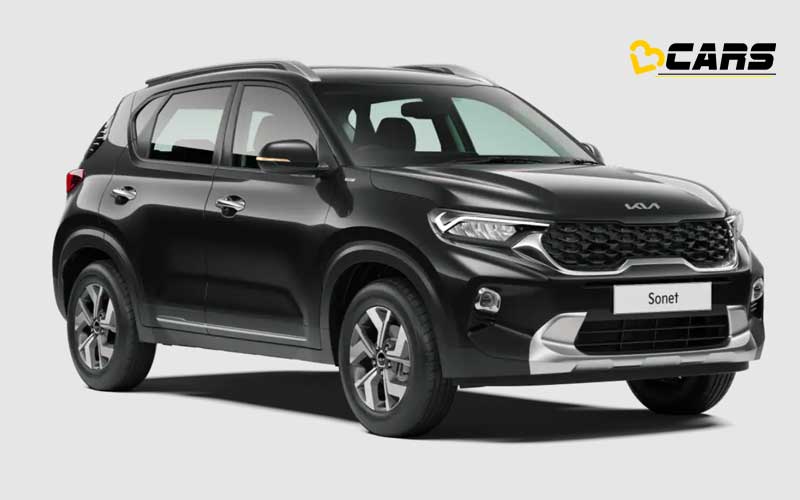
Besides the manual transmission, the Kia Sonet HTX diesel is also available with automatic transmission. The Sonet HTX diesel-manual costs Rs. 11.35 lakh, which is Rs. 86,000 more than the lower HTK Plus diesel-manual. The automatic is another Rs. 80,000 more and carries an ex-showroom price tag of Rs. 12.15 lakh. This variant gets the following notable additional features:
- Cruise control
- LED DRLs
- LED tail lamps
- LED reflector headlamps
- Rear window sunshades
- Flat-bottom steering
- Dual-tone interior
- Rear armrest
- Adjustable rear headrests
- Sunroof
- ESC
- Hill start assist
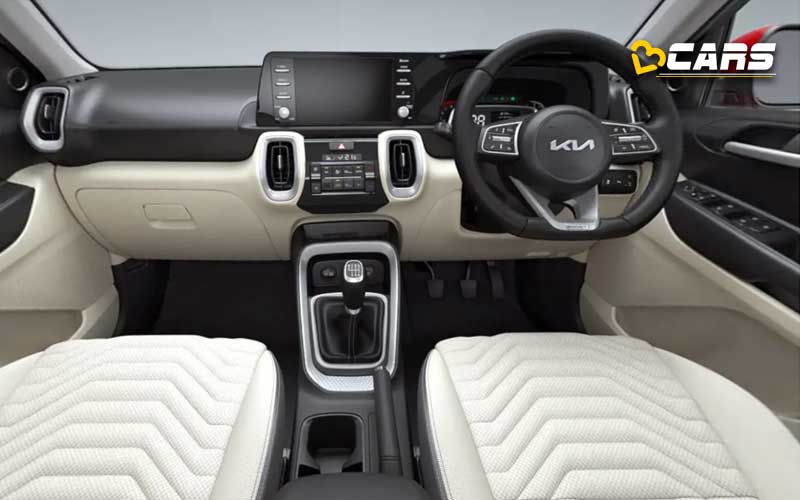
The HTX variant will offer a good ownership experience while offering tremendous value for money. It is the most VFM variant of the Sonet diesel and our top recommendation as it offers enough must-have and good-to-have features to satisfy most B2 diesel SUV buyers. This recommendation also holds for the diesel-automatic buyers, who enjoy an even better value score with the HTX variant.
Kia Sonet Diesel HTX vs HTX Plus Variant
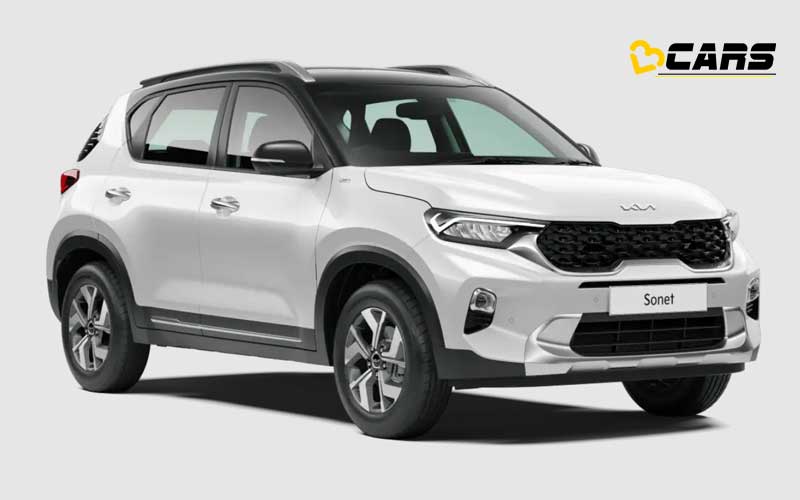
The Kia Sonet HTX Plus diesel is again only available with the manual transmission and costs Rs. 12.65 lakh (ex-showroom), which is Rs. 1.30 lakh higher than the HTX diesel-manual. It adds the following notable additional features:
- 2x curtain airbags
- Subwoofer
- Bose sound system
- Air purifier
- Telematics
- Ventilated front seats
- Leather upholstery
- LED ambient lighting
- Rear washer wiper
- 10.25-inch touchscreen
- Auto-dimming inside mirror
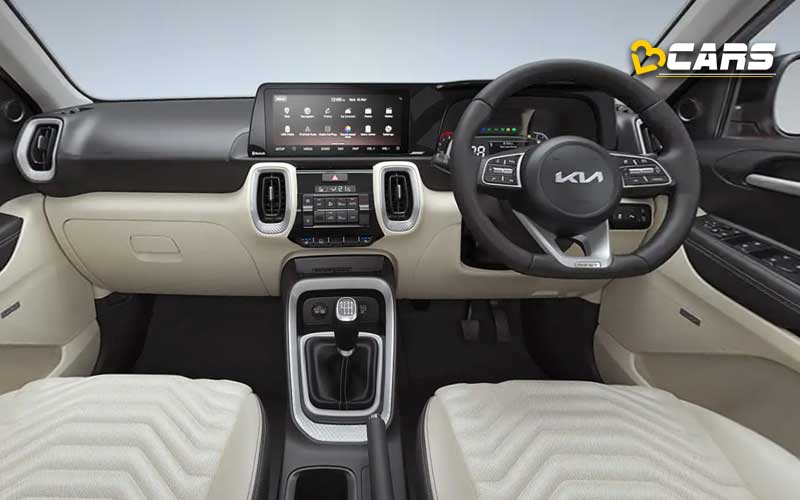
The HTX Plus variant is well-loaded and not available with the automatic transmission. This variant is suitable for Sonet buyers who want an upmarket ownership experience without compromising on the value for money. Although, it can’t match the HTX variant’s value score.
Kia Sonet Diesel HTX Plus vs GTX Plus Variant
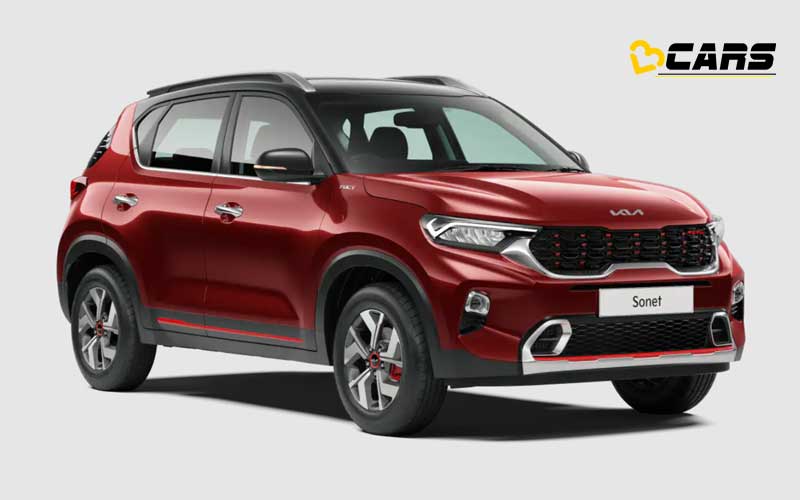
The top-spec Kia Sonet GTX Plus diesel gets manual as well as automatic transmission and costs Rs. 12.99 lakh with the manual and Rs. 13.79 lakh with the automatic. It’s only Rs. 34,001 pricier than the HTX Plus manual while the automatic is another Rs. 80,000 more expensive. It gets only cosmetic features like red accents inside and outside, GT Line badges, black interior and black leather upholstery.
Since this is a cosmetic upgrade over the HTX Plus trim, Sonet diesel-manual buyers should decide for themselves if they want the unique style features of the GTX Plus variant. Sonet automatic buyers don’t have the option of the HTX Plus variant. So, the Sonet GTX Plus diesel-automatic is suitable for those who want the automatic transmission without sacrificing on the upmarket ownership experience.
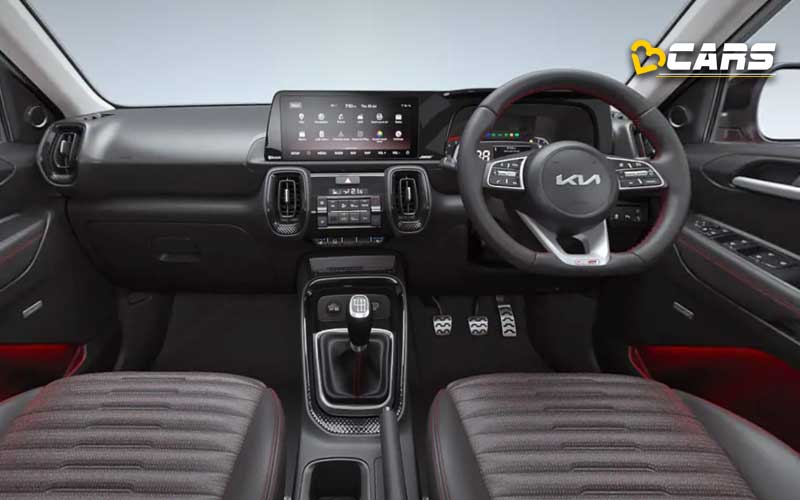
Kia Sonet Diesel GTX Plus vs X-Line Variant
The Kia Sonet X-Line variant is only available with the torque converter automatic transmission and costs Rs. 13.99 lakh (ex-showroom), which is Rs. 20,000 higher than the GTX Plus automatic’s price.
The cosmetic features of the X-Line easily justify the incremental cost over the GTX Plus and it offers better value too. So, for unique styling, the Sonet diesel-automatic buyers can also consider the X-Line variant for better value for money. Since this is also a cosmetic upgrade, we’ll leave it up to you to decide if you should buy this variant.
Which Variant Of The Kia Sonet Diesel Should You Buy?
With the diesel-manual powertrain, the base HTE variant lacks several must-have features while the next HTK variant offers very poor value for money. So, we’ll suggest budget buyers to just go with the base HTE variant and personalise it with accessories. If you can stretch your budget, then the HTK Plus may seem like a good option value-wise, but it’s not the one we’d recommend. It costs just over Rs. 10.0 lakh, so it’ll also end up costing a fair bit more because of the higher registration costs in many states.
We’ll suggest you stretch your budget a little more and buy our top recommended HTX variant. It offers almost all must-have features along with a tremendous value for money. Going up the price ladder, the HTX Plus and GTX Plus are decent options and worth considering if you want their features.
With the automatic transmission, the HTX is an easy choice and our top recommendation for most Sonet diesel buyers. The GTX Plus is alright in terms of value for money. So you can consider that too if you want some of its unique upmarket features.
What Are The Engine Specifications Of The Kia Sonet Diesel?
The Sonet is a rare diesel car in its class with an upmarket torque converter automatic transmission while its rivals either offer a simpler AMT or don’t have an automatic transmission at all. It has a class-leading mileage figure of 24.1kmpl. However, with the inefficient torque converter automatic transmission, its mileage figure drops to worst-in-class 19kmpl. Otherwise, its power and torque figures are acceptable for a B2-segment diesel SUV.
*Estimated
You can use our Fuel Cost Calculator to see how much any petrol, diesel or CNG car will cost to run based on the latest fuel price in your city.
What Are The Dimensions Of The Kia Sonet?
Against other B2-segment diesel SUVs, the Sonet stands out with a respectable ground clearance, width and boot space. Besides the boot space and height, it has nothing worth bragging about but it strikes a nice balance in its dimensions and doesn’t falter in any way.
What Are The Colour Options Of The Kia Sonet?
The 2022 Sonet is available in the following 8 monotone exterior colours:
- Silver
- Grey
- Red
- Flat white (HTK Plus and below)
- Blue (HTK Plus and above)
- Black (HTK Plus and above)
- Metallic white (HTX and above)
- Matte grey (X-Line only)
The Kia Sonet diesel also gets the following 2 dual-tone exterior colour options:
- Red with black roof (HTX Plus and above)
- Metallic white with black roof (HTX Plus and above)
Note: Here is a quick look at our length-based segmentation of cars to give you an idea of how we are classifying cars based on their size.