

 Upcoming CarsPopular CarsLatest CarsElectric Cars
Estimate costs and savings with our handy automotive calculators.
Simplify your car ownership journey with our buying, selling, and renewal tools.
Explore additional resources and comparisons for car enthusiasts.
Published : 08 August 2026
Read Time : 5 min
Author: Jagdev Kalsi
We drove the 2026 Maruti Arena Brezza with its new 1.0L turbo petrol engine and 6-speed manual transmission. We covered roughly 50km over about 2 hours at speeds representative of typical city driving. Here are my impressions of its performance, refinement, mileage, highway manners, ride and everyday usability.

2026 Maruti Brezza Turbo Specifications And Prices
The following table lists the turbo engine’s specifications, official mileage and complete ex-showroom price range:
The Brezza uses a higher-output version of the 1.0L turbo engine available in the Fronx. It produces 10PS more power and 22Nm more torque in the Brezza. Maruti Suzuki also pair it with a 6-speed manual instead of the Fronx’s 5-speed manual.
We drove the top-spec ZXi Plus turbo. Its exclusive features include a 10.1-inch touchscreen, ventilated front seats and 64-colour ambient lighting.
How Responsive Is The Brezza Turbo In The City?
We found the turbo engine most convincing with light or part-throttle acceleration. Its response becomes noticeably stronger near 2000rpm, where it begins producing peak torque.
It feels more responsive than the pre-facelift Brezza’s 1.5L normal petrol engine during everyday city driving. The turbo gives the Brezza some of the low-speed urgency that the larger engine lacked.
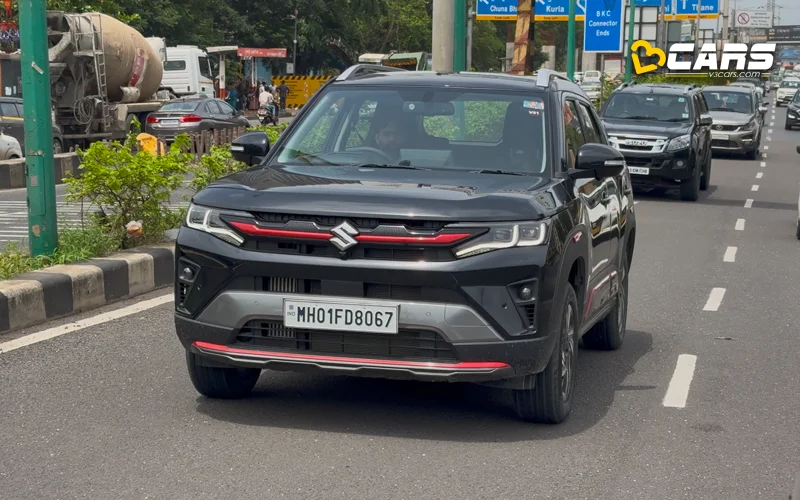
Its torque delivery at slow speeds even reminded me slightly of the old diesel Brezza. However, this petrol engine is smoother and does not feel as forceful.
We have not driven the updated 1.5L petrol Brezza with its new 6-speed manual transmission. Therefore, this is not a direct comparison between the 2 updated powertrains.
Does The Brezza Turbo Feel Quick?
The turbo engine’s advantage became less noticeable when the accelerator was pressed harder. At higher RPM, it felt adequate rather than genuinely quick.
We would not describe this as a performance-focused engine. It works best when you use its early torque delivery to make easy progress through city traffic.
The turbo makes the Brezza feel more responsive, but it does not encourage you to chase the engine’s top end.
Is The Brezza Turbo Engine Refined?
The 3-cylinder engine is impressively refined. It controls vibrations well, especially when driven with light accelerator inputs.
Image - Screenshot of interior shot with Jagdev visible
Drivers moving from a 4-cylinder engine may notice its characteristic sound. However, we do not think its vibrations will affect everyday comfort.
Engine noise becomes more noticeable beyond 3000rpm. Even then, we did not find it bothersome.
What Is The 6-Speed Manual Transmission Like?
The clutch feels light and makes the Brezza turbo easy to operate in traffic. However, we found the transmission’s shift throws relatively long. This combination suits regular commuting, where low clutch effort matters more than rapid gear changes. It does not feel particularly sporty despite the turbo engine.
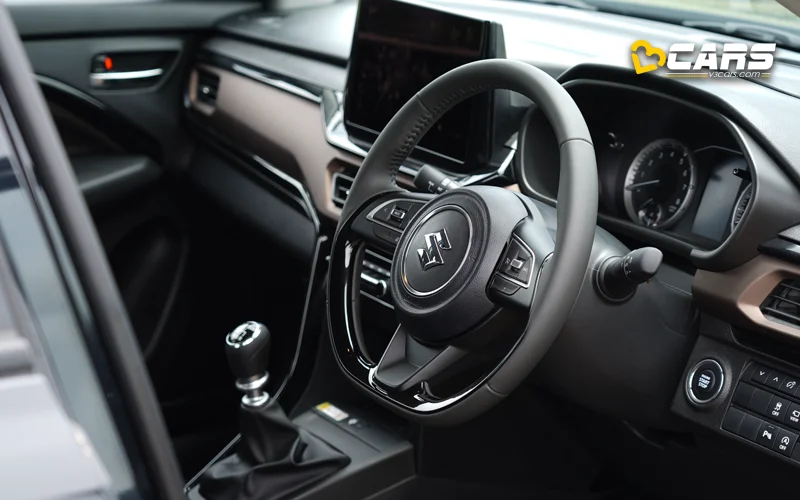
We think an automatic transmission would suit this engine well. Maruti Suzuki offer the same basic engine with a TC automatic in the Fronx. For now, buyers looking to buy an automatic Brezza must choose the 1.5L normal petrol engine.
A turbo-automatic could have combined the new engine’s city response with the convenience many urban buyers seek.
How Does The Brezza Turbo Feel At 100kmph?
At 100kmph in 6th gear, the engine runs below 2500rpm. It did not feel strained, although we did not feel encouraged to push it much harder.
The sixth ratio primarily helps the Brezza settle into a relaxed highway cruise. It does not turn the turbo into a strong high-speed performer.
We expect both Brezza petrol engines to offer similar cruising ability. However, the 4-cylinder 1.5L engine may feel smoother when extended to higher RPM.
What Mileage Did The Brezza Turbo Deliver?
The trip computer displayed approximately 12.5kmpl after roughly 50km and 2 hours of driving. The route and average speeds represented typical city use.
This was not a controlled tank-to-tank mileage test. Traffic, idling, driving style and the relatively short distance would have influenced the reading. Based on this drive, around 12.5kmpl appears realistic in similar city conditions. However, actual mileage will vary with traffic and driving style.
For context, the Fronx turbo-automatic delivered 12.80kmpl in the V3Cars comprehensive city mileage test. The Fronx and Brezza differ in weight, engine output and transmission. Therefore, their figures are not directly comparable.
Maruti Suzuki claim 20.47kmpl for the LXi and VXi turbo variants. The ZXi and ZXi Plus turbo variants have a claimed mileage of 19.96kmpl.
Brezza Turbo Ride Comfort, ADAS And Visibility
We found the Brezza’s ride comfortable and well-balanced. It feels neither excessively stiff nor overly soft during regular city driving. Its braking and manoeuvrability also felt well suited to urban use.
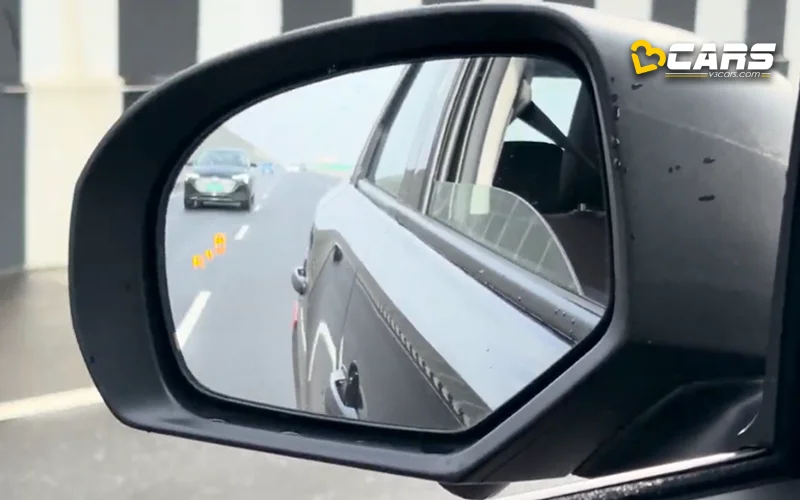
Blind spot warning was the most useful driver-assistance feature during my drive. It made changing lanes easier and, more importantly, safer. Maruti Suzuki offer this feature with the ZXi and ZXi Plus turbo variants. These variants also get front parking sensors, safe exit warning and rear cross traffic alert.
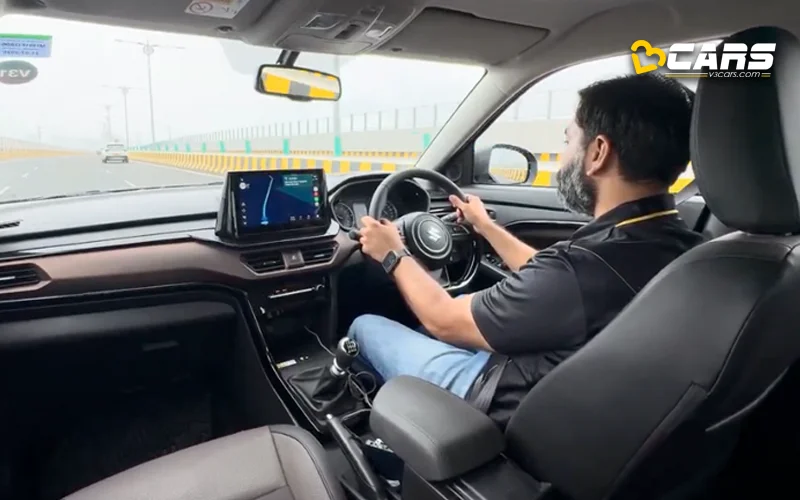
While outward visibility from the driver’s seat is great, we think the new touchscreen could sit lower on the dashboard. Its housing also looks and feels unnecessarily thick. We additionally found the front seat base slightly short. This may reduce under-thigh support for some occupants.
2026 Brezza Interior And Feature Changes
The cabin retains a predominantly black theme with a satin-finished brown dashboard insert. We found the combination elegant, although it does not look substantially different from before.
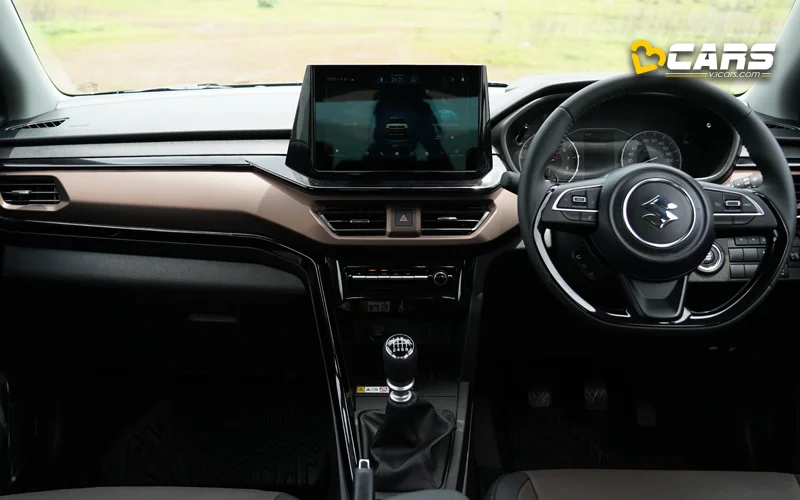
The ZXi Plus gets the new 10.1-inch touchscreen, 64-colour ambient lighting and ventilated front seats. These additions help the cabin feel more contemporary.
Maruti Suzuki have also introduced a new physical AC panel inspired by the Victoris. However, it lacks a dedicated auto AC on/off control. We found having to access this function through the touchscreen inconvenient while driving.
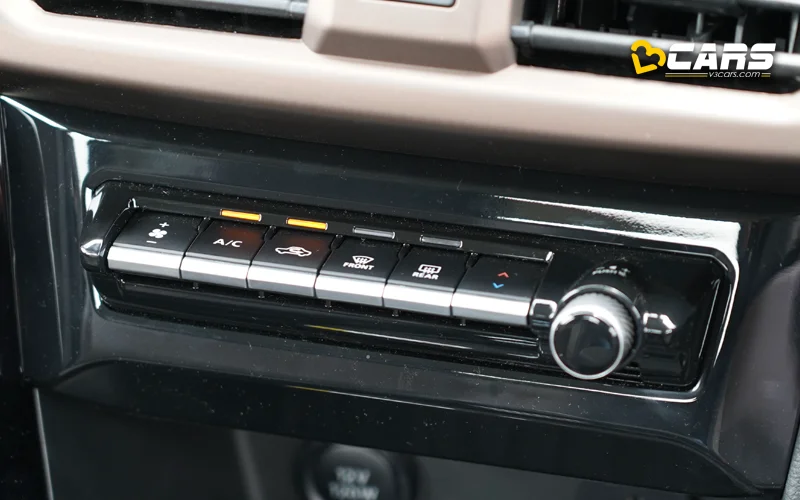
We would have also liked front USB-C ports and built-in rear window sunshades. Some rivals offer powered driver seats and panoramic sunroofs, although these features may not matter to every buyer.
2026 Brezza Exterior Changes
The exterior receives fewer changes than the cabin or powertrain. Updates include a restyled smoked-chrome grille, revised fog lamp housings and redesigned 16-inch alloy wheels.
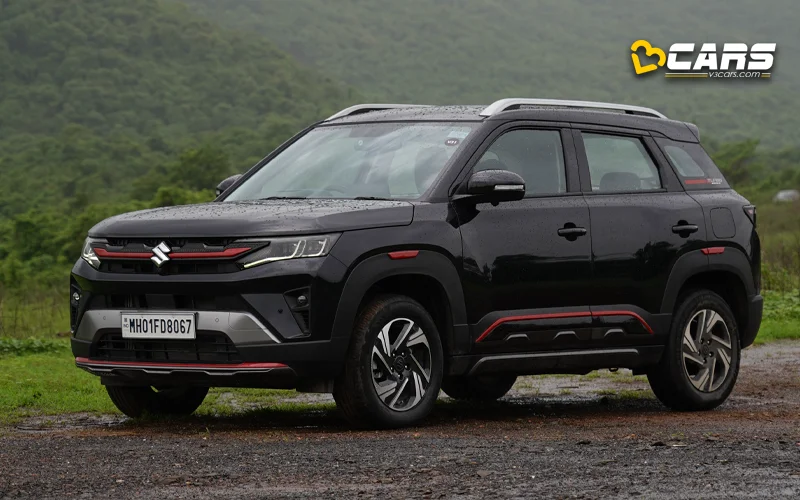
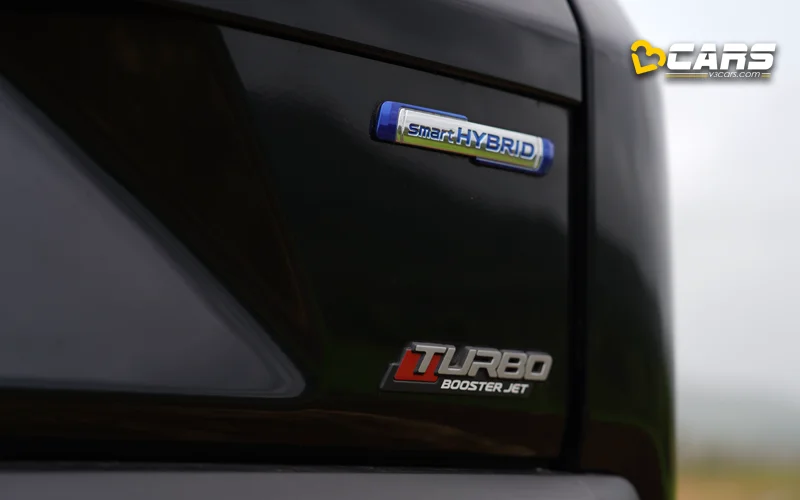
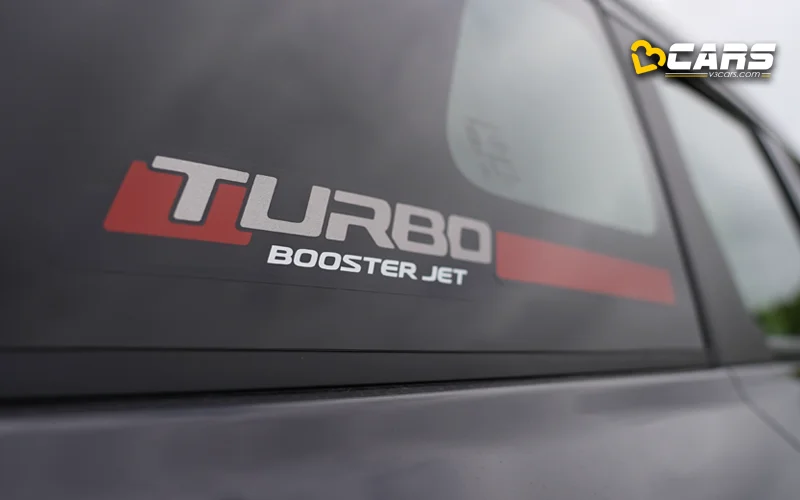
Maruti Suzuki have also reworked the front and rear bumpers. The ZXi Plus turbo we drove featured red exterior accents from the optional Metroscape accessory package. These dealer-fitted accessories are not standard on every turbo variant. All turbo variants get ‘Turbo Boosterjet’ badging at the rear and on the rear quarter window.
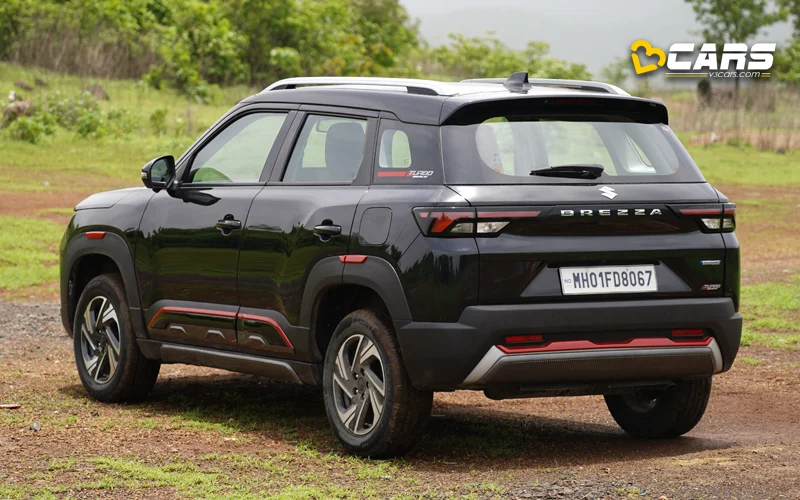
However, the headlamp and tail lamp internals remain largely familiar. We think revised lighting elements, especially a shift to LED lighting, could have given the facelift a stronger sense of novelty.
Our 2026 Brezza top changes article covers the complete exterior, interior, feature and mechanical updates.
2026 Brezza Turbo First Drive Verdict
The turbo engine makes the Brezza more responsive during ordinary city driving. Its early torque delivery, light clutch and refinement suit buyers who spend most of their time in traffic. However, this is not a performance-focused engine. Its acceleration feels adequate when pushed hard, while the long shift throws limit its sporty appeal.
The smaller engine also allows the Brezza to benefit from a lower tax rate. This helps its price start at Rs. 7.40 lakh and addresses one of the Nexon’s previous advantages.
We would choose the lower Brezza turbo variants over comparable Nexon petrol-manual variants. The Brezza’s turbo engine feels more refined, while Maruti Suzuki’s reliability and service record further strengthen its case. For buyers choosing between these 2 SUVs on a budget, we think the Brezza turbo is now the better petrol-manual option. PS: It is also the more value for money car of the two.
Our Nexon Creative Camo vs Brezza ZXi comparison explains how their similarly priced variants compare on engines, mileage, features and safety.
We also think the turbo makes a stronger case than the Brezza’s 1.5L petrol-manual for most buyers. It costs less, produces more power and torque, and offers more features in equivalent variants.
Buyers seeking easy city performance and relaxed cruising should consider the Brezza turbo. Those expecting stronger top-end acceleration or an automatic should also test-drive its turbo-petrol rivals.
Before you finalise your next car, these V3Cars tools can help you make a more informed decision:
Fuel Cost Calculator for Cars - Know your monthly fuel expense based on usage and mileage
Car On-Road Price Calculator - Convert ex-showroom to on-road price for any city
Sell Used Car Online - Enter your car and contact details to get an instant price estimate and book a free inspection with our partner network
Did you find this information helpful?

Head Of Content


Jagdev heads content for V3Cars. Apart from driving cars, he likes to keep an eye on the industry trends. He thinks he knows why Maruti Suzuki sells the most number of cars in India.
Car News Update
View All Latest News
Mahindra Bolero Bold Edition Revealed With Bronze Accents And Rear Camera
Mahindra have revealed the 2026 Bolero Bold Edition, which adds bronze exterior accents, revised seat upholstery and a reversing camera. Offered through an accessories package, the Bold Edition’s pricing remains undisclosed.
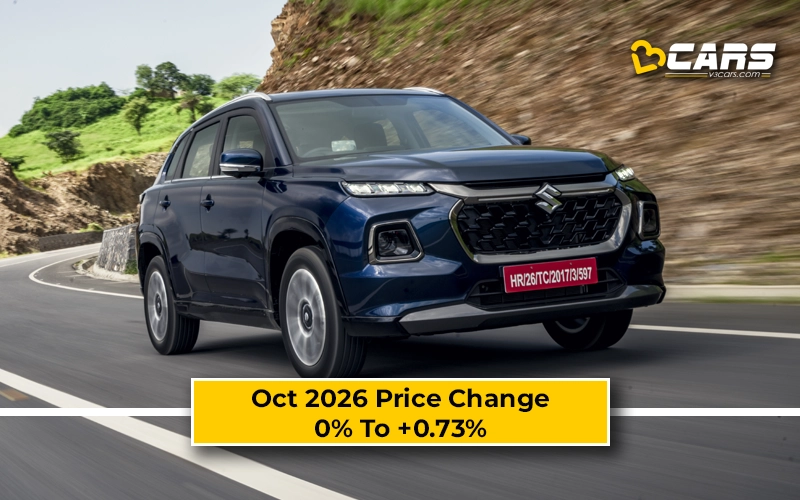
October 2026: Maruti Suzuki Grand Vitara Price Change - Hiked By Up To 10k
Maruti Suzuki have increased the prices of the 2026 Grand Vitara by up to Rs. 10,000. The Zeta variant with the 1.5L normal petrol-manual powertrain received the highest percentage price hike of 0.73%. The Alpha variant with the same powertrain and the Zeta and Alpha variants with the 1.5L normal petrol-automatic powertrain also became costlier by Rs. 10,000. Meanwhile, the Delta and Zeta variants with the 1.5L normal CNG-manual powertrain received a price hike of Rs. 5,000. The prices of all other variants remain unchanged. Following the price revision, the Grand Vitara’s ex-showroom prices range from Rs. 10.77 lakh to Rs. 19.62 lakh.
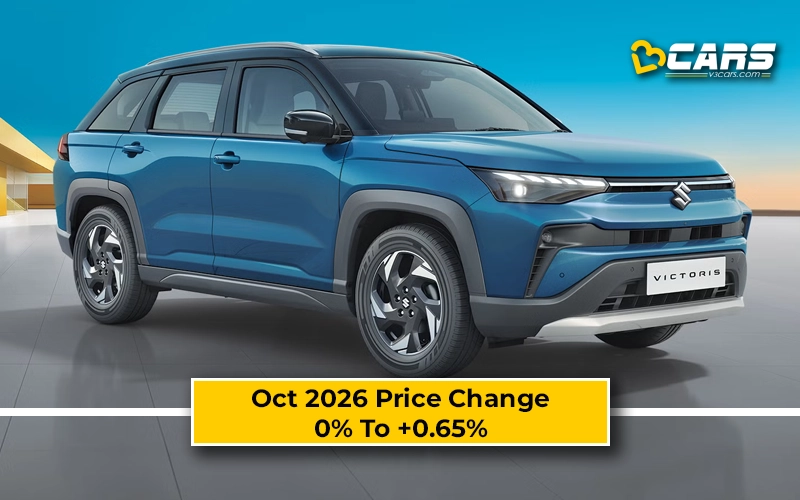
October 2026: Maruti Suzuki Victoris Price Change - Hiked By Up To 10k
Maruti Suzuki have increased the prices of the 2026 Victoris by up to Rs. 10,000. The ZXI Plus variant with the 1.5L normal petrol-manual powertrain received the highest percentage price hike of 0.65%. The ZXI Plus variant with the 1.5L normal petrol-automatic powertrain also became costlier by Rs. 10,000, while the prices of all other listed variants remain unchanged. Following the price revision, the Victoris’s ex-showroom prices range from Rs. 10.50 lakh to Rs. 19.99 lakh.
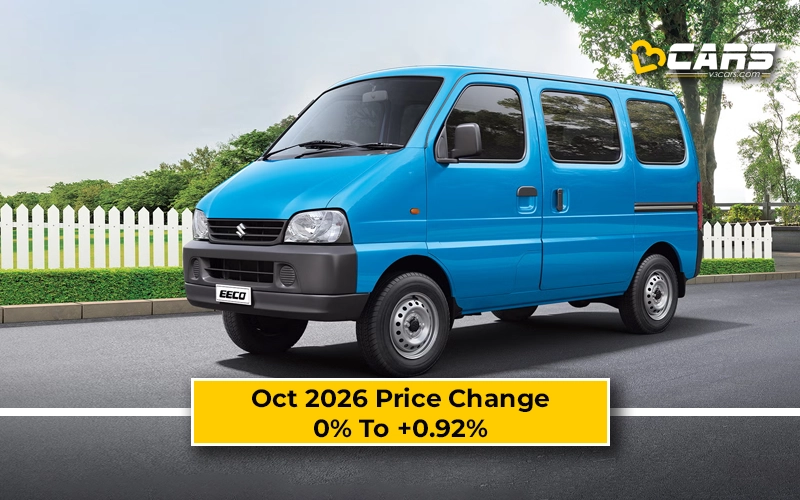
October 2026: Maruti Suzuki Eeco Price Change - Hiked By Up To 5k
Maruti Suzuki have increased the prices of the 2026 Eeco by up to Rs. 5,000. The Cargo variant with the 1.2L petrol-manual powertrain received the highest percentage price hike of 0.92%. Select variants with the 1.2L CNG-manual powertrain also became costlier by up to Rs. 5,000, while several other variants received smaller price increases of Rs. 2,500 or remained unchanged. Following the price revision, the Eeco’s ex-showroom prices range from Rs. 5.28 lakh to Rs. 8.09 lakh.
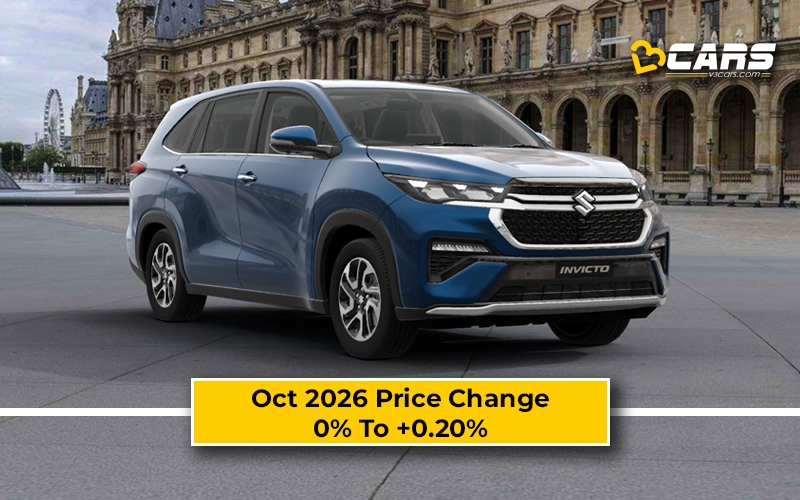
October 2026: Maruti Suzuki Invicto Price Change - Hiked By Up To 5k
Maruti Suzuki have increased the prices of the 2026 Invicto by up to Rs. 5,000. The Zeta Plus 7S variant with the 2.0L hybrid petrol-automatic powertrain received a price hike of Rs. 5,000, representing an increase of 0.20%. The prices of the Zeta Plus 8S and Alpha Plus 7S variants remain unchanged. Following the price revision, the Invicto’s ex-showroom prices range from Rs. 25.02 lakh to Rs. 28.71 lakh.
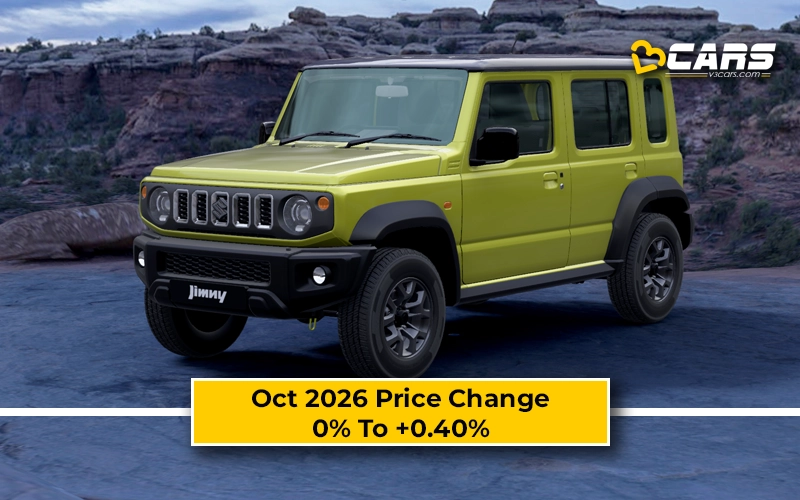
October 2026: Maruti Suzuki Jimny Price Change - Hiked By Up To 5k
Maruti Suzuki have increased the prices of the 2026 Jimny by up to Rs. 5,000. The Zeta All Grip Pro variant with the 1.5L petrol-manual powertrain received the highest percentage price hike of 0.40%. The Zeta All Grip Pro variant with the 1.5L petrol-automatic powertrain also became costlier by Rs. 5,000. Following the price revision, the Jimny’s ex-showroom prices range from Rs. 12.59 lakh to Rs. 14.52 lakh.

October 2026: Maruti Suzuki Brezza Price Change - Hiked By Up To 10k
Maruti Suzuki have increased the prices of the 2026 Brezza by up to Rs. 10,000. The LXI variant with the 1.0L turbo petrol-manual powertrain received the highest percentage price hike of 1.35%. The prices of select variants with the 1.5L petrol-manual and CNG-manual powertrains also increased by Rs. 5,000, while the prices of the listed petrol-automatic variants and some other variants remained unchanged. Following the price revision, the Brezza’s ex-showroom prices range from Rs. 7.50 lakh to Rs. 13.55 lakh.
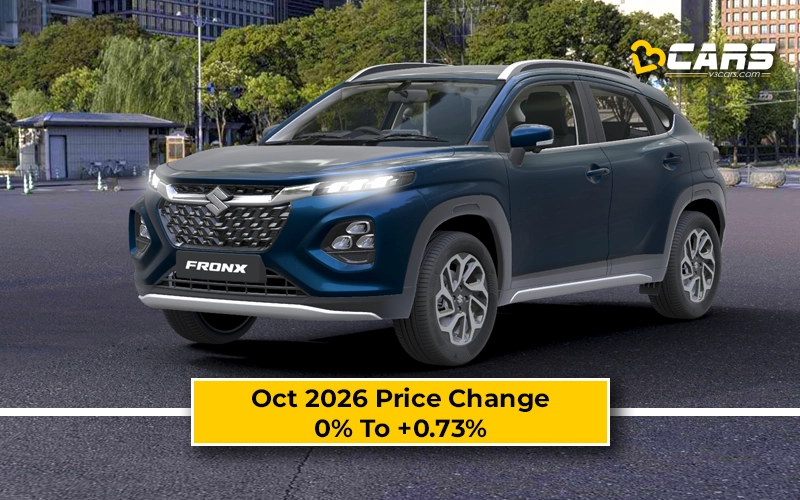
October 2026: Maruti Suzuki Fronx Price Change - Hiked By Up To 5k
Maruti Suzuki have increased the prices of the 2026 Fronx by up to Rs. 5,000. The Sigma variant with the 1.2L normal petrol-manual powertrain received the highest percentage price hike of 0.73%. Select variants with the 1.2L CNG and 1.0L turbo petrol powertrains also became costlier by Rs. 5,000. Following the price revision, the Fronx’s ex-showroom prices range from Rs. 6.89 lakh to Rs. 11.88 lakh.
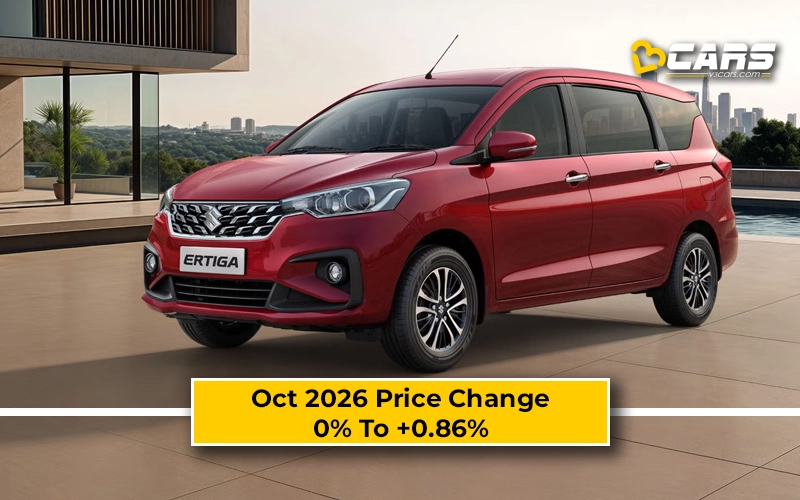
October 2026: Maruti Suzuki Ertiga Price Change — Hiked By Up To 10k
Maruti Suzuki have recently increased the prices of the 2026 Ertiga. The ZXI Plus variants with the 1.5L petrol-manual and petrol-automatic powertrains received the biggest price hike of Rs. 10,000. The Maruti Suzuki Ertiga 2026 prices now start from Rs. 8.90 lakh and go up to Rs. 13.14 lakh. In percentage terms, this is a price hike of up to 0.86%.
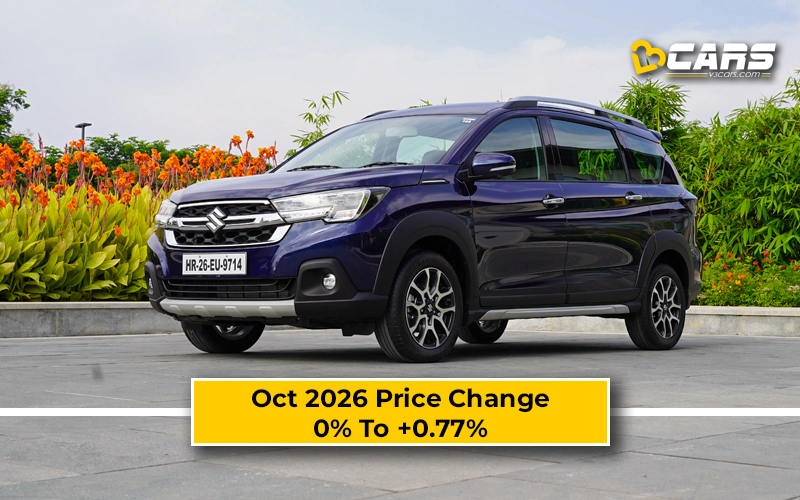
October 2026: Maruti Suzuki XL6 Price Change — Hiked By Up To 10k
Maruti Suzuki have recently increased the prices of the 2026 XL6. The Alpha Plus variants with the 1.5L petrol-manual and petrol-automatic powertrains received the biggest price hike of Rs. 10,000. The Maruti Suzuki XL6 2026 prices now start from Rs. 11.62 lakh and go up to Rs. 14.52 lakh. In percentage terms, this is a price hike of up to 0.77%.
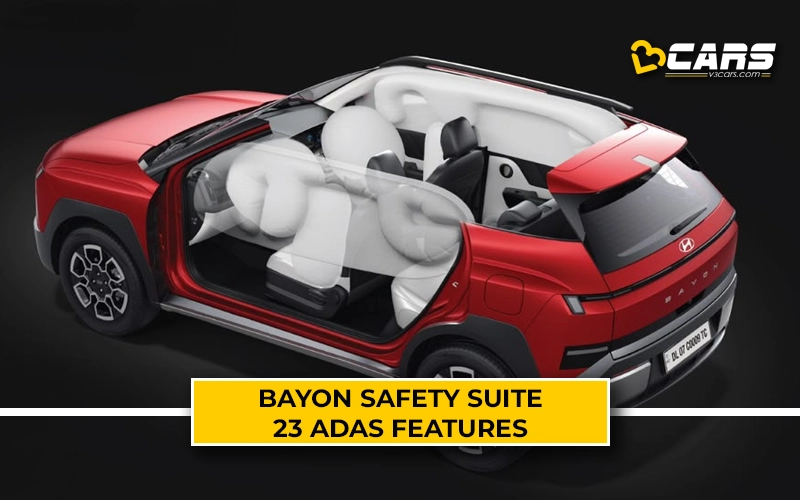
Hyundai Bayon Safety Features Revealed Ahead Of October 26 Launch
Hyundai have revealed the Bayon’s safety features ahead of its October 26 launch. The SUV will offer 6 airbags, electronic stability control and tyre pressure monitoring as standard. Its available driver assistance package includes adaptive cruise control, blind-spot collision avoidance and navigation-based speed assistance.
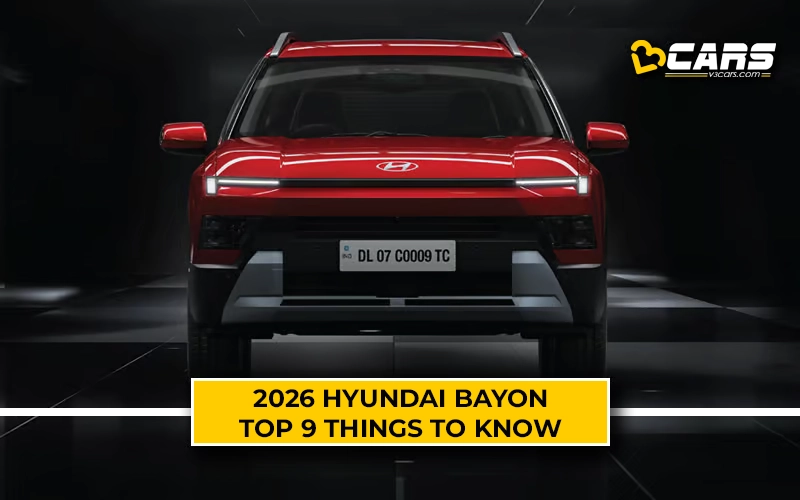
2026 Hyundai Bayon Top 9 Things To Know Before Launch
Hyundai have revealed the 2026 Bayon and detailed its safety equipment ahead of its October 26 launch. The new SUV is expected to sit between the Venue and Creta. Here are the top 9 things you should know about its design, powertrain, features and safety before launch.
Expert Car Reviews
View All Car Reviews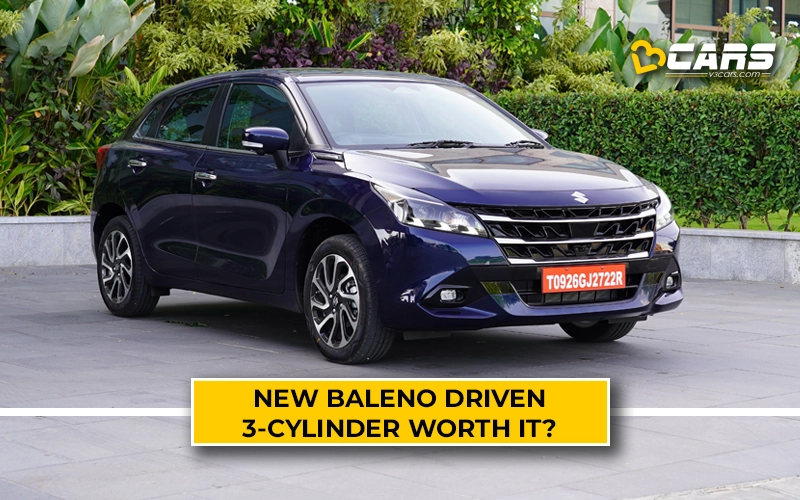
2026 Maruti Baleno Facelift Photo Gallery - Design, Features And Drive Review
The 2026 Maruti Baleno facelift gets a new 1.2L 3-cylinder petrol engine, level 2 ADAS and ventilated front seats. We drove it to see whether the new engine and added features make up for the loss of the old 4-cylinder’s refinement.
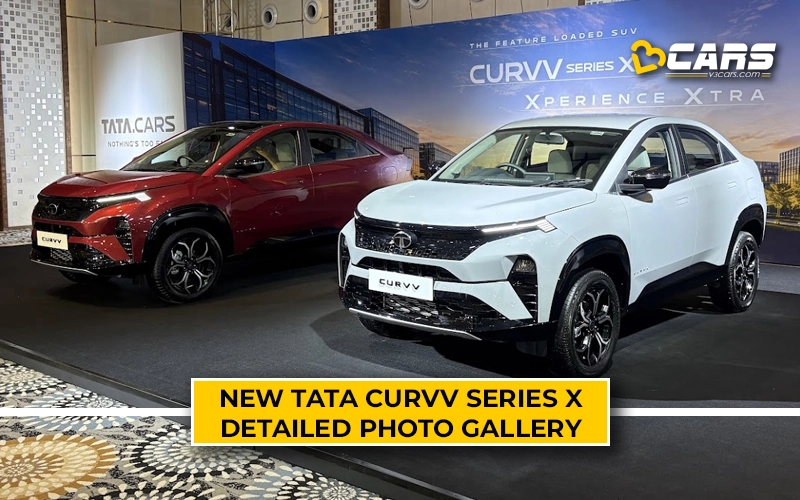
2026 Tata Curvv Series X Photo Gallery - Exterior, Interior And Features
Tata have launched the 2026 Curvv Series X with a simpler variant lineup and several features moved further down the range. We got a closer look at the new Curvv Series X, including the Pure X Plus and Creative X Plus variants. In this detailed photo gallery, we take you through their exterior differences, interior, features, rear-seat space and the construction of Tata’s R-Comfort seats.
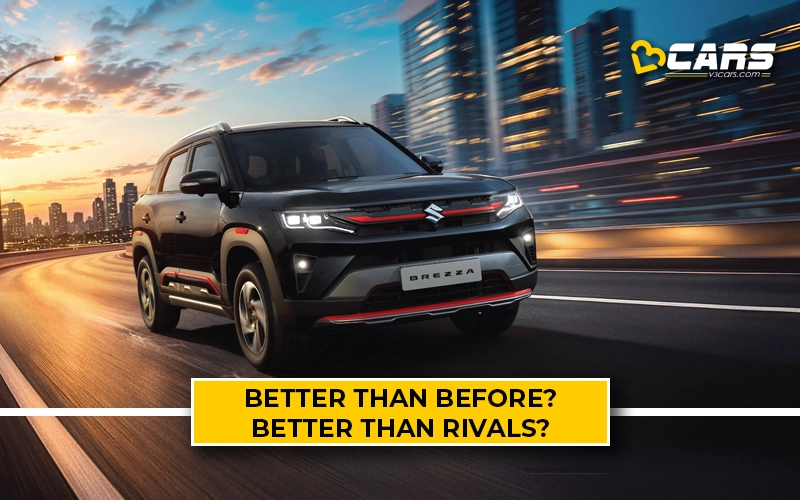
2026 Maruti Brezza Facelift Worth Buying?
The 2026 Maruti Brezza adds a 1.0L turbo petrol engine, more features and a 5-star Bharat NCAP rating. Its underbody CNG cylinder also frees up the full 328L boot. However, not every powertrain and variant offers equally strong value. We explain which Brezza to buy and when a rival makes more sense.
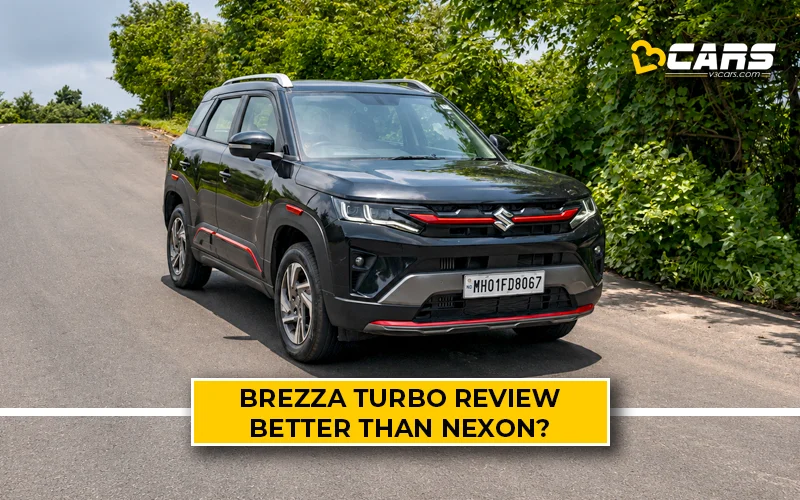
2026 Maruti Arena Brezza 1.0L Turbo Manual First Drive Review
We drove the 2026 Maruti Arena Brezza with its new 1.0L turbo petrol engine and 6-speed manual transmission. We covered roughly 50km over about 2 hours at speeds representative of typical city driving. Here are my impressions of its performance, refinement, mileage, highway manners, ride and everyday usability.
2026 Maruti Brezza CNG 328L Boot Space Explained
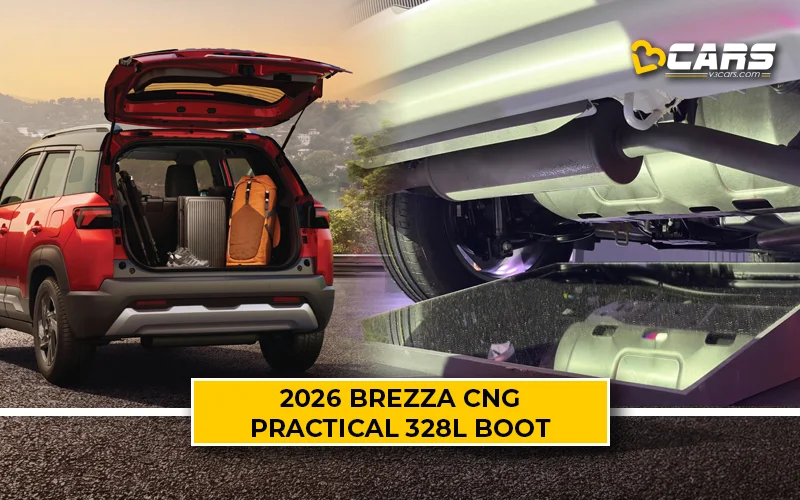
The 2026 Maruti Brezza CNG now has its cylinder mounted below the body, allowing it to retain the petrol version’s full 328L boot space. We examine the practical improvement, dimensions, ground clearance and boot-related features offered with each CNG variant.
2026 Maruti Brezza 1.0L Turbo Vs 1.5L Petrol - Which One To Buy?
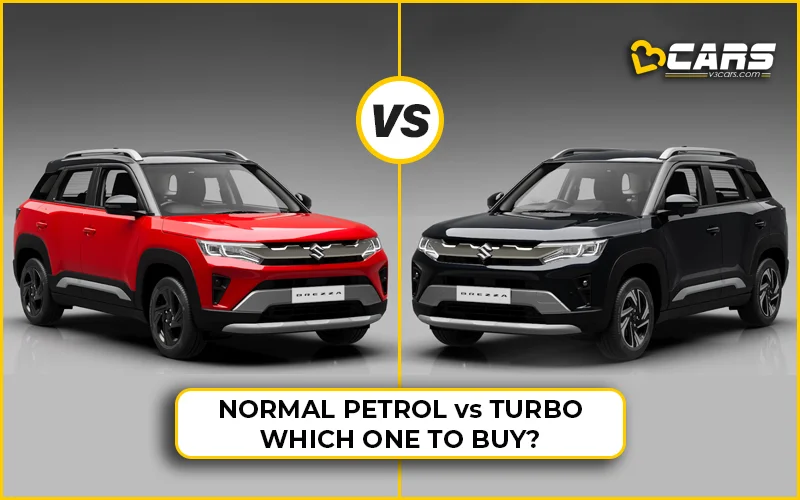
The 2026 Maruti Brezza offers a new 1.0L turbo petrol engine alongside the familiar 1.5L normal petrol. Both engines come with a new 6-speed manual transmission. The smaller turbo costs less and offers more power, torque and features, while the 1.5L petrol claims better mileage. We compare the 2 to determine which Brezza petrol-manual makes more sense.
Maruti Arena Fronx Petrol Vs CNG Mileage And Running Cost
If you’re wondering whether to buy the Maruti Suzuki Fronx petrol or CNG, this article will help you make a data-backed decision. We compare the latest ex-showroom prices, official mileage figures and current fuel prices in Delhi to calculate the running cost difference between the Fronx petrol and CNG variants. We also calculate how many kilometres you need to drive the Fronx CNG to recover its higher upfront cost over the petrol variant.
2026 Honda ZR-V Hybrid Photo Gallery
The 2026 Honda ZR-V Hybrid is set to launch in India as Honda’s new flagship SUV on May 22, 2026. Positioned above the Elevate, the ZR-V will rival premium SUVs like the Volkswagen Tiguan R-Line and Skoda Kodiaq with its strong hybrid powertrain, premium interior and advanced features. In this detailed photo gallery, we take a closer look at the ZRV Hybrid’s design, cabin, practicality, safety features and hybrid technology.
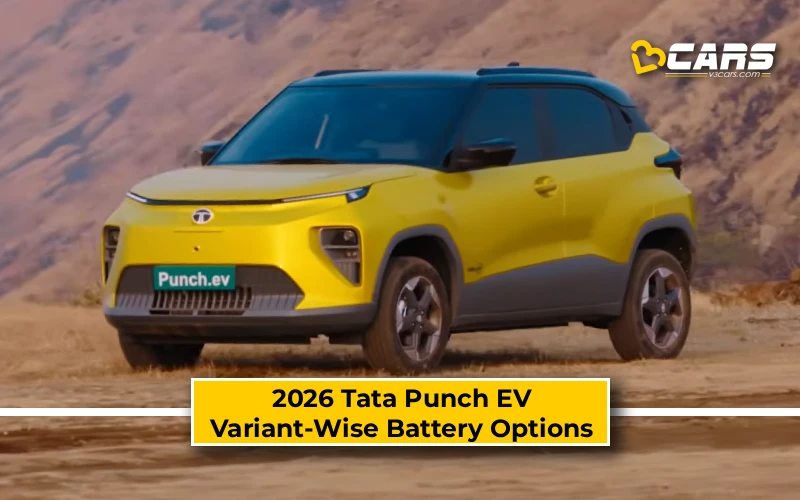
2026 Tata Punch EV Variant-Wise Powertrain Options – Battery, Range & Specifications
The 2026 Tata Punch EV is available with multiple battery pack and motor configurations, giving buyers the flexibility to choose between affordability and longer driving range. Depending on the variant, the new Punch EV offers different power outputs, battery capacities and claimed range. In this article, we break down the 2026 Punch EV’s variant-wise powertrain options and check out which variants get the 30kWh and 40kWh battery packs, along with their performance specifications, so you can pick the variant that best suits your needs.
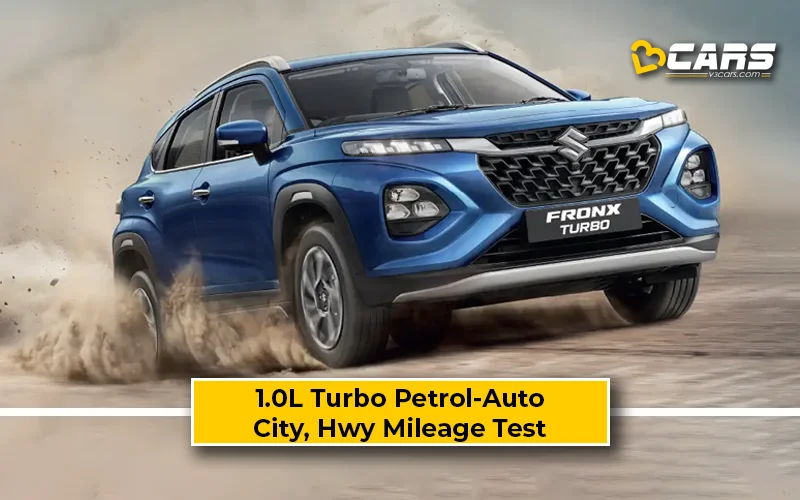
Maruti Fronx 1.0L Turbo Petrol-Auto Mileage Test: Real World City, Highway Fuel Efficiency
In this article, we’ll present the data based on V3Cars mileage test and inform you about what real-world fuel efficiency you can expect from the Maruti Fronx 1.0L turbo petrol-automatic in city and highway driving conditions. We’ll also find out how much the mileage numbers deviate from the manufacturer-claimed fuel efficiency figures. The information presented in this article will also help you learn about the mileage differences you can expect when driving in the city vs driving on the highway.
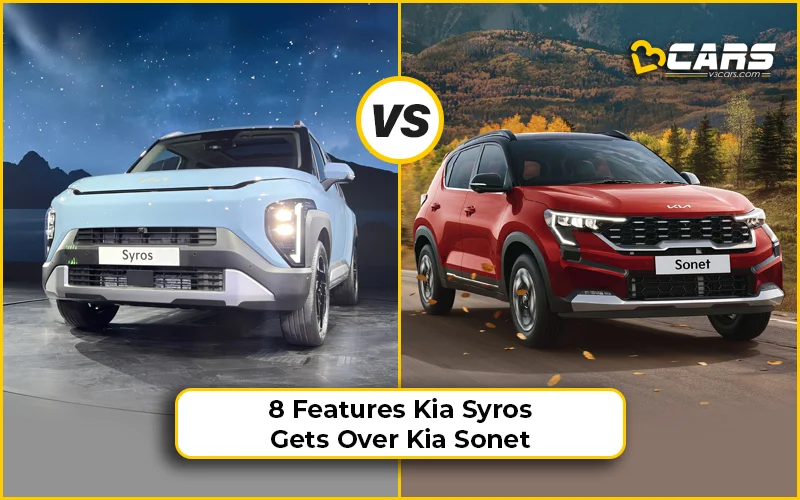
10 Features New Kia Syros Gets Over Kia Sonet
Kia unveiled their all-new B2-segment SUV, the 2025 Syros, on December 19, 2024. While Kia India are yet to reveal the variant-wise prices of the 2025 Syros, it is expected to slot in between the Sonet B2-SUV and Seltos C-SUV.
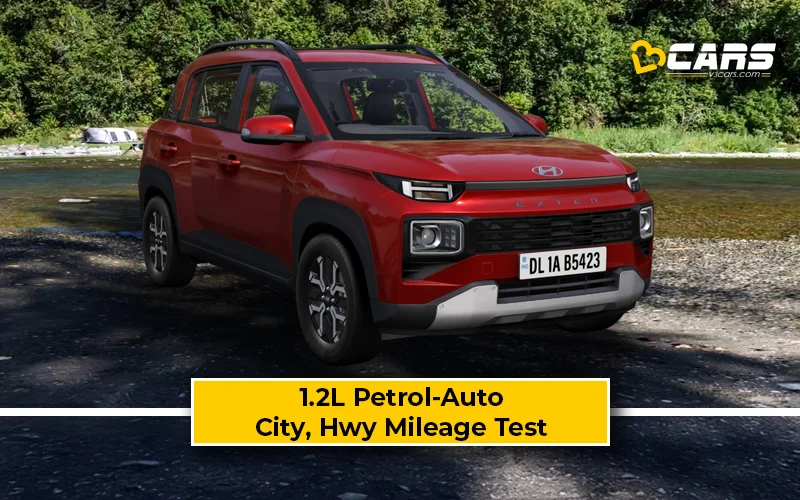
Hyundai Exter 1.2L Petrol-Auto Mileage Test: Real World City, Highway Fuel Efficiency
In this article, we’ll present the data based on V3Cars mileage test and inform you about what real-world fuel efficiency you can expect from the Hyundai Exter 1.2L petrol-automatic in city and highway driving conditions. We’ll also find out how much the mileage numbers deviate from the manufacturer-claimed fuel efficiency figures. The information presented in this article will also help you learn about the mileage differences you can expect when driving in the city vs driving on the highway.
Latest Videos
View All Car Latest Videos



Upcoming Cars In India
View All Upcoming Cars



Popular News
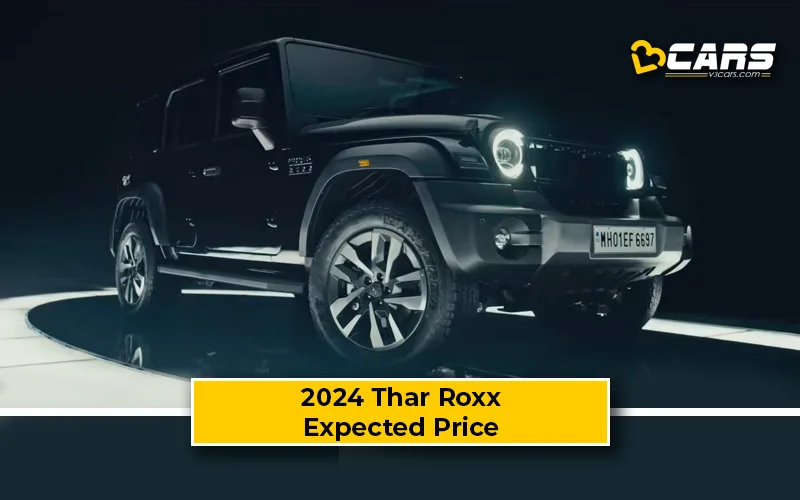
Mahindra Thar Roxx (Thar 5-door) Expected Price — #WithLogic (Updated: Jul 29)

5 Missing Features In Mahindra XUV700 Over Scorpio N

Top 5 Features Scorpio N Misses But The Tata Safari Gets
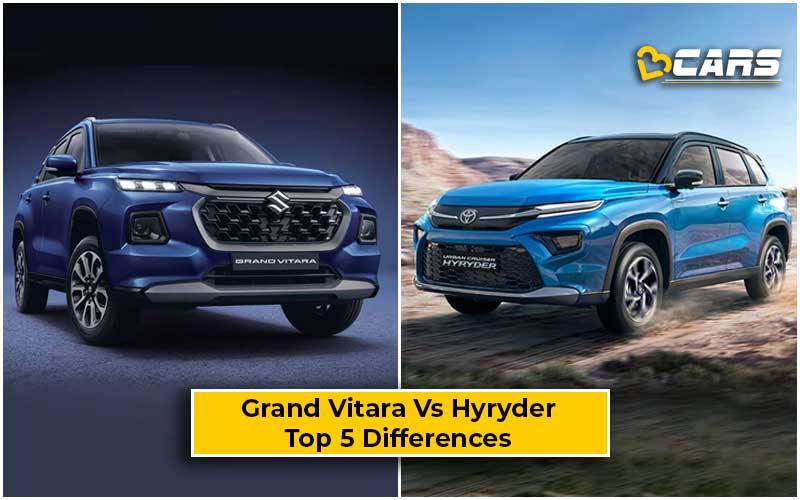
Top 5 Differences – Maruti Suzuki Grand Vitara Vs Toyota Urban Cruiser Hyryder
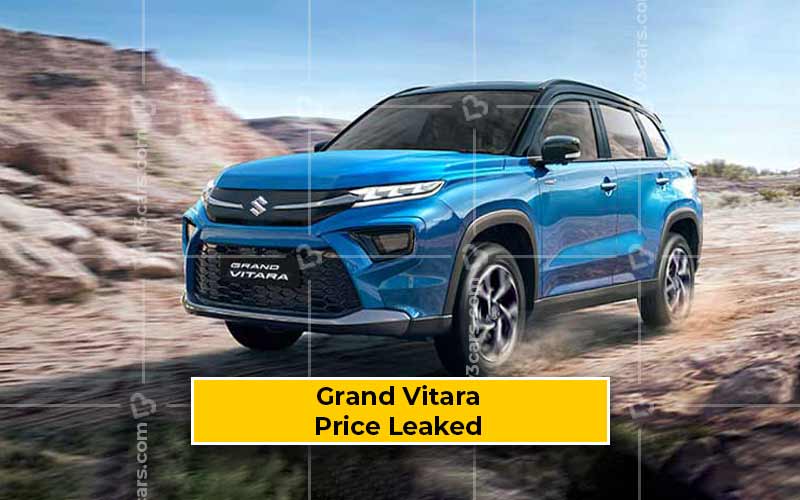
Maruti Suzuki Grand Vitara Ex-Showroom Price Leaked Ahead Of July 20 Debut

6 Missing Features In 2022 Hyundai Venue Facelift
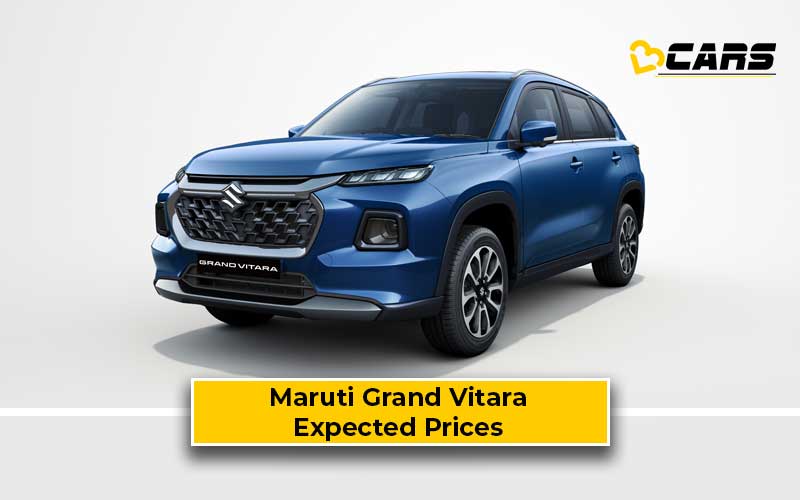
Maruti Suzuki Grand Vitara Expected Prices
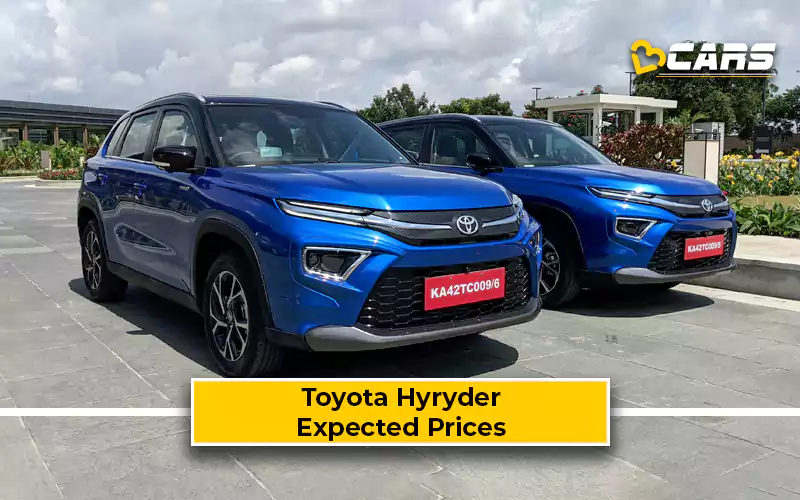
2022 Toyota Urban Cruiser Hyryder Expected Prices — Mild Hybrid, AWD And Mild Hybrid Auto
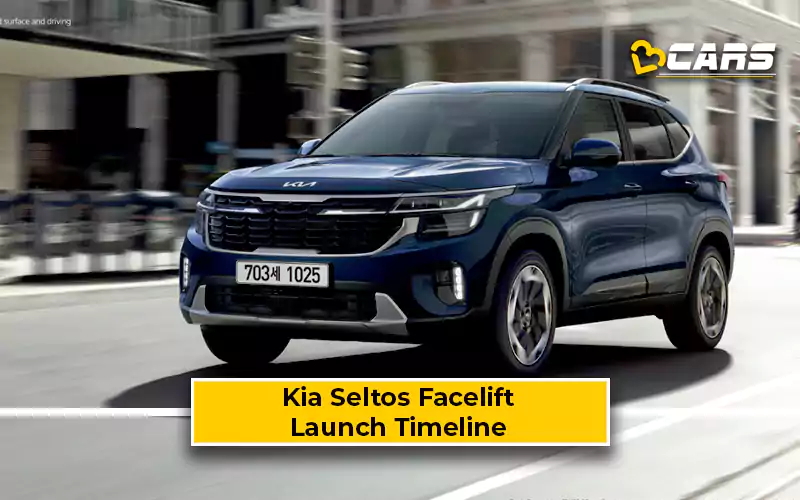
Kia Seltos Facelift Launch In 2023

2022 Mahindra Scorpio - First Teaser Drops Ft. Amitabh Bacchan
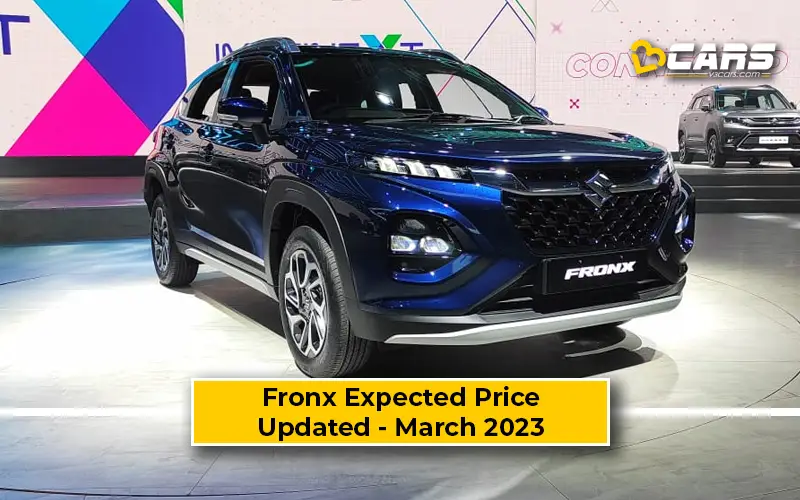
Updated Maruti Nexa Fronx Expected Price Calculation (Variant-wise) - With Logic

7 Missing Features In Hyundai Creta Over Toyota Urban Cruiser Hyryder
Latest Car News
Mahindra Bolero Bold Edition Revealed With Bronze Accents And Rear Camera
October 2026: Maruti Suzuki Grand Vitara Price Change - Hiked By Up To 10k
October 2026: Maruti Suzuki Victoris Price Change - Hiked By Up To 10k
October 2026: Maruti Suzuki Eeco Price Change - Hiked By Up To 5k
October 2026: Maruti Suzuki Invicto Price Change - Hiked By Up To 5k
October 2026: Maruti Suzuki Jimny Price Change - Hiked By Up To 5k
October 2026: Maruti Suzuki Brezza Price Change - Hiked By Up To 10k
October 2026: Maruti Suzuki Fronx Price Change - Hiked By Up To 5k
October 2026: Maruti Suzuki Ertiga Price Change — Hiked By Up To 10k
October 2026: Maruti Suzuki XL6 Price Change — Hiked By Up To 10k
Hyundai Bayon Safety Features Revealed Ahead Of October 26 Launch
Comments
0 comments