

 Upcoming CarsPopular CarsLatest CarsElectric Cars
Estimate costs and savings with our handy automotive calculators.
Simplify your car ownership journey with our buying, selling, and renewal tools.
Explore additional resources and comparisons for car enthusiasts.
Published : 29 September 2026
Read Time : 5 min
Author: Nikil Jonathan
The Renault Triber Turbo offers a more powerful engine to one of India's most affordable 7-seater MPVs, but the new powertrain isn't the only highlight. The Triber Turbo also offers several practical features that are particularly useful for families, including functional roof rails, a flexible 2nd and 3rd row, multiple cooled storage areas and rear AC vents. It also gets a comprehensive set of safety features as standard.

Here are the top features of the Renault Triber Turbo that make it worth considering.
1. 100PS Turbo-Petrol Engine With 180Nm Torque
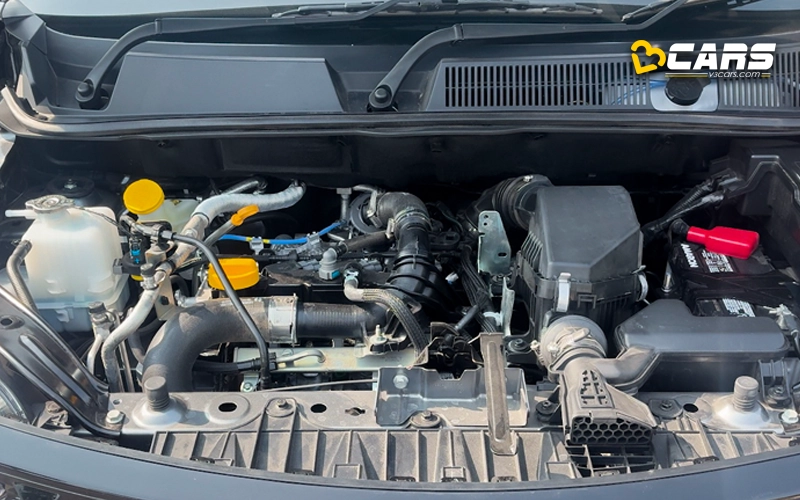
The biggest addition to the Renault Triber is its new 1L, 3-cylinder turbo-petrol engine. It produces 100PS of power at 5000rpm and 180Nm of torque between 2000rpm and 3750rpm. In comparison, the normal petrol engine produces 72PS and 96Nm.
The turbo engine therefore delivers 39% more power and 88% more torque than the normal petrol engine. More importantly, its peak torque arrives much earlier and remains available across a wider rev range, which should make the Triber more responsive when carrying a full load or driving on highways.
The Triber Turbo also offers a claimed mileage of 21kmpl, which is 2.6kmpl higher than the claimed figure of the naturally aspirated petrol-manual.
The only limitation is that the turbo engine is offered exclusively with a 5-speed manual transmission.
2. Functional Roof Rails With 50kg Load Capacity
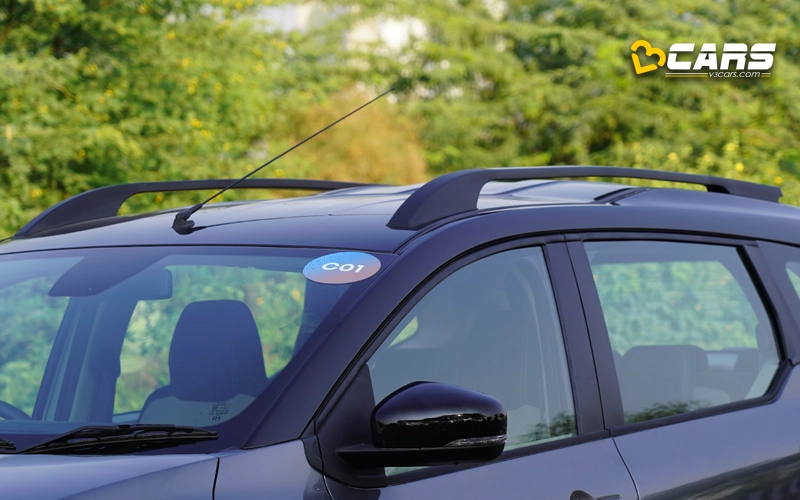
Roof rails are increasingly common on SUVs and crossovers, but they’re often fitted primarily as styling elements. The Triber’s roof rails, on the other hand, offer a load-carrying capacity of 50kg, making them functional rather than merely decorative.
This gives Triber owners the option of carrying additional luggage or equipment on the roof when the cabin and boot are occupied, which can be particularly useful on long family trips.
For a vehicle positioned as a practical 7-seater, this is a feature with genuine utility rather than just visual appeal.
3. Removable Third-Row Seats And Flexible Second Row
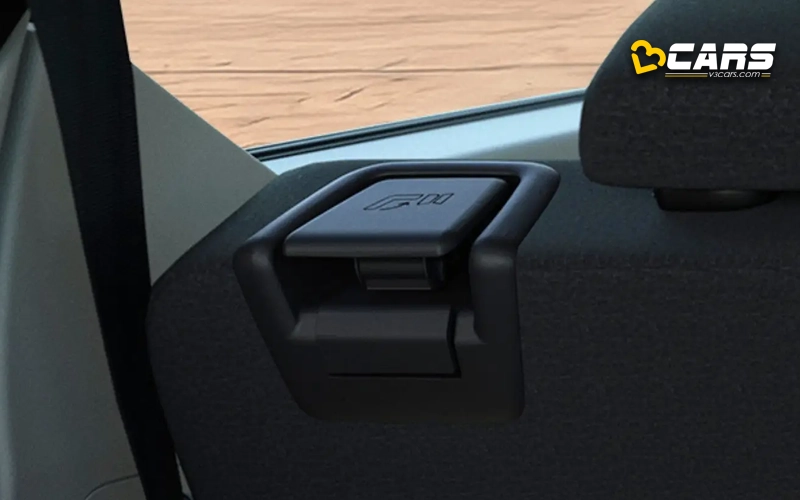
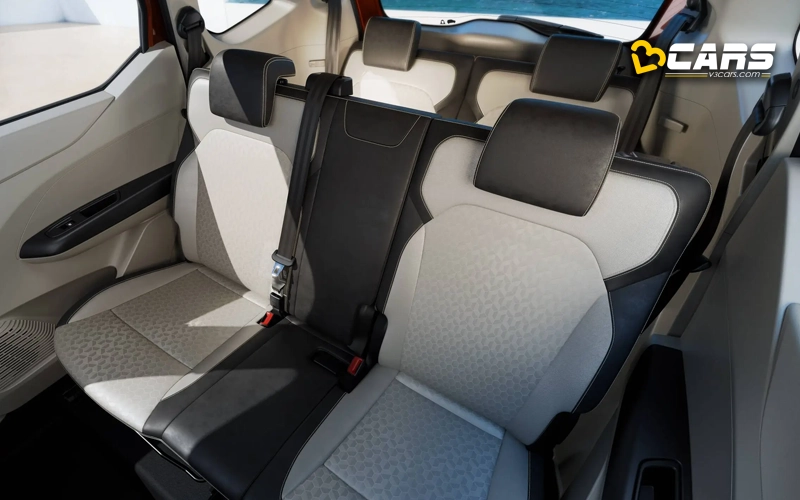
The Triber’s modular seating arrangement remains one of its strongest practical features, and the Triber Turbo retains it.
The 3rd-row seats can be completely removed, while the 2nd-row seats can slide and recline. The 2nd row also gets a one-touch tumble function, making access to the 3rd row easier.
With the 3rd row removed, the Triber offers a claimed 625-litre boot space.
This means owners can configure the cabin according to their needs. Use all 3 rows when carrying 7 people, fold or remove the 3rd row when carrying luggage, or adjust the 2nd row when additional passenger comfort or cargo space is required. This flexibility is arguably more useful than several of the headline features found in similarly priced SUVs.
4. 2nd- And 3rd-Row AC Vents
The Triber Turbo gets AC vents for the 2nd and 3rd rows as standard. With passengers sitting across 3 rows, front-mounted AC vents alone can take longer to cool the entire cabin.
Dedicated rear AC vents help distribute cooled air towards passengers sitting in the back. The 2nd row AC vents are positioned on the door pillars while the 3rd row gets roof-mounted AC vents.
5. 21 Standard Safety Features
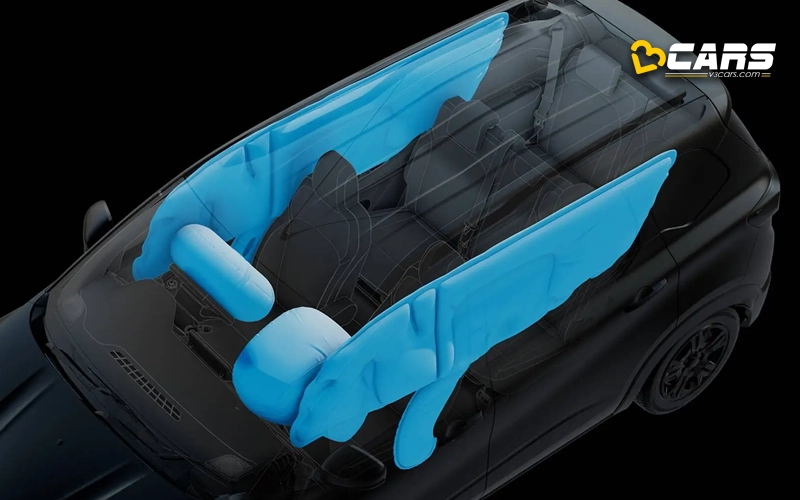
The Triber Turbo comes with a comprehensive set of 21 standard safety features, including:
- 6 airbags
- Electronic Stability Program
- Traction Control
- Hill Start Assist
- Front parking sensors
- Rear parking sensors
- Tyre Pressure Monitoring System
- ABS and EBD
- Electronic Brakeforce Distribution
The Turbo also gets revised braking and vehicle dynamic control tuning as part of the mechanical upgrades made for the more powerful turbo petrol engine.
6. 8-Inch Touchscreen With Wireless Android Auto And Apple CarPlay
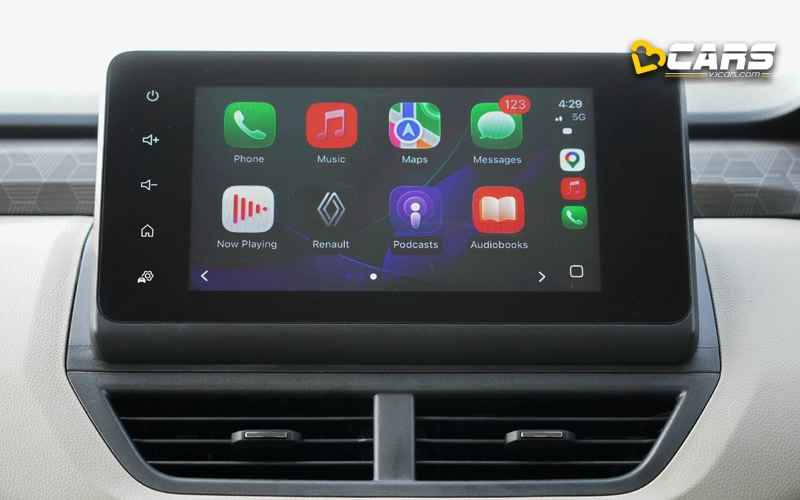
The Triber Turbo gets an 8-inch touchscreen infotainment system with wireless Android Auto and Apple CarPlay.
Wireless smartphone connectivity means compatible phones can connect without requiring a cable every time the car is started, while the 8-inch display provides a reasonably sized interface for navigation, music and other connected functions.
7. Cooled Centre Console And Lower Glove Box
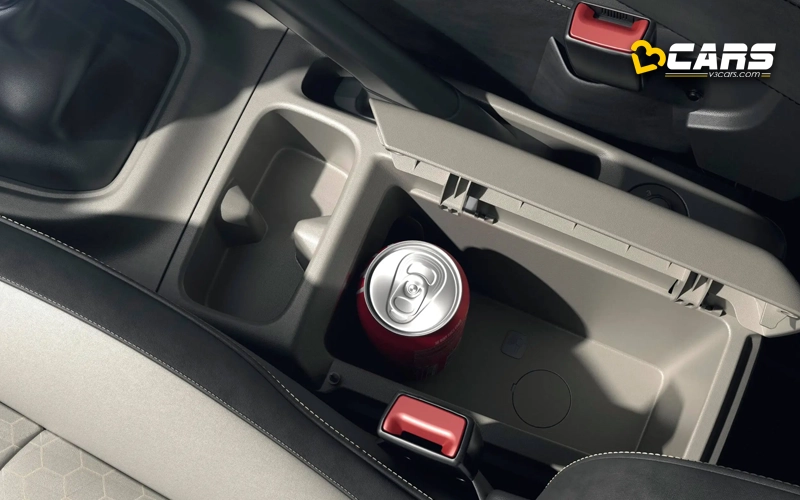
Renault has equipped the Triber with cooled storage compartments, including the centre console and lower glove box that can keep beverages and other items cool while the AC is running. For buyers who spend considerable time in the car or regularly undertake long journeys, these small convenience features can be surprisingly useful.
8. LED Headlamps, DRLs And LED Tail Lamps
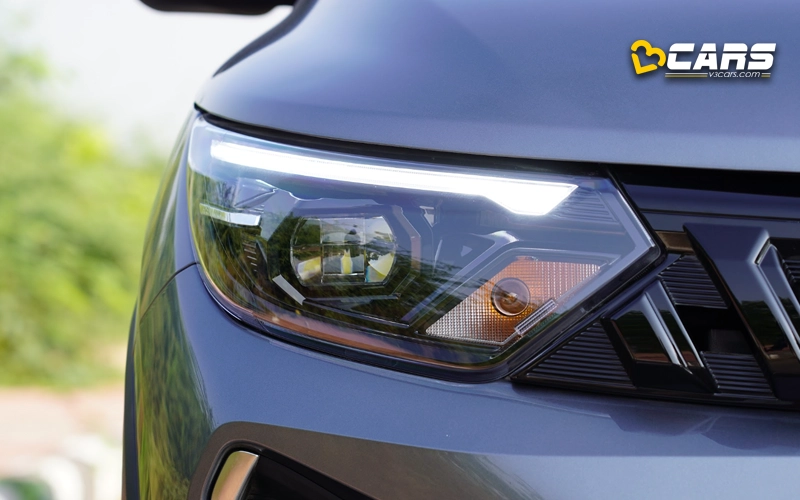
The top-spec Emotion variant gets LED headlamps with daytime running lights and LED tail lamps. The availability of LED lighting on the top variant gives buyers a clear visual distinction from lower variants.
9. Automatic Headlamps And Rain-Sensing Wipers
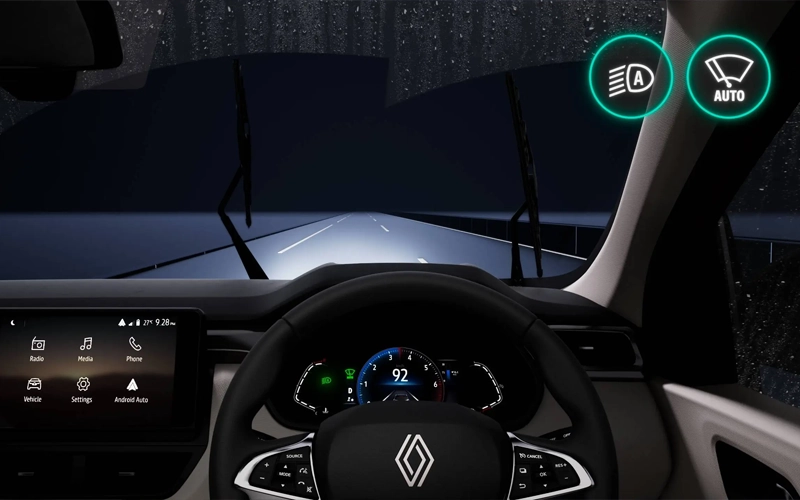
The Emotion variant also gets automatic headlamps and rain-sensing wipers. The automatic headlamps switch on when ambient light levels fall, while the rain-sensing wipers automatically adjust their operation depending on the amount of rain detected on the windscreen.
These are convenience features rather than necessities, but they reduce the number of small tasks the driver needs to perform, particularly during changing weather and light conditions.
10. Automatic Climate Control
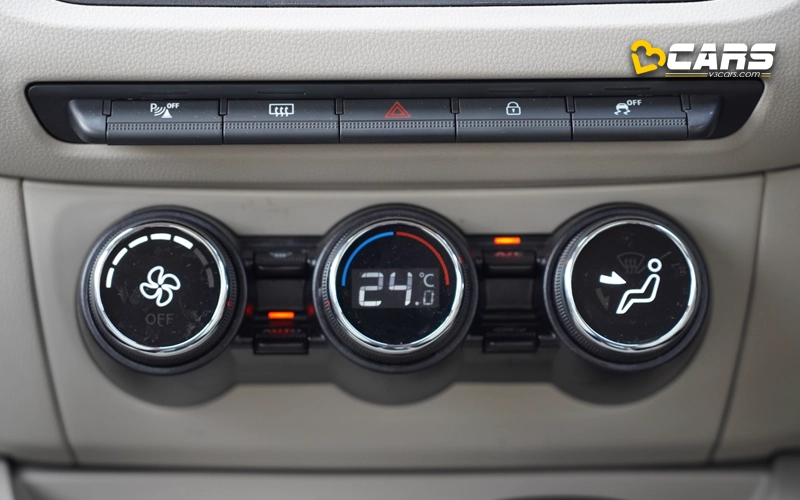
The Emotion variant gets automatic climate control. Unlike a conventional manual AC system, automatic climate control allows the driver to set a desired temperature and lets the system regulate cooling accordingly.
In a family-oriented vehicle with 3 rows, maintaining a comfortable cabin temperature becomes more important, especially when the vehicle is carrying several passengers.
11. 7-Inch Digital Driver's Display
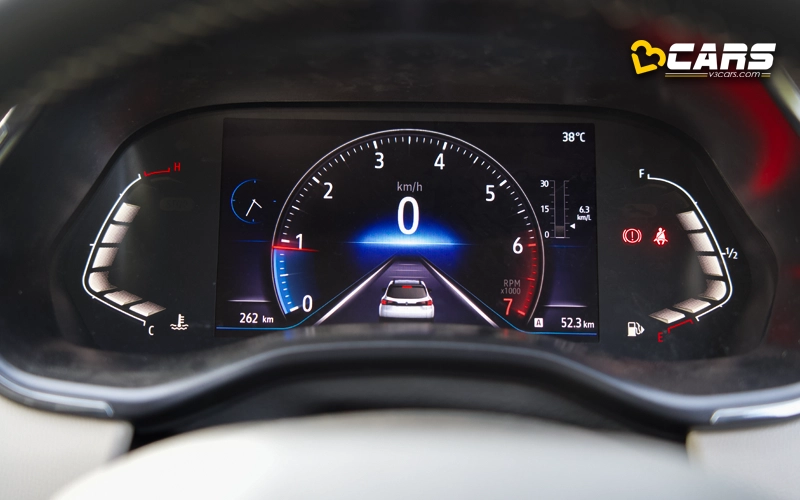
The Triber Turbo gets a 7-inch digital driver’s display. A larger digital instrument display allows key driving information to be presented more prominently than a conventional small instrument cluster, while giving the Triber a more modern cabin experience.
12. Wireless Charging
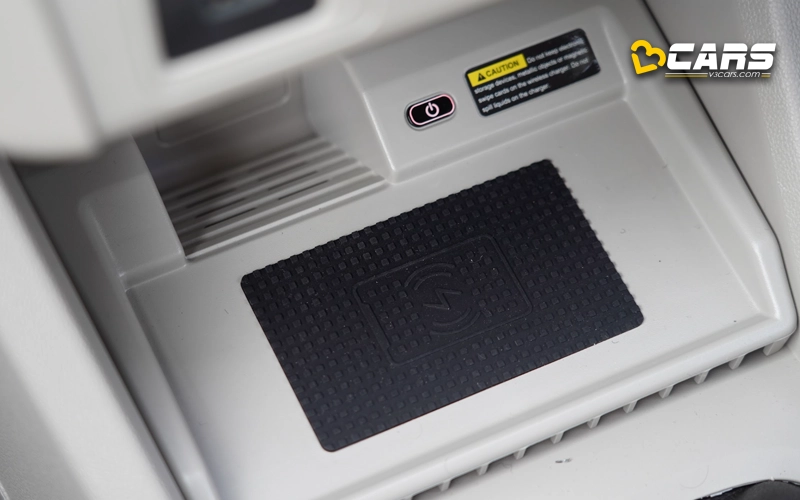
The Triber Turbo also gets a wireless smartphone charging pad. For compatible smartphones, this eliminates the need to plug in a charging cable for basic charging during a journey. Combined with wireless Android Auto and Apple CarPlay, it also keeps the centre console relatively free of cables.
Features Missing From 2026 Triber Turbo
While the Triber Turbo’s equipment list covers most of the practical requirements, there are a few features that could have made the overall package more appealing.
1. Alloy Wheels
The Triber Turbo could have benefited from alloy wheels, particularly considering that the Turbo is the more expensive and performance-oriented version of the Triber. Alloys would also have provided a more premium appearance compared with the steel wheels (base) and styled steel wheels on offer.
2. Ventilated Front Seats
Ventilated front seats would have been a useful addition for Indian conditions, especially on longer journeys. Along with the Triber's automatic climate control, ventilated seats could make the cabin more comfortable during hot weather.
3. Larger Infotainment Screen
An 8-inch touchscreen is adequate, but a larger display would have given the Triber a more contemporary cabin experience, particularly considering that several newer mass-market cars now offer 10.25-inch screens.
4. 2nd-Row Captain Seats
Given the Triber’s emphasis on passenger flexibility, 2nd-row captain seats could have provided a more premium alternative for buyers who don’t need to use the 2nd row as a 3-person bench. However, captain seats would also reduce the Triber’s ability to carry seven occupants.
5. Sunroof
A sunroof could have added to the perceived value of the top-spec Triber. However, it would primarily be a lifestyle feature rather than one that adds to the vehicle’s practicality.
Also Read: 2026 Renault Triber Turbo Goes On Sale From Rs. 7.84 Lakh
Before you finalise your next car, these V3Cars tools can help you make a more informed decision:
Fuel Cost Calculator for Cars – Know your monthly fuel expense based on usage and mileage
Car On-Road Price Calculator – Convert ex-showroom to on-road price for any city
Sell Used Car Online – Enter your car and contact details to get an instant price estimate and book a free inspection with our partner network
Did you find this information helpful?

Content Writer
Nikil's a huge fan of classic cars, especially Italian beauties such as the Alfa Romeo Giulia Sprint and the Iso Grifo. His love for cars and bikes originated when he first laid his eyes on a poster of the Ferrari F40 and the MV Agusta F4 when he was just a child. He also loves all things analogue, especially vintage cameras and turntables.
Car News Update
View All Latest News
Denza D9 Electric MPV Launched In India At Rs. 90 Lakh
Denza have launched the D9 electric MPV in India at Rs. 90 lakh (ex-showroom). The 7-seater comes in a single variant with a 115.07kWh battery and a claimed range of 730km on the New European Driving Cycle (NEDC). It is one of 2 models to mark the BYD-owned brand’s India entry, alongside the Z9 GT electric estate.
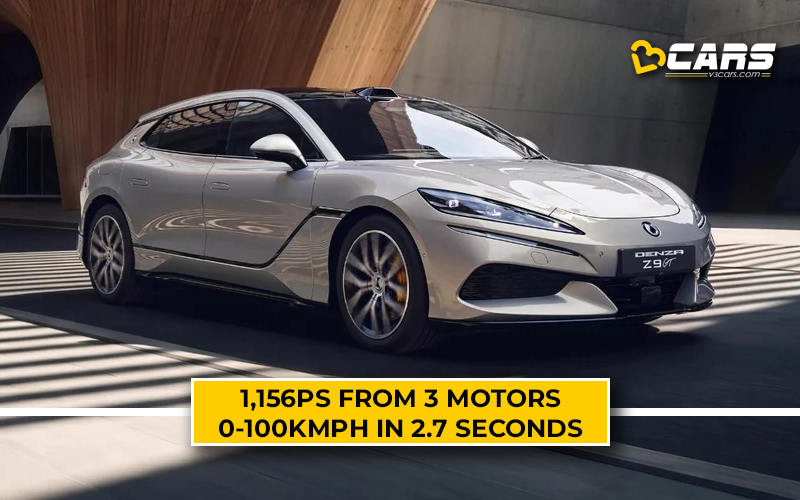
Denza Z9 GT Electric Estate Launched In India At Rs. 1.57 Crore
Denza have launched the Z9 GT in India at Rs. 1,57 crore (ex-showroom). The high-performance electric estate uses 3 motors to drive all 4 wheels and has a claimed 0-100kmph time of 2.7 seconds. It joins the D9 electric MPV in the first India line-up from BYD’s luxury brand.

Top 10 Features Of Denza Z9 GT – 3-Motor AWD, Crab Walk And 20-Speaker Audio
The Denza Z9 GT is a luxury performance car that combines a shooting brake design with advanced EV technology. Developed under BYD's premium Denza brand, the Z9 GT stands out with its 3-motor all-wheel-drive (AWD) setup, rear-wheel steering and several unusual manoeuvring functions.

Top 10 Features Of Denza D9 – Luxury Captain Seats, 15.6-Inch Screen And More
BYD's luxury car brand Denza have launched the D9 luxury MPV in India at a starting price of Rs. 90 lakh (ex-showroom). Positioned in the premium electric MPV segment, the D9 combines a spacious 7-seat cabin with chauffeur-focused comfort features, an extensive technology package and an all-electric powertrain.

Kia India To Invest $2 Billion In Second Plant; Capacity To Cross 6 Lakh Units
Kia India have announced a combined investment of USD 2 billion (approximately Rs 18,000 crore) with its supplier partners to set up its second manufacturing plant in Andhra Pradesh. The carmaker signed an MoU (Memorandum of Understanding) with the state government for the proposed facility, which will be located in Anantapur, where Kia already operates its existing manufacturing plant.

Made-In-India Renault Kiger Scores 4-Star Global NCAP Safety Rating
The India-made Renault Kiger has secured a 4-star rating for adult occupant protection (AOP) and a 3-star rating for child occupant protection (COP) in the latest Global NCAP crash tests. The SUV tested was manufactured in India for the South African market and came equipped with 6 airbags and electronic stability control (ESC) as standard.
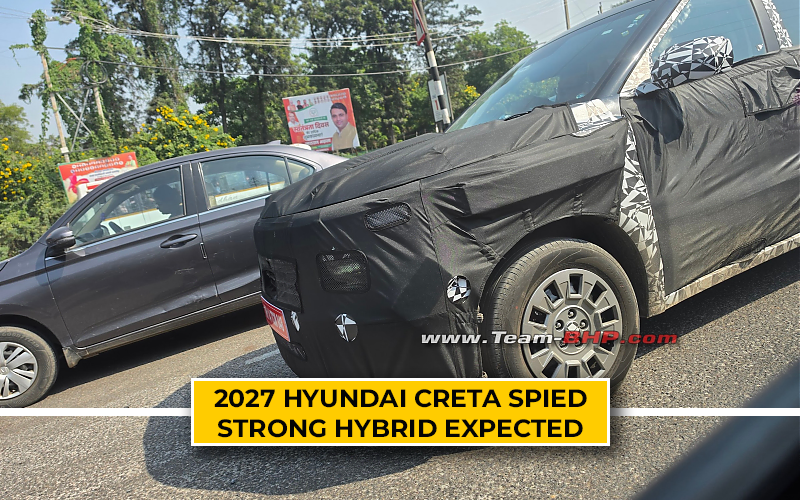
2027 Hyundai Creta Spied – Pleos Connect, Strong Hybrid Powertrain Expected
The next-generation Hyundai Creta was spotted testing in Manalie recently, revealing fresh exterior design details. The 3rd generation Creta will launch in India in April 2027 and is expected to be positioned above the new Bayon 2026.

BYD Atto 2 Spied Testing: What We Know So Far About This Electric SUV
BYD looks set to expand their Indian portfolio as a camouflaged BYD Atto 2 electric SUV was recently spotted testing on Indian soil. This marks the Atto 2’s first appearance in the country, hinting at a potential launch in the coming months. Positioned below the Atto 3, the Atto 2 is set to enter the competitive C-segment, challenging rivals like the Hyundai Creta EV, Tata Curvv EV as well as the Maruti Suzuki eVitara.

Mahindra XUV 3XO CNG Gets 5-Star Bharat NCAP Safety Rating
Bharat NCAP has extended the Mahindra XUV 3XO’s 5-star safety rating to its factory-fitted CNG variants, sold as the XUV 3XO ZNG. The CNG version earned 5 stars in both categories, scoring 29.36 out of 32.00 for adult occupant protection and 45.00 out of 49.00 for child occupant protection.
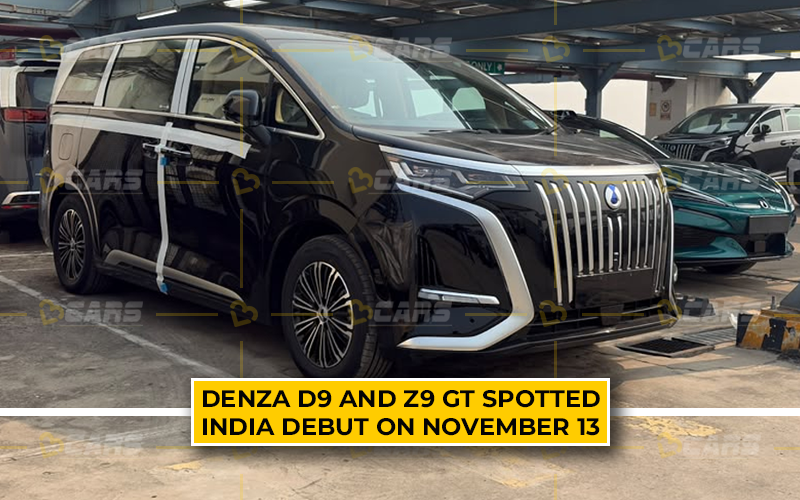
Denza D9 And Z9 GT Spotted At Dealer Yard Ahead Of India Debut
V3Cars have obtained exclusive photos of at least 3 Denza D9 electric MPVs at a dealer yard. A green Denza Z9 GT, the brand’s high-performance electric estate, is parked nearby. BYD’s luxury brand will make its India debut in Mumbai on November 13, 2026.

November 2026: VinFast VF MPV 7 Electric Price Change - Reduced By Rs. 4.10 Lakh
VinFast have revised the prices of the VF MPV 7 Electric for November 2026. The VF MPV 7 Electric with the 60.13kWh battery pack received a price cut of Rs. 4.10 lakh, making it significantly more affordable.
The VinFast VF MPV 7 Electric 2026 price now stands at Rs. 20.39 lakh, down from its previous price of Rs. 24.49 lakh. In percentage terms, the price reduction stands at 16.74%.

Toyota Innova Crysta Limo Launched For Fleet Customers; Prices Remain Unchanged
Toyota have introduced the Innova Crysta Limo, a dedicated offering for fleet and commercial mobility customers. Available exclusively in the GX-SLF variant, the new Limo branding aims to give Toyota’s professional mobility offering a distinct identity.
Expert Car Reviews
View All Car Reviews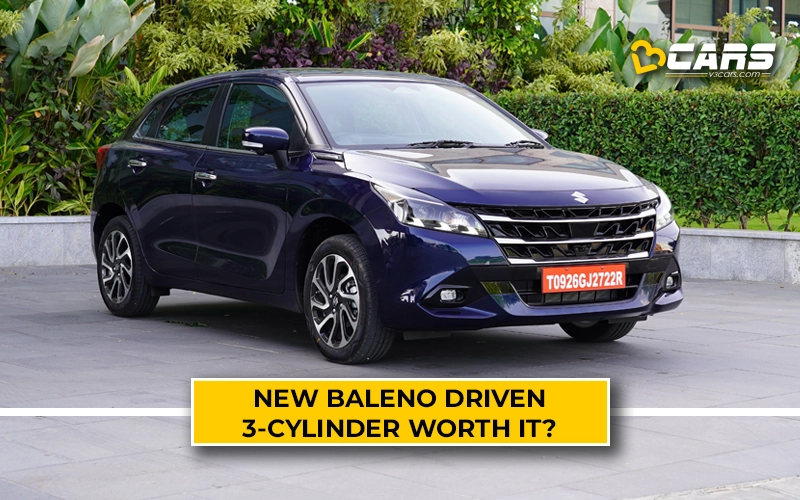
2026 Maruti Baleno Facelift Photo Gallery - Design, Features And Drive Review
The 2026 Maruti Baleno facelift gets a new 1.2L 3-cylinder petrol engine, level 2 ADAS and ventilated front seats. We drove it to see whether the new engine and added features make up for the loss of the old 4-cylinder’s refinement.
2026 Tata Curvv Series X Photo Gallery - Exterior, Interior And Features
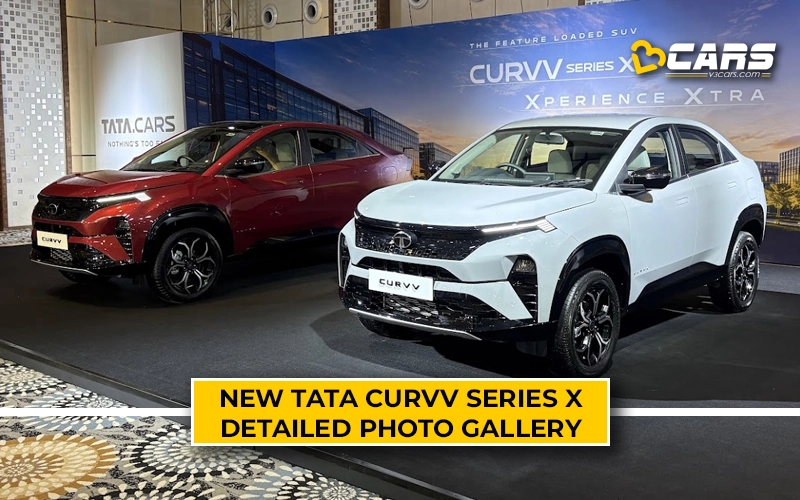
Tata have launched the 2026 Curvv Series X with a simpler variant lineup and several features moved further down the range. We got a closer look at the new Curvv Series X, including the Pure X Plus and Creative X Plus variants. In this detailed photo gallery, we take you through their exterior differences, interior, features, rear-seat space and the construction of Tata’s R-Comfort seats.
2026 Maruti Brezza Facelift Worth Buying?
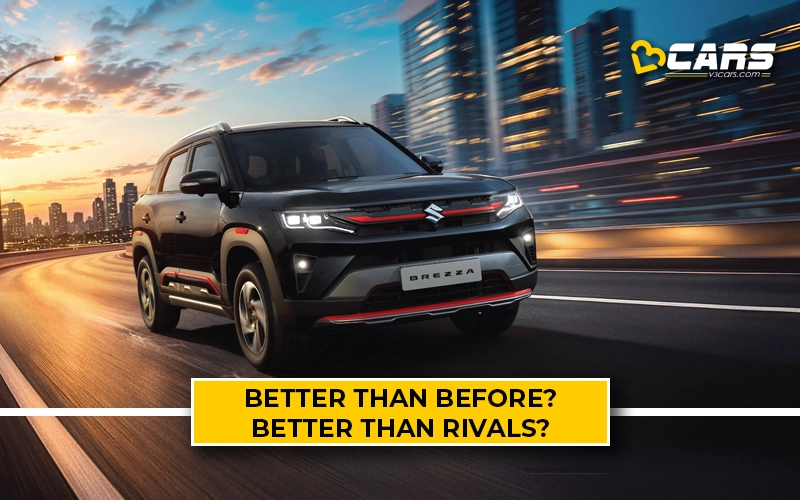
The 2026 Maruti Brezza adds a 1.0L turbo petrol engine, more features and a 5-star Bharat NCAP rating. Its underbody CNG cylinder also frees up the full 328L boot. However, not every powertrain and variant offers equally strong value. We explain which Brezza to buy and when a rival makes more sense.
2026 Maruti Arena Brezza 1.0L Turbo Manual First Drive Review
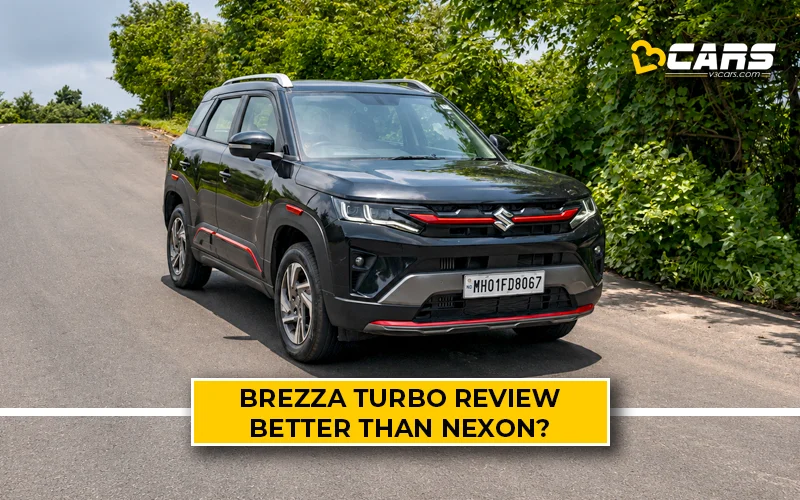
We drove the 2026 Maruti Arena Brezza with its new 1.0L turbo petrol engine and 6-speed manual transmission. We covered roughly 50km over about 2 hours at speeds representative of typical city driving. Here are my impressions of its performance, refinement, mileage, highway manners, ride and everyday usability.
2026 Maruti Brezza CNG 328L Boot Space Explained
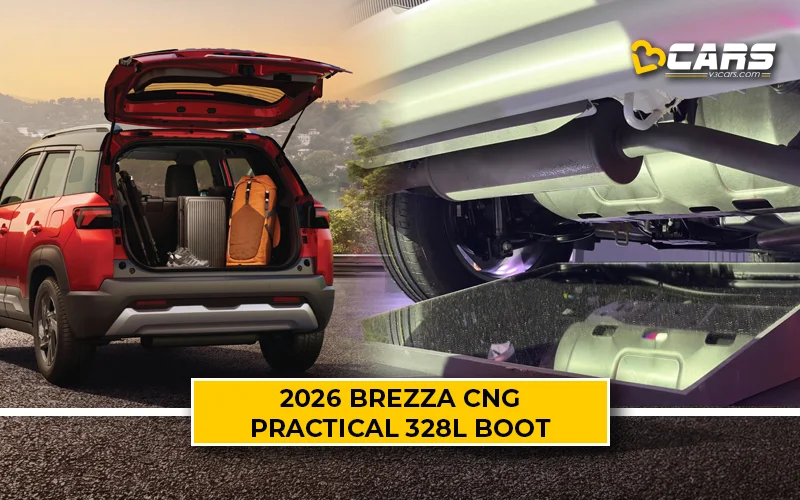
The 2026 Maruti Brezza CNG now has its cylinder mounted below the body, allowing it to retain the petrol version’s full 328L boot space. We examine the practical improvement, dimensions, ground clearance and boot-related features offered with each CNG variant.
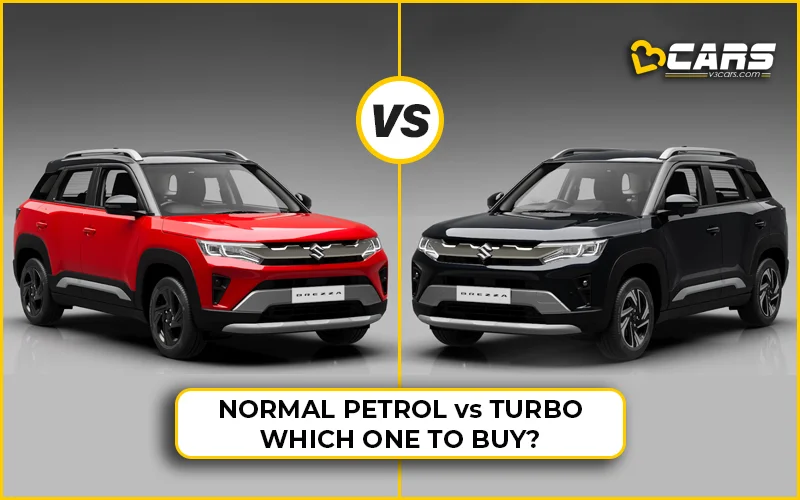
2026 Maruti Brezza 1.0L Turbo Vs 1.5L Petrol - Which One To Buy?
The 2026 Maruti Brezza offers a new 1.0L turbo petrol engine alongside the familiar 1.5L normal petrol. Both engines come with a new 6-speed manual transmission. The smaller turbo costs less and offers more power, torque and features, while the 1.5L petrol claims better mileage. We compare the 2 to determine which Brezza petrol-manual makes more sense.
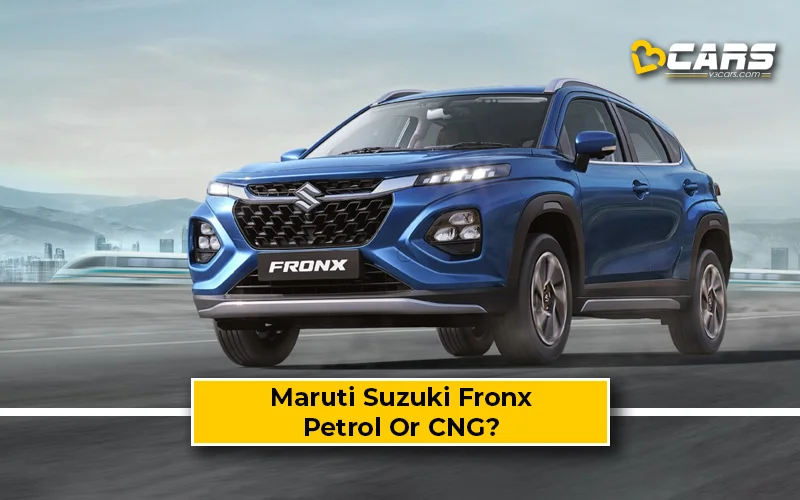
Maruti Arena Fronx Petrol Vs CNG Mileage And Running Cost
If you’re wondering whether to buy the Maruti Suzuki Fronx petrol or CNG, this article will help you make a data-backed decision. We compare the latest ex-showroom prices, official mileage figures and current fuel prices in Delhi to calculate the running cost difference between the Fronx petrol and CNG variants. We also calculate how many kilometres you need to drive the Fronx CNG to recover its higher upfront cost over the petrol variant.

2026 Honda ZR-V Hybrid Photo Gallery
The 2026 Honda ZR-V Hybrid is set to launch in India as Honda’s new flagship SUV on May 22, 2026. Positioned above the Elevate, the ZR-V will rival premium SUVs like the Volkswagen Tiguan R-Line and Skoda Kodiaq with its strong hybrid powertrain, premium interior and advanced features. In this detailed photo gallery, we take a closer look at the ZRV Hybrid’s design, cabin, practicality, safety features and hybrid technology.
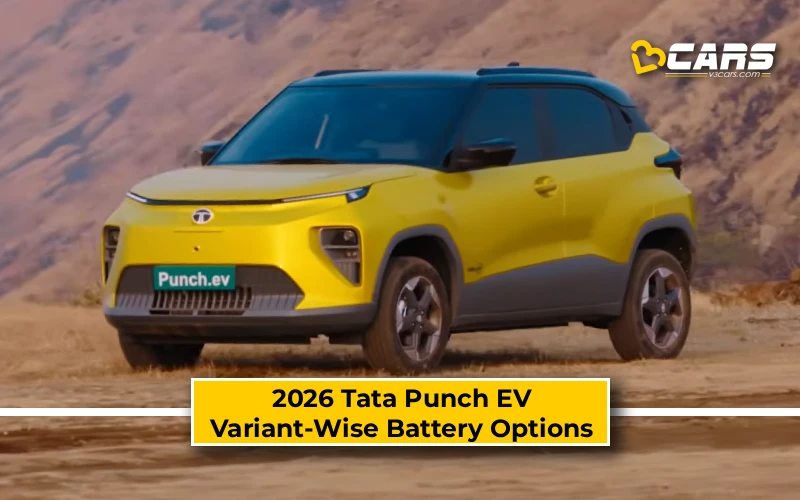
2026 Tata Punch EV Variant-Wise Powertrain Options – Battery, Range & Specifications
The 2026 Tata Punch EV is available with multiple battery pack and motor configurations, giving buyers the flexibility to choose between affordability and longer driving range. Depending on the variant, the new Punch EV offers different power outputs, battery capacities and claimed range. In this article, we break down the 2026 Punch EV’s variant-wise powertrain options and check out which variants get the 30kWh and 40kWh battery packs, along with their performance specifications, so you can pick the variant that best suits your needs.

Maruti Fronx 1.0L Turbo Petrol-Auto Mileage Test: Real World City, Highway Fuel Efficiency
In this article, we’ll present the data based on V3Cars mileage test and inform you about what real-world fuel efficiency you can expect from the Maruti Fronx 1.0L turbo petrol-automatic in city and highway driving conditions. We’ll also find out how much the mileage numbers deviate from the manufacturer-claimed fuel efficiency figures. The information presented in this article will also help you learn about the mileage differences you can expect when driving in the city vs driving on the highway.
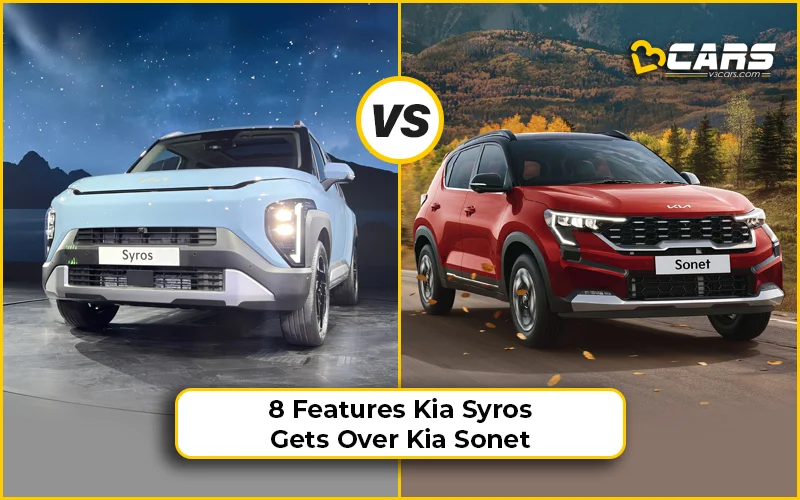
10 Features New Kia Syros Gets Over Kia Sonet
Kia unveiled their all-new B2-segment SUV, the 2025 Syros, on December 19, 2024. While Kia India are yet to reveal the variant-wise prices of the 2025 Syros, it is expected to slot in between the Sonet B2-SUV and Seltos C-SUV.
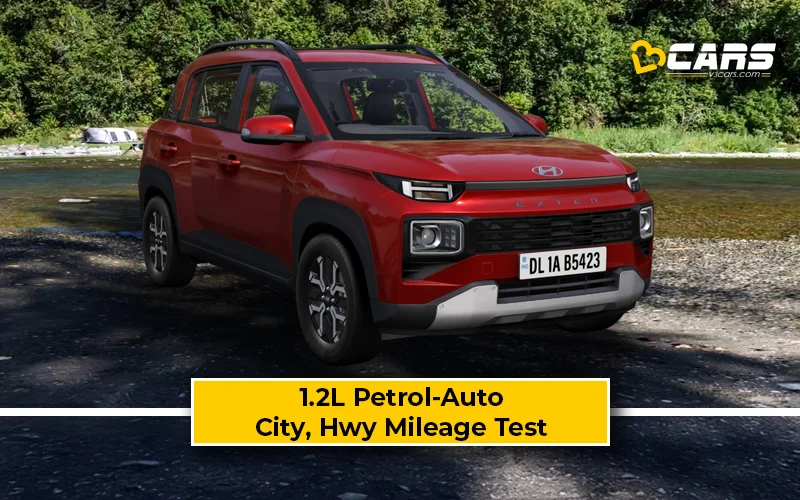
Hyundai Exter 1.2L Petrol-Auto Mileage Test: Real World City, Highway Fuel Efficiency
In this article, we’ll present the data based on V3Cars mileage test and inform you about what real-world fuel efficiency you can expect from the Hyundai Exter 1.2L petrol-automatic in city and highway driving conditions. We’ll also find out how much the mileage numbers deviate from the manufacturer-claimed fuel efficiency figures. The information presented in this article will also help you learn about the mileage differences you can expect when driving in the city vs driving on the highway.





Popular News
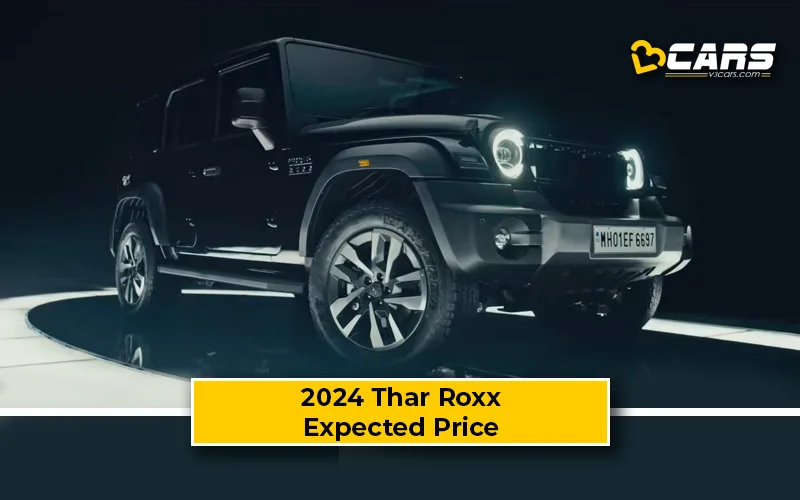
Mahindra Thar Roxx (Thar 5-door) Expected Price — #WithLogic (Updated: Jul 29)

5 Missing Features In Mahindra XUV700 Over Scorpio N

Top 5 Features Scorpio N Misses But The Tata Safari Gets
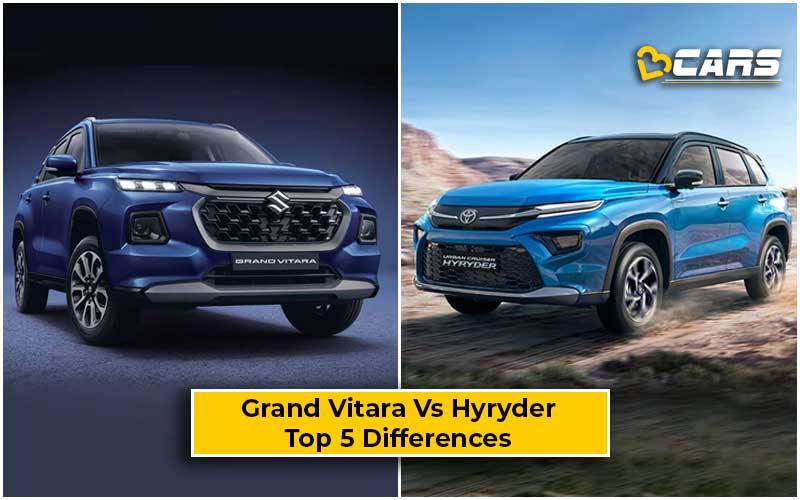
Top 5 Differences – Maruti Suzuki Grand Vitara Vs Toyota Urban Cruiser Hyryder
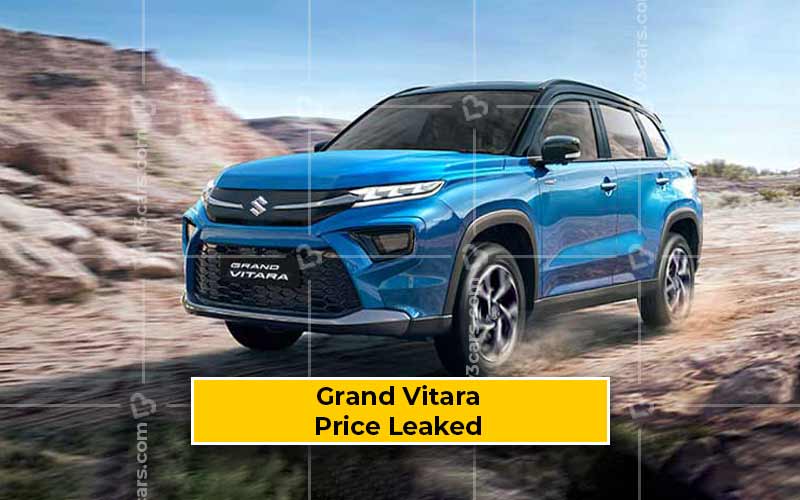
Maruti Suzuki Grand Vitara Ex-Showroom Price Leaked Ahead Of July 20 Debut

6 Missing Features In 2022 Hyundai Venue Facelift
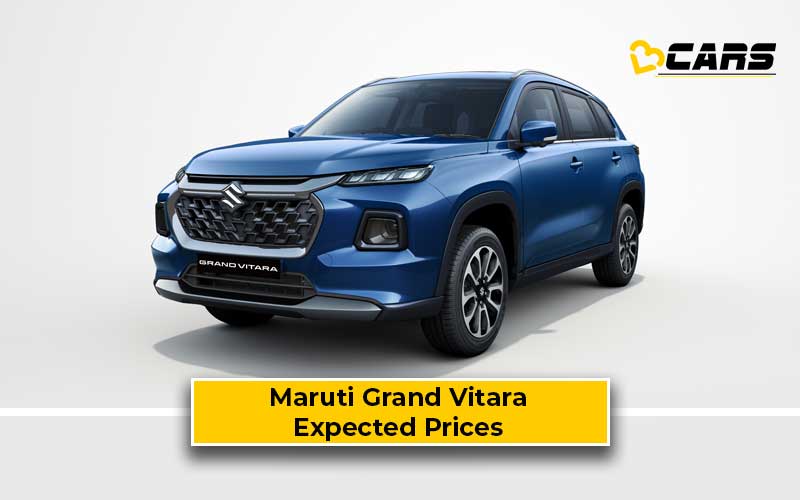
Maruti Suzuki Grand Vitara Expected Prices
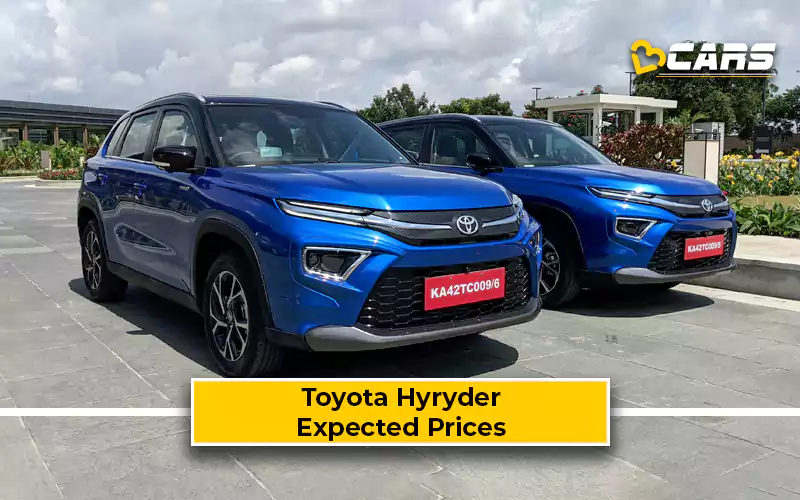
2022 Toyota Urban Cruiser Hyryder Expected Prices — Mild Hybrid, AWD And Mild Hybrid Auto

Kia Seltos Facelift Launch In 2023

2022 Mahindra Scorpio - First Teaser Drops Ft. Amitabh Bacchan
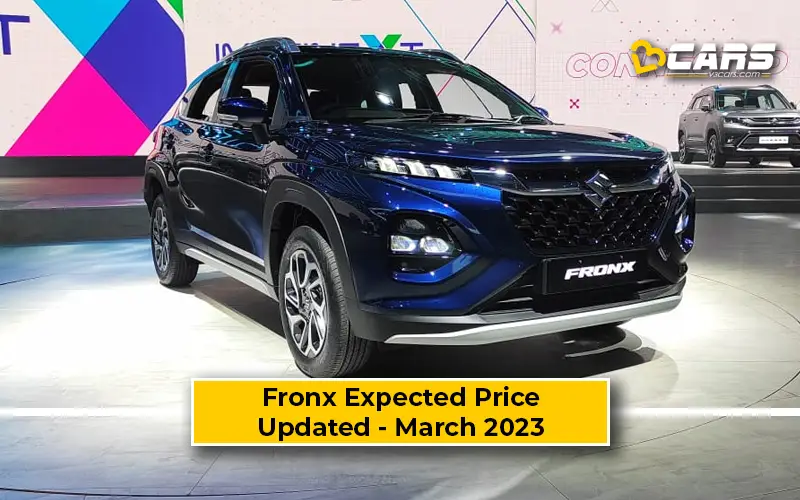
Updated Maruti Nexa Fronx Expected Price Calculation (Variant-wise) - With Logic

7 Missing Features In Hyundai Creta Over Toyota Urban Cruiser Hyryder
Latest Car News
Denza D9 Electric MPV Launched In India At Rs. 90 Lakh
Denza Z9 GT Electric Estate Launched In India At Rs. 1.57 Crore
Top 10 Features Of Denza Z9 GT – 3-Motor AWD, Crab Walk And 20-Speaker Audio
Top 10 Features Of Denza D9 – Luxury Captain Seats, 15.6-Inch Screen And More
Kia India To Invest $2 Billion In Second Plant; Capacity To Cross 6 Lakh Units
Made-In-India Renault Kiger Scores 4-Star Global NCAP Safety Rating
2027 Hyundai Creta Spied – Pleos Connect, Strong Hybrid Powertrain Expected
BYD Atto 2 Spied Testing: What We Know So Far About This Electric SUV
Mahindra XUV 3XO CNG Gets 5-Star Bharat NCAP Safety Rating
Denza D9 And Z9 GT Spotted At Dealer Yard Ahead Of India Debut
November 2026: VinFast VF MPV 7 Electric Price Change - Reduced By Rs. 4.10 Lakh
Comments
0 comments