

 Upcoming CarsPopular CarsLatest CarsElectric Cars
Estimate costs and savings with our handy automotive calculators.
Simplify your car ownership journey with our buying, selling, and renewal tools.
Explore additional resources and comparisons for car enthusiasts.
Published : 29 October 2026
Read Time : 5 min
Author: Siddharth
The Hyundai Bayon HX5 CVT and Volkswagen Taigun Highline AT offer different reasons to spend around Rs. 14 lakh on an automatic SUV. The Bayon costs less and offers features such as a sunroof, smart key and electrically folding outside mirrors. The Taigun offers better driveability, alloy wheels and additional rear-seat equipment. Here’s how these petrol automatic SUVs compare.
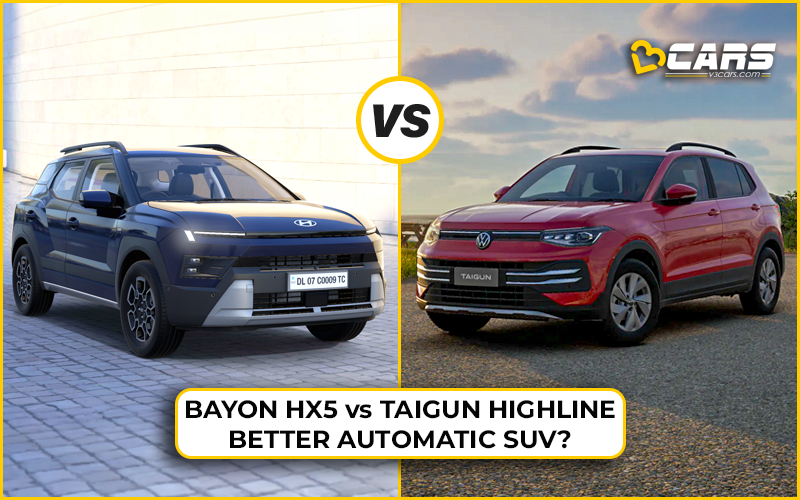
Hyundai Bayon HX5 CVT vs Taigun Highline AT - Prices
The HX5 is the most affordable automatic option in the Bayon range. Similarly, the Highline is the starting point for buyers considering a Taigun automatic.
Here are their ex-showroom prices:
*The Bayon’s price is introductory.
With Rs. 25,100 separating the Hyundai Bayon HX5 CVT and Volkswagen Taigun Highline 1.0L AT, let’s look at whether the Taigun’s benefits justify its premium over the Bayon.
Hyundai Bayon HX5 CVT vs Taigun Highline AT - Features
Both SUVs cover several everyday requirements, including auto AC, cruise control, wireless smartphone connectivity and a rear parking camera.
The table below lists their notable common features:
The differences become clearer when we look at their specific equipment:
The Bayon’s additional features mainly improve convenience. Its smart key, automatic headlamps and electrically folding mirrors can be useful during everyday use. Buyers who want a sunroof also get one without moving to a higher trim.
The Taigun’s rear armrest, adjustable rear headrests and split-folding rear seat make its rear cabin more versatile. It also offers front parking sensors and a rear wiper. Volkswagen additionally list multi-collision braking, brake disc wiping and an electronic differential lock among its safety functions.
Hyundai Bayon HX5 CVT vs Taigun Highline AT - Engine Specs And Mileage
The Bayon uses a 1.5L non-turbo petrol engine with a CVT automatic. The Taigun gets a smaller 1.0L turbo petrol engine paired with an 8-speed torque converter automatic.
Here’s how their specifications compare:
Both engines produce 115PS, but the Taigun delivers about 24 percent more peak torque. Its maximum torque is also available from 1850rpm, compared with the Bayon’s torque peak at 4500rpm. This gives the Taigun the stronger torque figures on paper, particularly at lower engine speeds.
The Taigun also has the higher claimed mileage. Using these figures alone, it would consume approximately 26L less petrol over 10,000km. Actual fuel consumption will depend on traffic, driving style and operating conditions.
The Bayon offers Eco, Normal and Sport drive modes. These alter the powertrain’s response, but they do not increase its stated maximum power or torque.
Hyundai Bayon HX5 CVT vs Taigun Highline AT - Dimensions And Practicality
The Bayon is longer and wider, while the Taigun is slightly taller and has a longer wheelbase.
The table below brings together their dimensions and other practical specifications:
*Hyundai quote the Bayon’s height with the roof rails included. #Hyundai claim a 505L boot capacity for the Bayon with no spare tyre fitted. The HX5 CVT comes with a spare tyre, and Hyundai have not published its boot capacity separately.
The Taigun’s 60:40 split rear seat provides another practical benefit. It lets you fold part of the rear bench for longer luggage while retaining passenger seating on the other side.
Hyundai Bayon HX5 CVT vs Taigun Highline AT - Crash-Test Ratings And Warranty
The Taigun received 5 stars for adult and child occupant protection in Global NCAP’s October 2022 assessment. Hyundai describes the Bayon as engineered for 5-star Indian safety standards.
Their standard warranty coverage also differs:
The Taigun provides an additional year of standard coverage. The Bayon’s unlimited-kilometre warranty could be more useful for buyers with high annual usage.
Hyundai Bayon HX5 CVT vs Taigun Highline AT - Which One Should You Buy?
Based on their specifications and equipment, the Taigun Highline AT would be our pick. Its turbo engine should require less revving at lower city speeds, when overtaking or driving uphill with passengers and luggage. The Rs. 25,100 premium also brings front parking sensors, alloy wheels and a rear wiper.
The rear armrest, adjustable rear headrests and split-folding rear seat further strengthen its appeal as a family SUV. These additions are useful if you regularly carry rear-seat passengers or need flexibility for luggage.
Choose the Bayon HX5 CVT if its convenience features matter more to you. It costs less and includes a sunroof, smart key, automatic headlamps and electrically folding mirrors. Factory-fitted connected car technology and an individual tyre pressure display are other useful additions.
The Taigun makes the stronger case for buyers who frequently travel with a full load or on hilly roads. The Bayon offers more everyday convenience features at a lower purchase price.
Also Read: 2026 Hyundai Bayon Variants Explained - Which One To Buy?
Before you finalise your next car, these V3Cars tools can help you make a more informed decision:
Fuel Cost Calculator for Cars – Know your monthly fuel expense based on usage and mileage
Car On-Road Price Calculator – Convert ex-showroom to on-road price for any city
Sell Used Car Online – Enter your car and contact details to get an instant price estimate and book a free inspection with our partner network
Did you find this information helpful?

Associate Editor


Siddharth enjoys understanding why certain cars click with buyers and figuring out what makes people actually stop and read or watch automotive content. He also has a soft spot for cars that may not always make logical sense, but still leave a lasting impression. Travelling, photography and exploring new cuisines are among his other passions.
Car News Update
View All Latest News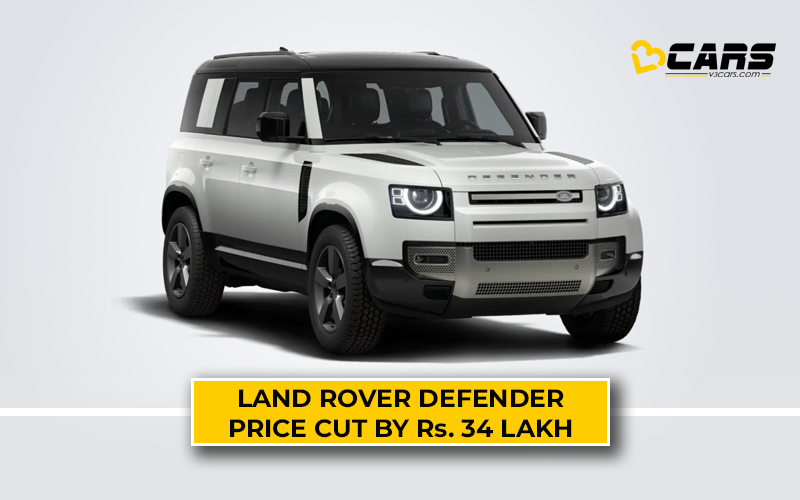
Land Rover Defender Prices Cut By Up To Rs. 34 Lakh After Local Assembly
The Land Rover Defender 110 is now up to Rs. 34 lakh cheaper in India after Jaguar Land Rover (JLR) started assembling the luxury SUV at its Pune facility. Prices now start at Rs. 99 lakh (ex-showroom), taking the entry-level locally assembled version below the Rs. 1 crore mark. The price reduction is a result of shifting from importing fully built vehicles to assembling them in India using imported kits.
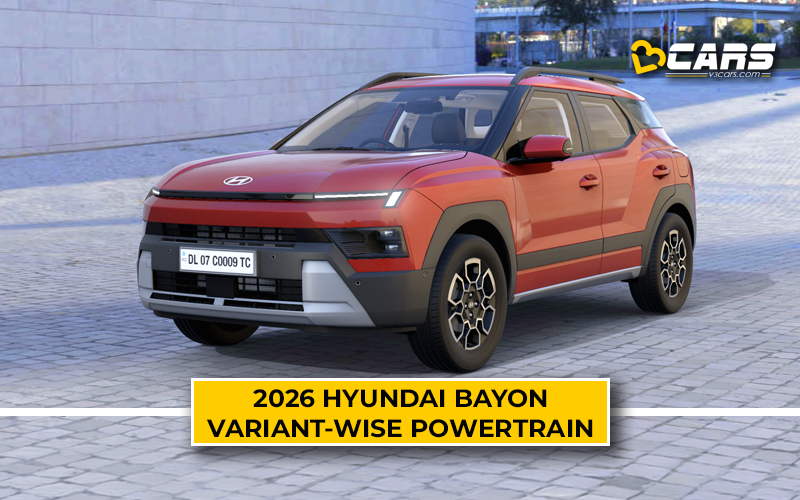
Hyundai Bayon – Variant-Wise Powertrain Options
Hyundai have launched the 2026 Bayon SUV with prices starting at Rs. 10 lakh (ex-showroom). Hyundai offer the 2026 Bayon in 7 variants with petrol-manual and petrol-automatic powertrain options. However, the automatic transmission is not available in all variants.

New Maruti Suzuki YMC Electric MPV Spotted
A new Maruti Suzuki electric MPV, internally codenamed YMC, was spotted testing recently, with fresh spy shots revealing more details about its exterior styling and cabin. Expected to share its underpinnings with the e Vitara, the upcoming electric MPV could expand Maruti Suzuki’s EV lineup with a more spacious family-oriented model.
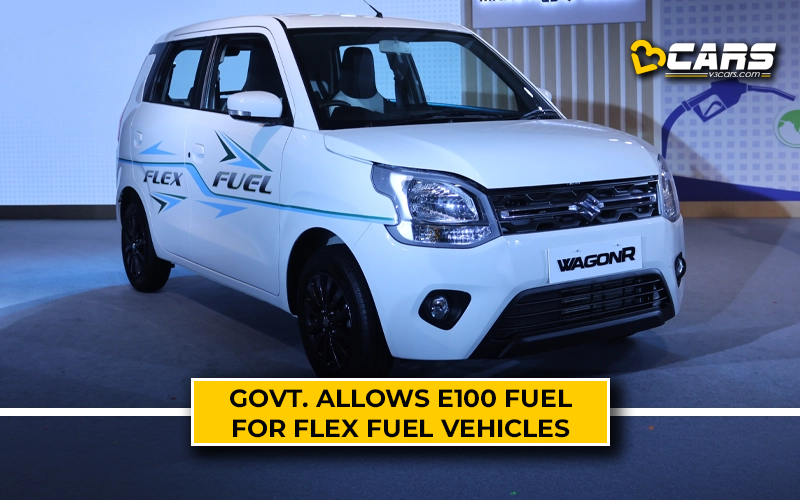
Government Allows E100 Fuel For Flex-Fuel Cars – What Changes For Buyers?
The Ministry of Road Transport and Highways (MoRTH) have amended the Central Motor Vehicles Rules (CMVR), 1989, to formally recognise E100 fuel for compatible flex-fuel vehicles. The change creates a clearer regulatory pathway for automakers to develop and certify vehicles that can run on higher ethanol blends, including fuel containing 100% ethanol. However, it does not mean that existing petrol cars can use E100 or that the fuel will become available at every petrol pump immediately.
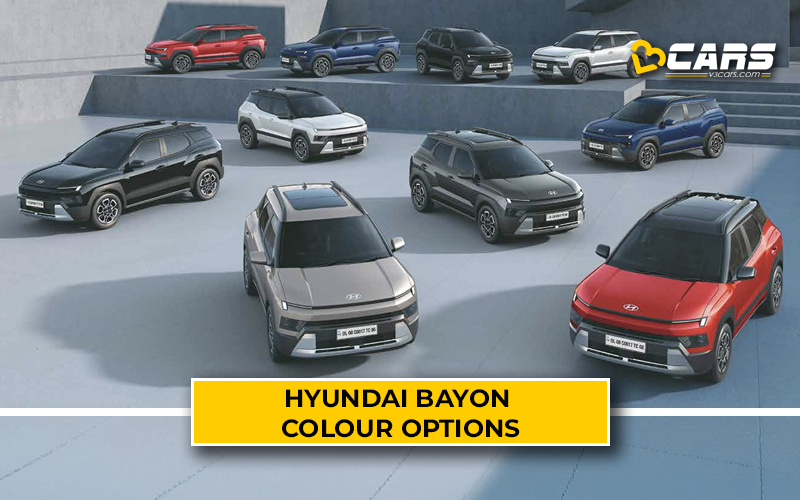
Hyundai Bayon Variant-Wise Colours
Hyundai offer 10 exterior colour options for the Bayon. These include 6 single-tone shades, 2 matte finishes and 2 dual-tone combinations. Here’s their variant-wise availability, along with the interior colour themes paired with them.

Hyundai Bayon CNG Launch In January 2027
Hyundai have confirmed that the Bayon CNG will launch in India in January 2027. The upcoming CNG version of Hyundai’s new C-segment SUV is expected to use the petrol model’s 1.5L non-turbo petrol engine, albeit with lower power and torque outputs. It will also feature an underbody CNG tank to preserve boot space.

Jeep Compass Sport AT Launched At Rs. 22 Lakh
Jeep India have launched the Compass Sport base variant with a 9-speed automatic transmission at Rs. 21.99 lakh (ex-showroom). Compared to the 2026 Compass Sport manual variant, the new Compass Sport AT costs Rs. 4 lakh more and serves as the entry-level variant with an automatic gearbox. Deliveries are scheduled to begin by the second week of November 2026.
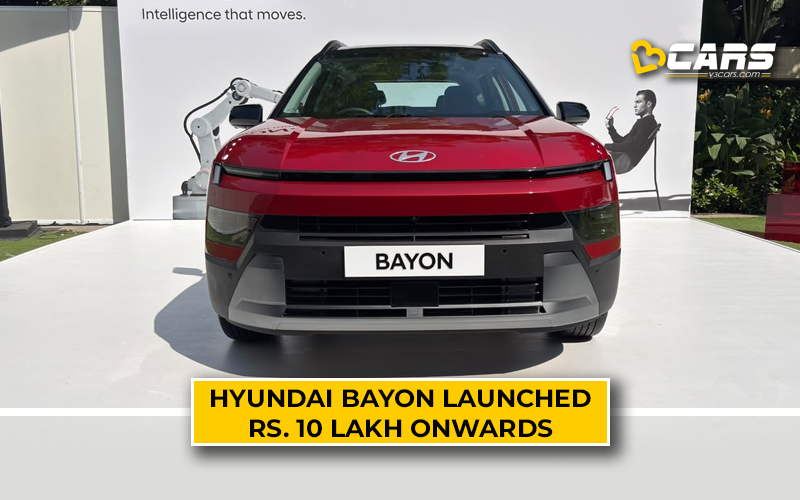
Hyundai Bayon Launched At Rs. 10 Lakh
Hyundai have launched the Bayon at an introductory starting price of Rs. 10 lakh (ex-showroom). Buyers can choose a 1.5L normal petrol engine with either a 6-speed manual transmission or CVT automatic.

Top 15 Features Of Hyundai Bayon
The Hyundai Bayon 2026 offers several premium comfort, convenience, technology and safety features. Highlights include AI-powered voice assistance, a panoramic sunroof, ventilated front seats, a 360-degree camera and Level 2 ADAS. It also gets a large 505-litre boot and a 1.5L non-turbo petrol engine with manual and CVT automatic transmission options.
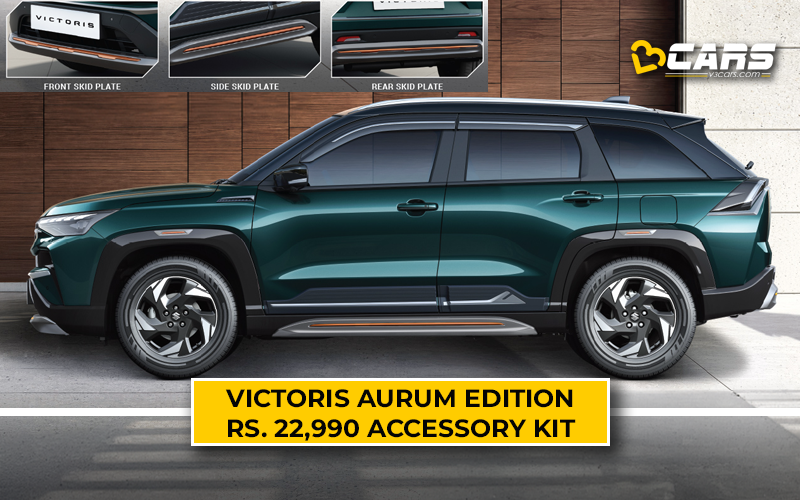
Maruti Victoris Aurum Edition Launched With Rs. 22,990 Accessory Kit
Maruti Suzuki have launched the Victoris Aurum Edition to mark the SUV’s first anniversary. Offered for the strong hybrid variants, it adds exterior styling accessories, cabin and boot mats, and a boot sill guard as a kit which costs Rs. 22,990.

Hyundai Ioniq 1 Top 5 Things To Know
Hyundai are developing a compact electric SUV, expected to be called the Ioniq 1. Here are 5 things to know about its positioning, battery options, features and expected debut.
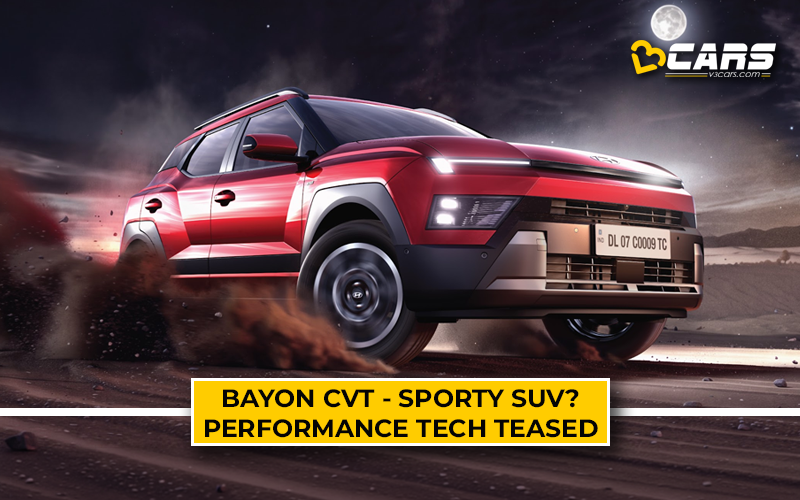
Hyundai Bayon CVT To Get 3 Drive Modes, Performance Features Revealed
Hyundai have confirmed 3 drive modes and 2 performance features for the upcoming Bayon’s CVT automatic. The performance features focus on quicker overtaking response and a sportier acceleration feel. The SUV will launch on October 26, 2026.
Expert Car Reviews
View All Car Reviews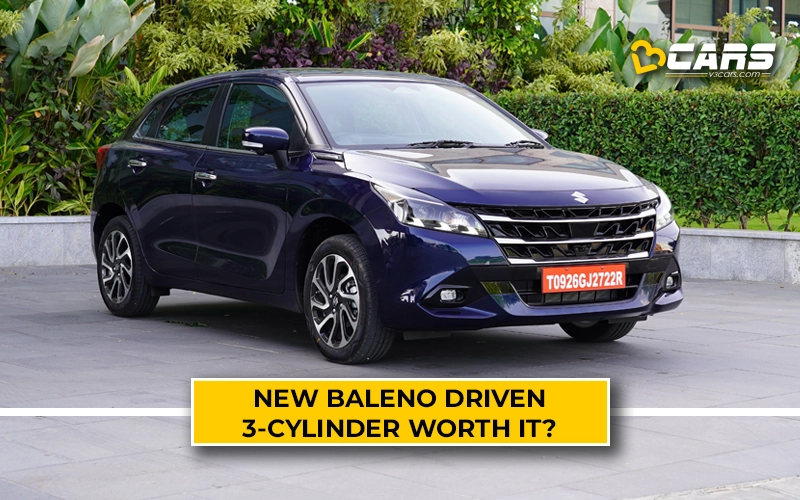
2026 Maruti Baleno Facelift Photo Gallery - Design, Features And Drive Review
The 2026 Maruti Baleno facelift gets a new 1.2L 3-cylinder petrol engine, level 2 ADAS and ventilated front seats. We drove it to see whether the new engine and added features make up for the loss of the old 4-cylinder’s refinement.
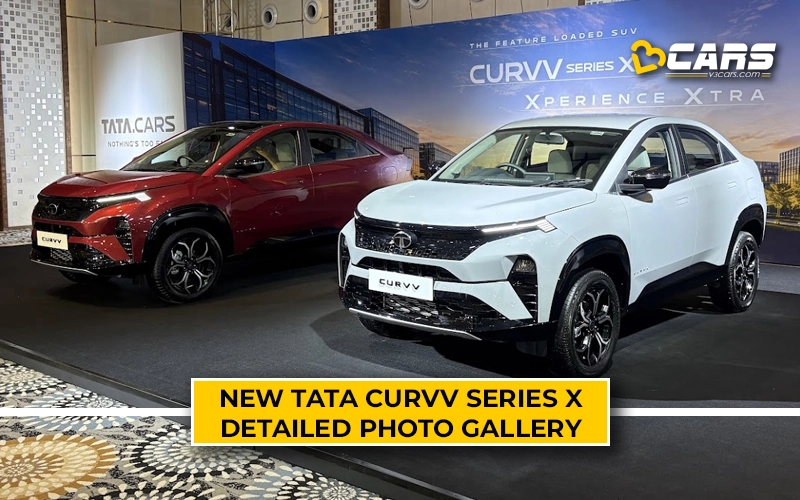
2026 Tata Curvv Series X Photo Gallery - Exterior, Interior And Features
Tata have launched the 2026 Curvv Series X with a simpler variant lineup and several features moved further down the range. We got a closer look at the new Curvv Series X, including the Pure X Plus and Creative X Plus variants. In this detailed photo gallery, we take you through their exterior differences, interior, features, rear-seat space and the construction of Tata’s R-Comfort seats.

2026 Maruti Brezza Facelift Worth Buying?
The 2026 Maruti Brezza adds a 1.0L turbo petrol engine, more features and a 5-star Bharat NCAP rating. Its underbody CNG cylinder also frees up the full 328L boot. However, not every powertrain and variant offers equally strong value. We explain which Brezza to buy and when a rival makes more sense.
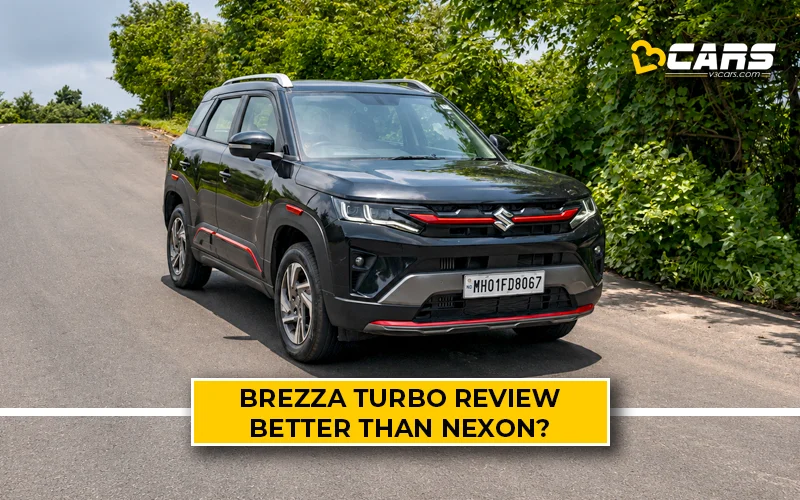
2026 Maruti Arena Brezza 1.0L Turbo Manual First Drive Review
We drove the 2026 Maruti Arena Brezza with its new 1.0L turbo petrol engine and 6-speed manual transmission. We covered roughly 50km over about 2 hours at speeds representative of typical city driving. Here are my impressions of its performance, refinement, mileage, highway manners, ride and everyday usability.
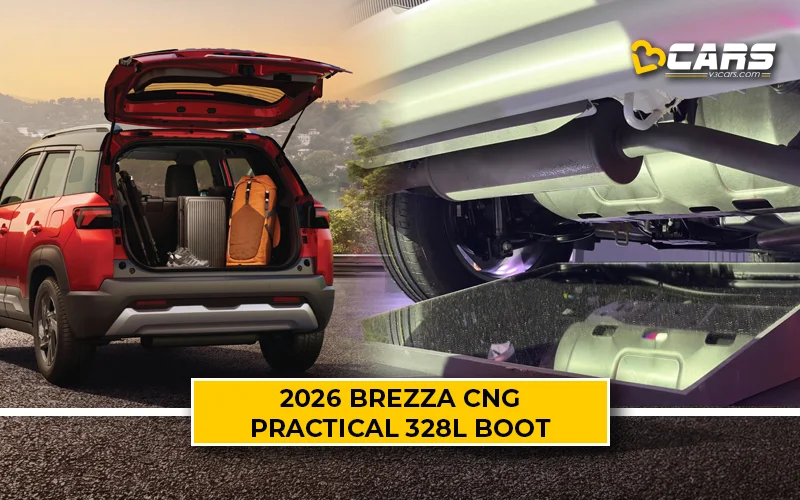
2026 Maruti Brezza CNG 328L Boot Space Explained
The 2026 Maruti Brezza CNG now has its cylinder mounted below the body, allowing it to retain the petrol version’s full 328L boot space. We examine the practical improvement, dimensions, ground clearance and boot-related features offered with each CNG variant.
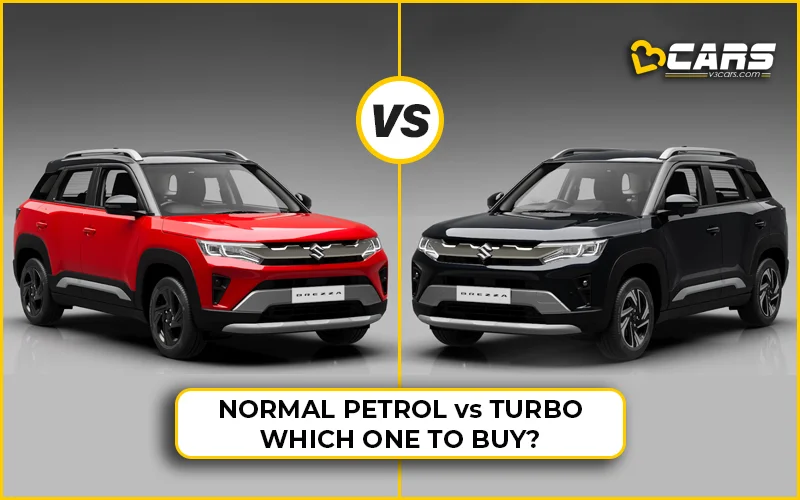
2026 Maruti Brezza 1.0L Turbo Vs 1.5L Petrol - Which One To Buy?
The 2026 Maruti Brezza offers a new 1.0L turbo petrol engine alongside the familiar 1.5L normal petrol. Both engines come with a new 6-speed manual transmission. The smaller turbo costs less and offers more power, torque and features, while the 1.5L petrol claims better mileage. We compare the 2 to determine which Brezza petrol-manual makes more sense.
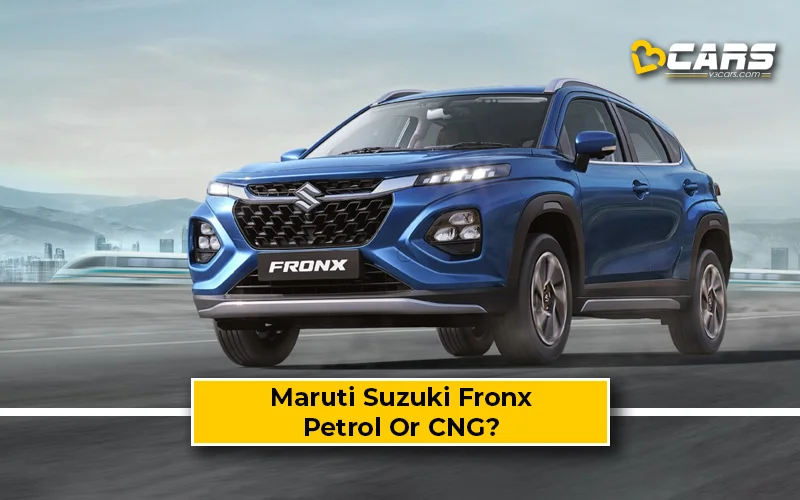
Maruti Arena Fronx Petrol Vs CNG Mileage And Running Cost
If you’re wondering whether to buy the Maruti Suzuki Fronx petrol or CNG, this article will help you make a data-backed decision. We compare the latest ex-showroom prices, official mileage figures and current fuel prices in Delhi to calculate the running cost difference between the Fronx petrol and CNG variants. We also calculate how many kilometres you need to drive the Fronx CNG to recover its higher upfront cost over the petrol variant.

2026 Honda ZR-V Hybrid Photo Gallery
The 2026 Honda ZR-V Hybrid is set to launch in India as Honda’s new flagship SUV on May 22, 2026. Positioned above the Elevate, the ZR-V will rival premium SUVs like the Volkswagen Tiguan R-Line and Skoda Kodiaq with its strong hybrid powertrain, premium interior and advanced features. In this detailed photo gallery, we take a closer look at the ZRV Hybrid’s design, cabin, practicality, safety features and hybrid technology.
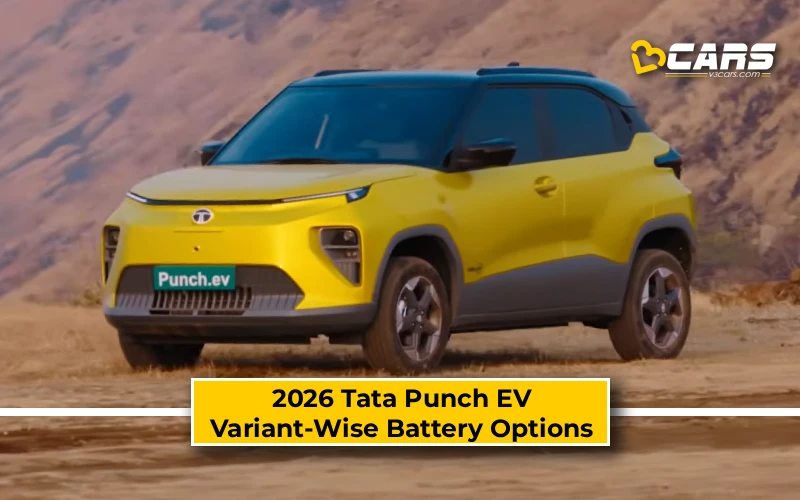
2026 Tata Punch EV Variant-Wise Powertrain Options – Battery, Range & Specifications
The 2026 Tata Punch EV is available with multiple battery pack and motor configurations, giving buyers the flexibility to choose between affordability and longer driving range. Depending on the variant, the new Punch EV offers different power outputs, battery capacities and claimed range. In this article, we break down the 2026 Punch EV’s variant-wise powertrain options and check out which variants get the 30kWh and 40kWh battery packs, along with their performance specifications, so you can pick the variant that best suits your needs.
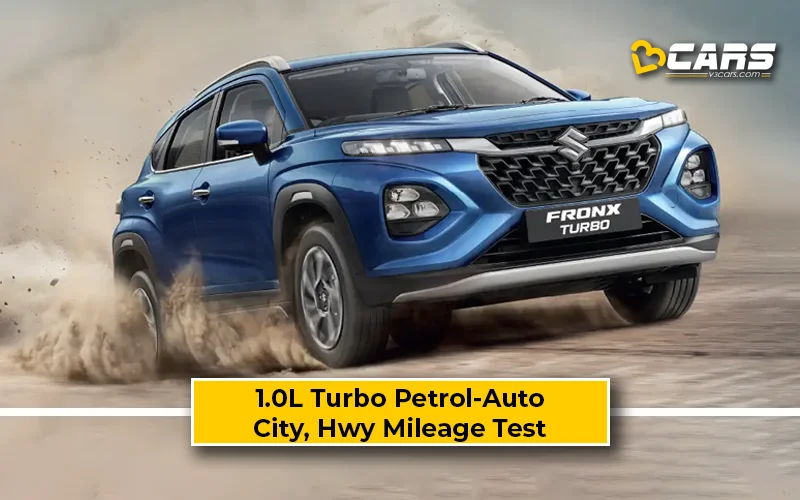
Maruti Fronx 1.0L Turbo Petrol-Auto Mileage Test: Real World City, Highway Fuel Efficiency
In this article, we’ll present the data based on V3Cars mileage test and inform you about what real-world fuel efficiency you can expect from the Maruti Fronx 1.0L turbo petrol-automatic in city and highway driving conditions. We’ll also find out how much the mileage numbers deviate from the manufacturer-claimed fuel efficiency figures. The information presented in this article will also help you learn about the mileage differences you can expect when driving in the city vs driving on the highway.
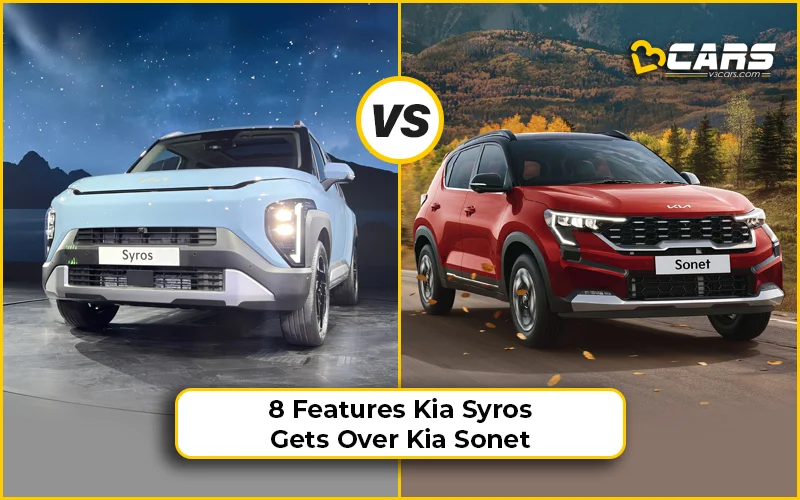
10 Features New Kia Syros Gets Over Kia Sonet
Kia unveiled their all-new B2-segment SUV, the 2025 Syros, on December 19, 2024. While Kia India are yet to reveal the variant-wise prices of the 2025 Syros, it is expected to slot in between the Sonet B2-SUV and Seltos C-SUV.
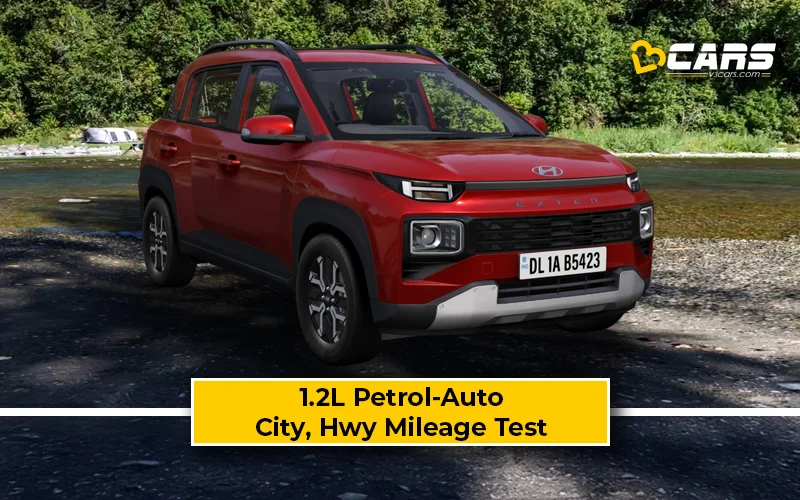
Hyundai Exter 1.2L Petrol-Auto Mileage Test: Real World City, Highway Fuel Efficiency
In this article, we’ll present the data based on V3Cars mileage test and inform you about what real-world fuel efficiency you can expect from the Hyundai Exter 1.2L petrol-automatic in city and highway driving conditions. We’ll also find out how much the mileage numbers deviate from the manufacturer-claimed fuel efficiency figures. The information presented in this article will also help you learn about the mileage differences you can expect when driving in the city vs driving on the highway.
Latest Videos
View All Car Latest Videos





Upcoming Cars In India
View All Upcoming Cars




Popular News
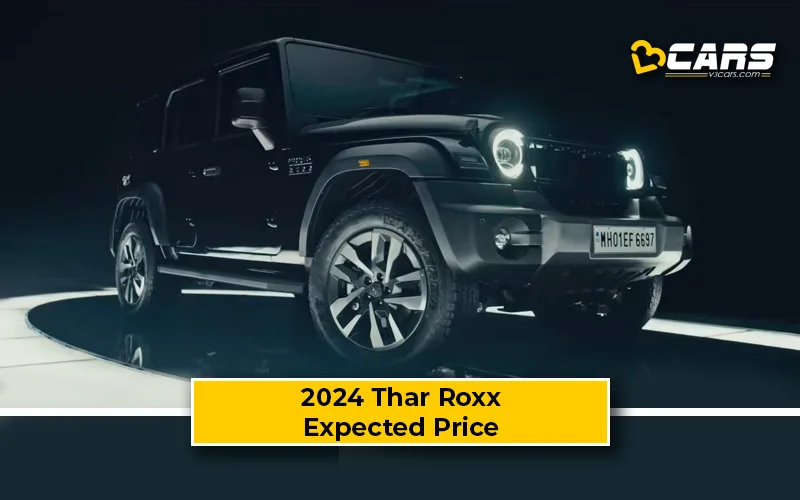
Mahindra Thar Roxx (Thar 5-door) Expected Price — #WithLogic (Updated: Jul 29)

5 Missing Features In Mahindra XUV700 Over Scorpio N

Top 5 Features Scorpio N Misses But The Tata Safari Gets
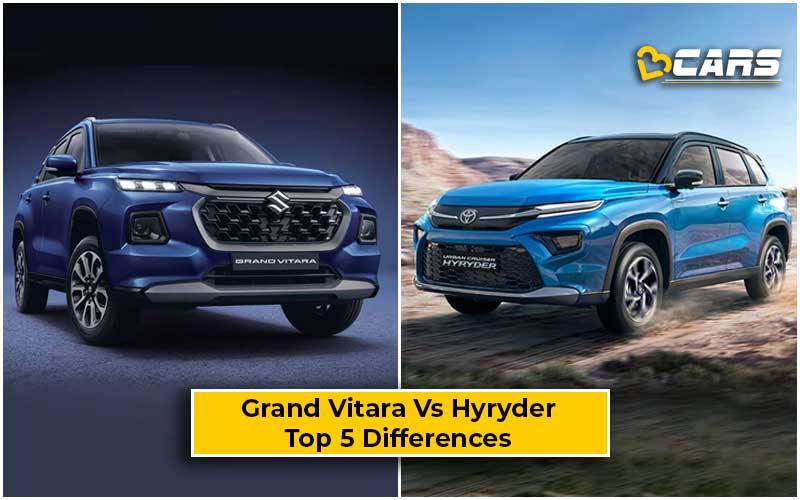
Top 5 Differences – Maruti Suzuki Grand Vitara Vs Toyota Urban Cruiser Hyryder

Maruti Suzuki Grand Vitara Ex-Showroom Price Leaked Ahead Of July 20 Debut

6 Missing Features In 2022 Hyundai Venue Facelift
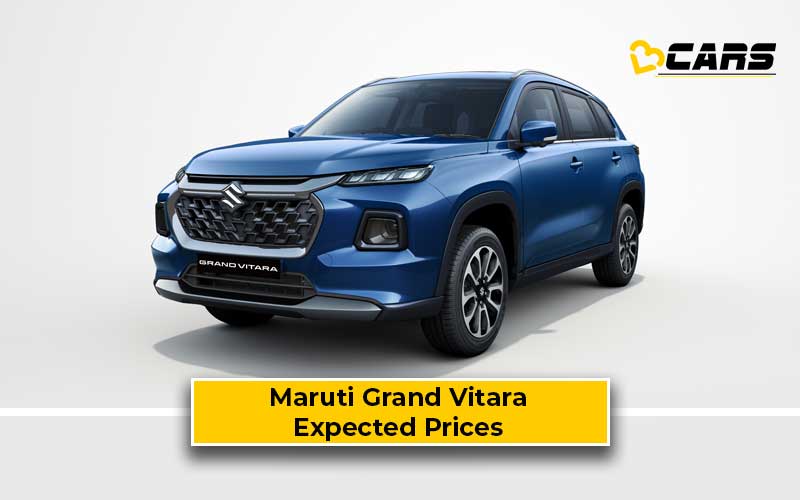
Maruti Suzuki Grand Vitara Expected Prices
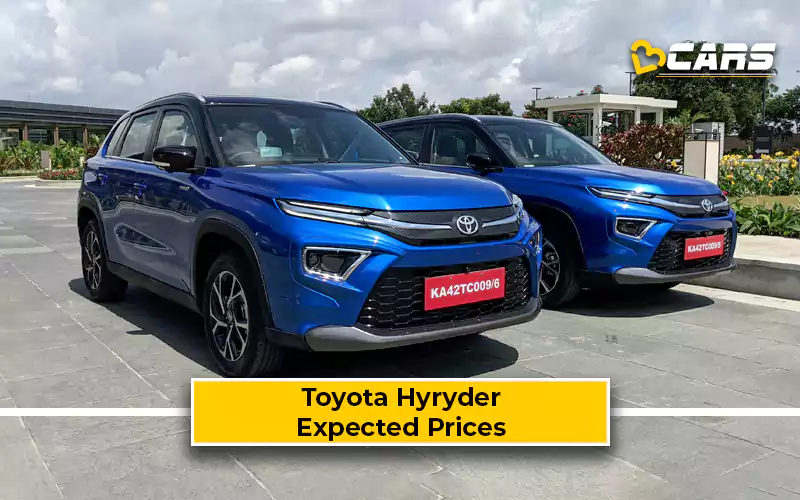
2022 Toyota Urban Cruiser Hyryder Expected Prices — Mild Hybrid, AWD And Mild Hybrid Auto
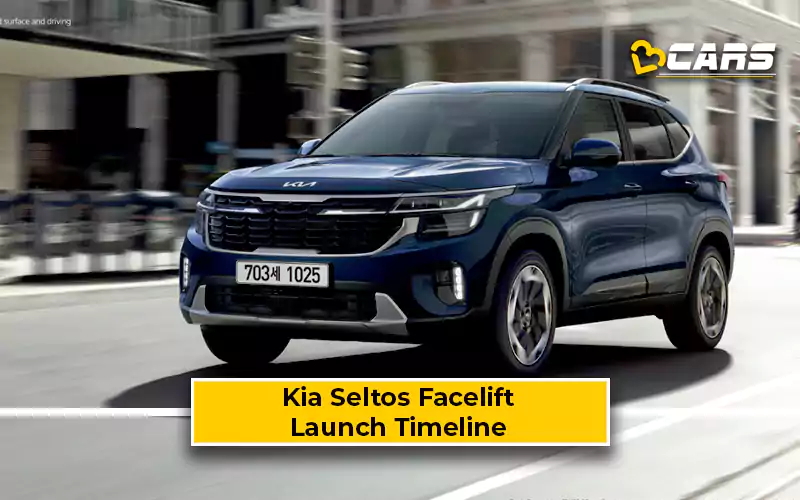
Kia Seltos Facelift Launch In 2023

2022 Mahindra Scorpio - First Teaser Drops Ft. Amitabh Bacchan
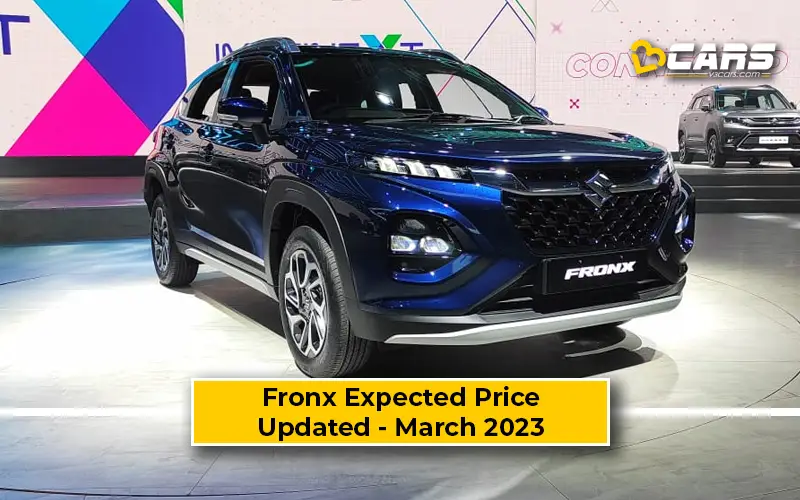
Updated Maruti Nexa Fronx Expected Price Calculation (Variant-wise) - With Logic

7 Missing Features In Hyundai Creta Over Toyota Urban Cruiser Hyryder
Latest Car News
Land Rover Defender Prices Cut By Up To Rs. 34 Lakh After Local Assembly
Hyundai Bayon – Variant-Wise Powertrain Options
New Maruti Suzuki YMC Electric MPV Spotted
Government Allows E100 Fuel For Flex-Fuel Cars – What Changes For Buyers?
Hyundai Bayon Variant-Wise Colours
Hyundai Bayon CNG Launch In January 2027
Jeep Compass Sport AT Launched At Rs. 22 Lakh
Hyundai Bayon Launched At Rs. 10 Lakh
Top 15 Features Of Hyundai Bayon
Maruti Victoris Aurum Edition Launched With Rs. 22,990 Accessory Kit
Hyundai Ioniq 1 Top 5 Things To Know
Comments
0 comments