

 Upcoming CarsPopular CarsLatest CarsElectric Cars
Estimate costs and savings with our handy automotive calculators.
Simplify your car ownership journey with our buying, selling, and renewal tools.
Explore additional resources and comparisons for car enthusiasts.
Published : 15 May 2024
Read Time : 5 min
Author: Mahesh Yadav
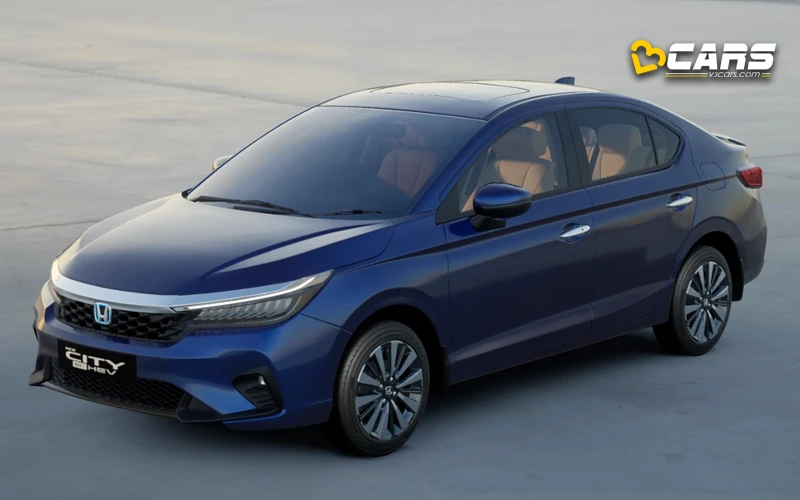
In this variant explained article, you'll find out which variant of the Honda City petrol or hybrid you should buy based on the ex-showroom prices, variant-wise features and value for money. Here we compare and objectively analyse the 2024 City's petrol variants and the features to figure out which variant is worth buying for a good value for money and ownership experience. Then we will compare the engine specs, dimensions and mileage of the Honda City with its competitors and other petrol-powered C-segment sedans like Maruti Suzuki Ciaz, Skoda Slavia, Volkswagen Virtus and Hyundai Verna.

Updated (May 15, 2024): Honda recently added some features in all City variants and revised the prices. This update of the Honda City variants explained article includes the latest May 2024 prices of the Honda City and the updated feature tables.
Also Read: 2024 Kia Seltos Variants Explained - Which One To Buy?
Maruti Grand Vitara Petrol Variants Explained - Which One To Buy?
Hyundai Verna Petrol Variants Explained - Which One To Buy?
What Are The Pros And Cons Of Honda City Petrol?
The pros or advantages of Honda City petrol are:
- ADAS features available in V variant with manual as well as automatic transmission
- The City is one of the rare car, and also the most affordable car, to offer adaptive cruise control with manual transmission
- 3 engine-transmission combinations to choose from: petrol-manual, petrol-automatic and hybrid petrol-automatic
- Very well-equipped V variant offers phenomenal value for money and should suffice for most sedan buyers
- Good number of standard safety features (ESP, TC, HSA, 6 airbags, projector headlamps, rear defogger, rear camera, TPMS, 5x 3-point seatbelts)
- The highly-fuel efficient hybrid promises 27.13kmpl along with class-leading torque output from near-zero RPMs
The Honda City petrol has the following shortcomings or problems:
- Hybrid petrol engine is obscenely expensive (with May 2024 fuel prices in Delhi and official mileage figures, it’ll take you 1,50,000km to recover the higher upfront cost for the hybrid powertrain — even after factoring in the perceived value of the features and better performance)
- 185-section tyres, even in the top variants, are too narrow for a car of this size and price; even the Baleno has wider tyres
- No turbo petrol engine option
What Is The Price Of Honda City Petrol Variants?
The 5th gen Honda City is available in 4 variants - SV, V, VX and ZX. All 4 variants are available with the petrol-manual powertrain while the higher 3 also get the option of CVT automatic transmission for an additional Rs. 1.25 lakh. The petrol-manual variants cost between Rs. 12.08 lakh and Rs. 15.10 lakh (ex-showroom). The City petrol-automatic variants start from Rs. 14.10 lakh and top out at Rs. 16.35 lakh.
The City’s top model also gets the option of hybrid powertrain with automatic transmission. The City ZX hybrid costs Rs. 20.55 lakh. Compared to the petrol-automatic variants, the hybrid option costs Rs. 4.20 lakh more.
Honda recently updated the City’s variants with additional features and increased the prices. It’s worth noting that, as of May 15, 2024, Honda are selling the older model. The following table lists out the ex-showroom price of the older City variants and the newer, updated variants:
You can check the variant wise feature updates of the updated City at the following link:
2024 Honda City Features, Prices Updated For April 2024
Considering the additional features of each variant, the price gap is either almost justified (in base variant) or completely justified (in higher variants). So, we’ll suggest you pick the newer, updated variants of the City. However, if the discounts are different on the older and newer models of the City, then you should choose the older model only if the gap is significantly larger than what’s highlighted in the comparison table.
With that condition out of the way, let’s start comparing the features of the updated City variants.
Honda City Petrol SV - Base Model Standard Features
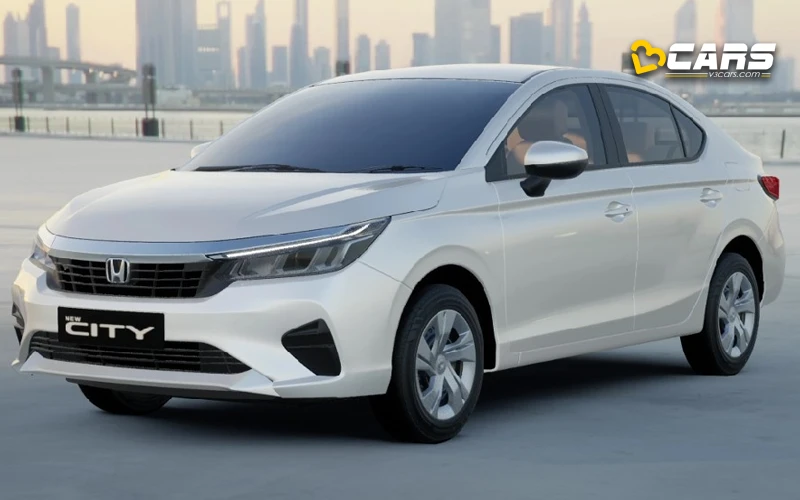
The base SV variant of the 5th gen Honda City costs Rs. 12.08 lakh and it’s only available with the manual transmission. The notable standard features of the City base model are:
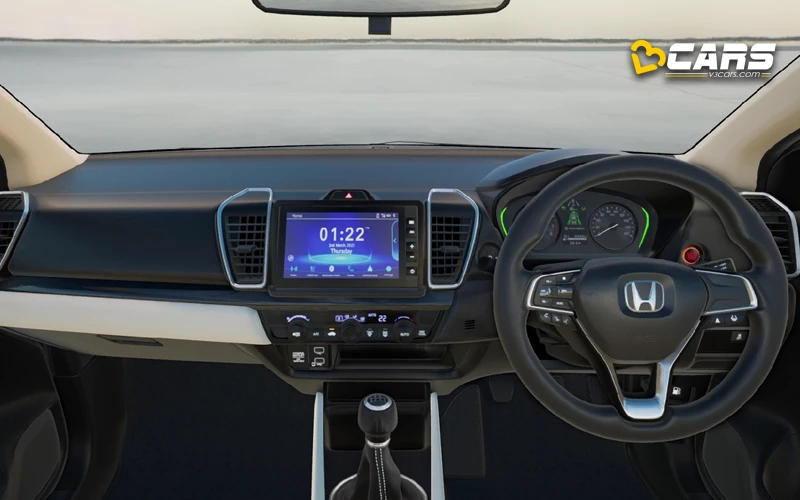
The only features you may miss in this variant are:
- Alloy wheels
- Cruise control
- Wireless phone connectivity
- Fog lamps
As you can see, the base variant of the City is very well equipped and gets all of the must-have features. For most buyers, this variant will suffice and will offer a decent ownership experience. It’s especially suitable for budget buyers who are absolutely against having ADAS features. For most buyers, we’ll strongly recommend upgrading to the higher V variant, which offers better value for money even if you exclude the ADAS features. With the perceived value of the ADAS factored in, the higher V variant offers bonkers value for money.
Honda City Petrol SV vs V Variant - Price, Feature Comparison
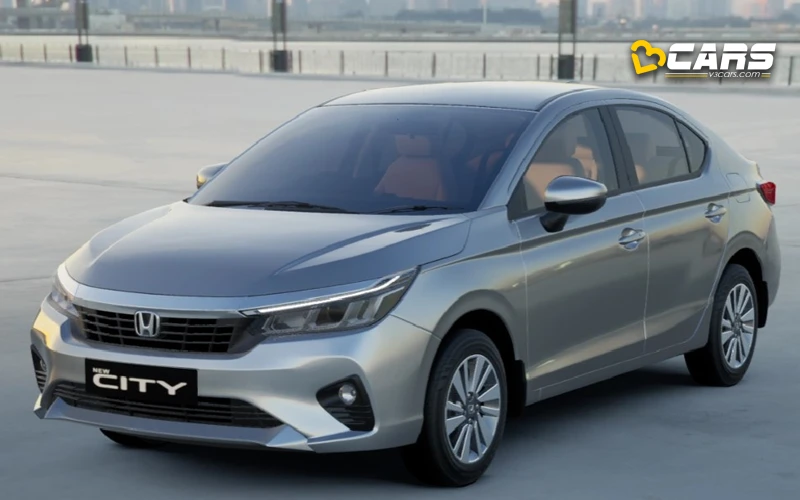
V variant of the new Honda City is available with manual as well as automatic transmission option. With the petrol-manual, it costs Rs. 12.85 lakh, which is almost Rs. 77,000 more than the base variant. For an additional Rs. 1.25 lakh, you can buy the City V petrol-automatic as it costs Rs. 14.10 lakh (ex-showroom).
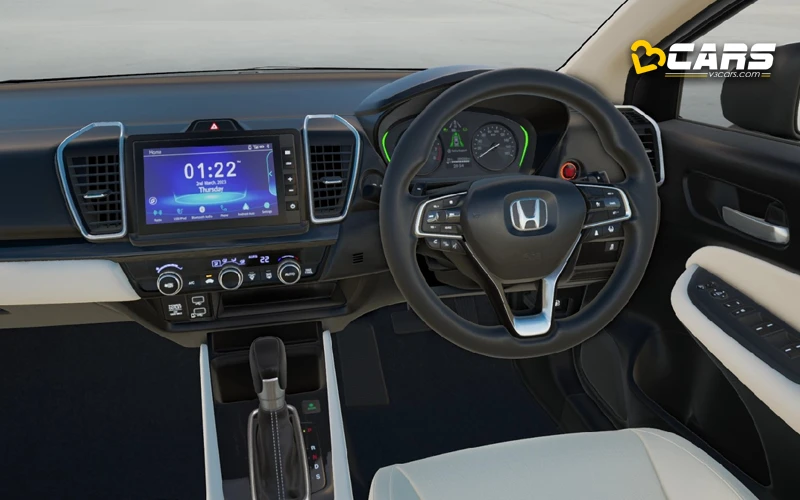
For the additional sum, you get the following notable features over the City base model:
For petrol-manual and petrol-automatic buyers, the City V variant is the best option. It offers the best value for money and doesn’t miss out on any must-have feature we expect from a car at this price. Even if you don’t want the ADAS features, the other features alone justify the upgrade to the V trim over the SV.
Honda City Petrol V vs VX Variant - Price, Feature Comparison
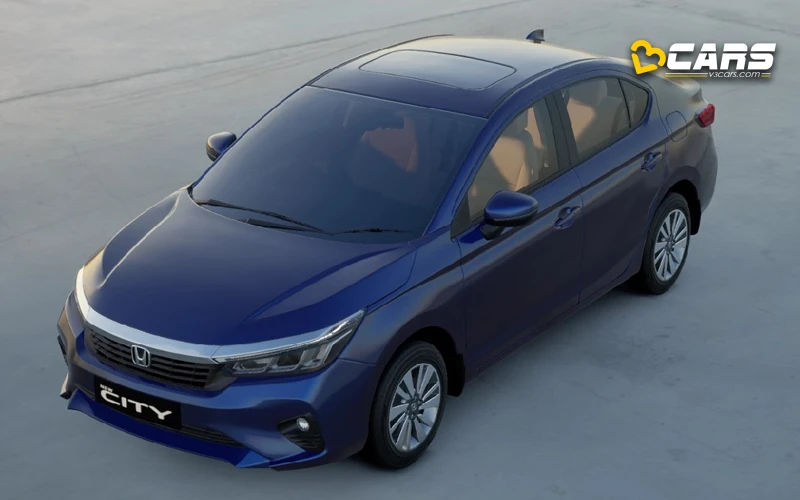
The Honda City VX petrol costs Rs. 13.92 lakh (manual transmission) and Rs. 15.17 lakh (automatic). These prices are Rs. 1.07 lakh higher than the V variant’s.
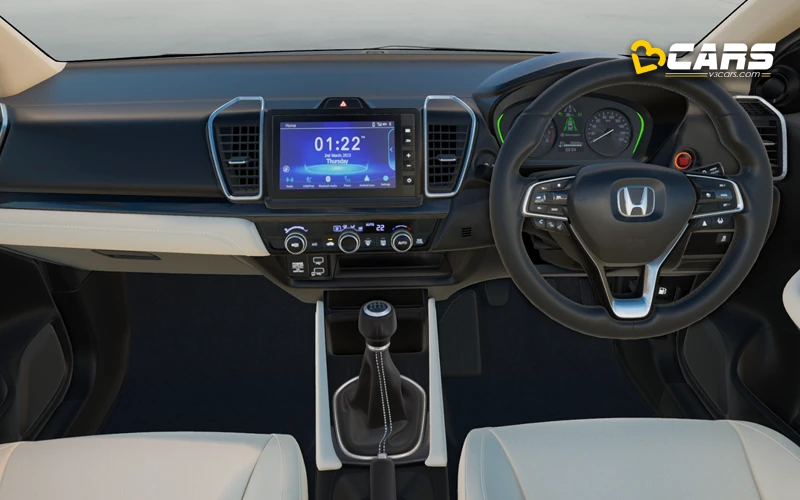
For the higher asking price, this variant adds the following notable features:
For the style features, you can upgrade to the VX variant. Otherwise, the V variant is satisfactorily loaded with features and offers far better value than the VX variant.
Honda City Petrol VX vs ZX Variant - Price, Feature Comparison
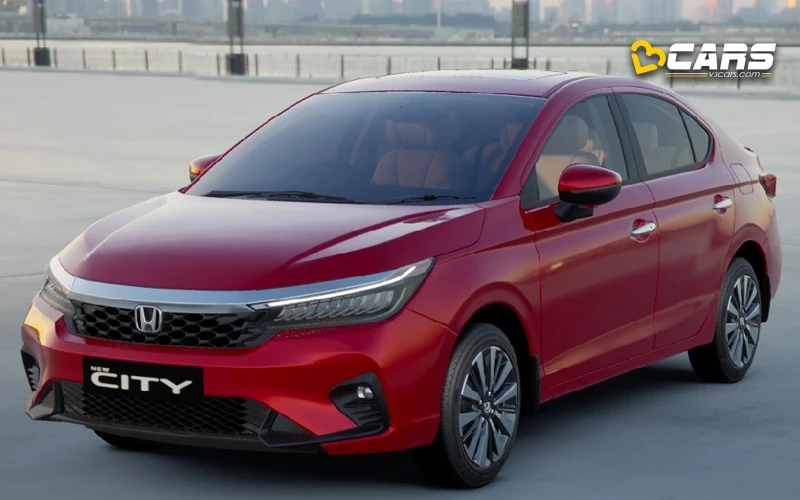
The Honda City ZX petrol costs Rs. 15.10 lakh with the manual and Rs. 16.35 lakh with the automatic transmission. These prices are Rs. 1.18 lakh higher than the VX variant. The City ZX is also available with the hybrid powertrain with the automatic transmission. It’s Rs. 4.20 lakh more expensive than the ZX normal petrol-automatic.
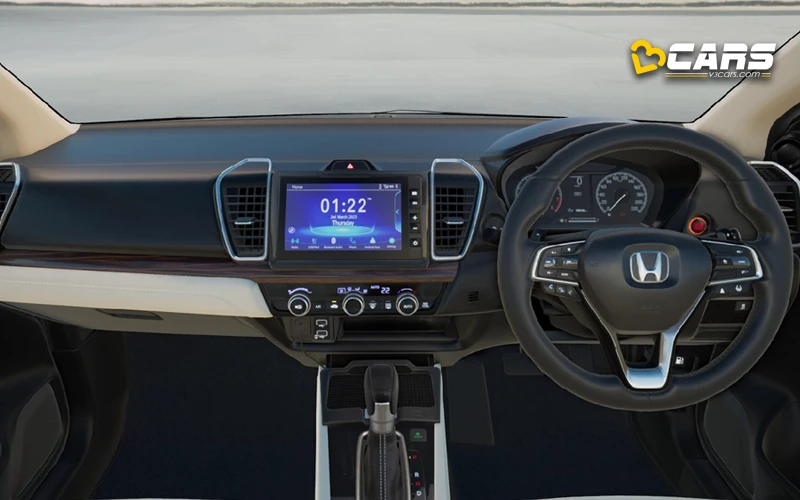
The ZX variant adds the following features over the lower VX variant:
The ZX variant mostly adds good-to-have features and doesn’t offer better value than the lower VX variant either. Financially, it doesn’t make sense to upgrade to this variant, but you can consider this jump if you value these features. Thanks to the significant value boost from the V variant’s ADAS features, both higher trims justify the upgrade over the base model of the City.
If you’re interested in the City hybrid for the higher mileage figure, then you should know that at the current fuel prices in Delhi, you’ll end up saving about Rs. 1.66 per kilometre in fuel cost with the hybrid powertrain. At that rate, you’ll have to drive the City hybrid for around 2.50 lakh kilometres just to recover the higher upfront costs. Even if you factor in the value of the additional exclusive features and better torque output, you will still have to drive the City for about 1.50 lakh kilometres just to break even. At the current steep price, the City hybrid doesn't make much financial sense besides giving you bragging rights. So, we can’t recommend the hybrid powertrain to any Honda City buyer.
Which Variant Of The Honda City Petrol Should You Buy?
The base SV variant offers a balanced set of features and covers the basics quite well. However, we strongly recommend upgrading to the V variant as it offers phenomenal value for money because of the ADAS features. Even if you exclude the ADAS features of the V variant, it still justifies the upgrade cost. So, we’ll strongly recommend the upgrade to the V variant for all City petrol-manual and automatic buyers. It also wins our top recommendation among all variants of the new Honda City.
From there, the VX variant is worth considering for the style upgrades but the ZX variant doesn’t feel like a compelling upgrade at all.
Similarly, for the City automatic buyers, the V is the top recommendation. From there, the value quotient only drops as you move up the variant chain.
If you’re interested in the ZX hybrid for its better mileage figure, know that you’ll need to drive it 2.50 lakh kilometres just to recover the higher upfront cost of Rs. 4.20 lakh. Even if you factor in the perceived value of better performance and extra features, you still need to drive it for 1.50 lakh kilometres just to break even. These calculations are estimated at May 2024 fuel price in Delhi and official mileage figures. With such high breakeven costs, we don’t see much financial sense in buying the City hybrid.
What Are The Engine Specifications Of The Honda City Petrol?
Neither the mileage figures nor the torque output of the new City are setting any benchmarks in the segment. Even the Virtus and Slavia’s 1.0L turbo petrol engine has a higher torque output than the City’s 1.5L normal petrol engine. Moreover, it’s available at a much lower RPM and for most of the rev band. Thus, the Virtus and Slavia with their base turbo petrol engines will offer better drivability than the City petrol along with better fuel efficiency.
Only the hybrid petrol engine of the City offers notable advantages over its rivals. It has a segment-best 253Nm of peak torque coming in early at near-zero RPMs. While the Verna, Slavia and Virtus also have similar torque output, their torque comes at a slightly higher RPMs. The City hybrid also offers a phenomenal mileage figure of 27.13kmpl. But, it doesn’t justify the cost of upgrading over the City with the normal petrol-automatic powertrain. It’s also worth noting that all high-performance turbo petrol cars in the following table carry shockingly good ARAI mileage figures considering their high performance engines.
You can use our Fuel Cost Calculator to see how much any petrol, diesel or CNG car will cost to run based on the latest fuel price in your city.
What Are The Dimensions Of The Honda City?
In terms of dimensions, the new City was the first car with a length of more than 4.5 metres. But now, all C-segment sedans measure more than 4.5m. Only the Ciaz is a shade under 4500mm. In this segment, the new Verna is the widest while the Virtus is the longest. The other notable thing about the Slavia and Virtus is their SUV-like ground clearance, which makes them very practical for Indian road conditions. This also eliminates the need to buy a tall SUV and makes them great cross country touring cars.
The thing that hurts the City the most is its tyre size. It has the narrowest tyres in the segment. Even its top variant offers 185-section tyres when the Baleno has wider tyres despite belonging to a lower segment.
*Estimated
Find out how you can get the best mileage or fuel efficiency from your car:
10 Tips To Get Better Mileage From Your Petrol, Diesel Or CNG Car
What Are The Colour Options Of The Honda City Petrol?
The 2024 City petrol is available in the following 6 colours:
- White
- Blue
- Red
- Brown
- Grey
- Silver
To find out the variant-wise colour option availability of the City, you can visit the following link:
Honda City – All Exterior Colour Options (Variant-wise)
Note: Here is a quick look at our length-based segmentation of cars to give you an idea of how we are classifying cars based on their size.
You can read more about vehicle segmentation at the following link:
Did you find this information helpful?
Car News Update
View All Latest NewsExpert Car Reviews
View All Car ReviewsLatest Videos
View All Car Latest VideosUpcoming Cars In India
View All Upcoming Cars
Comments
0 comments